
Interview: Football referee Gabriel Butros 2022-06-23
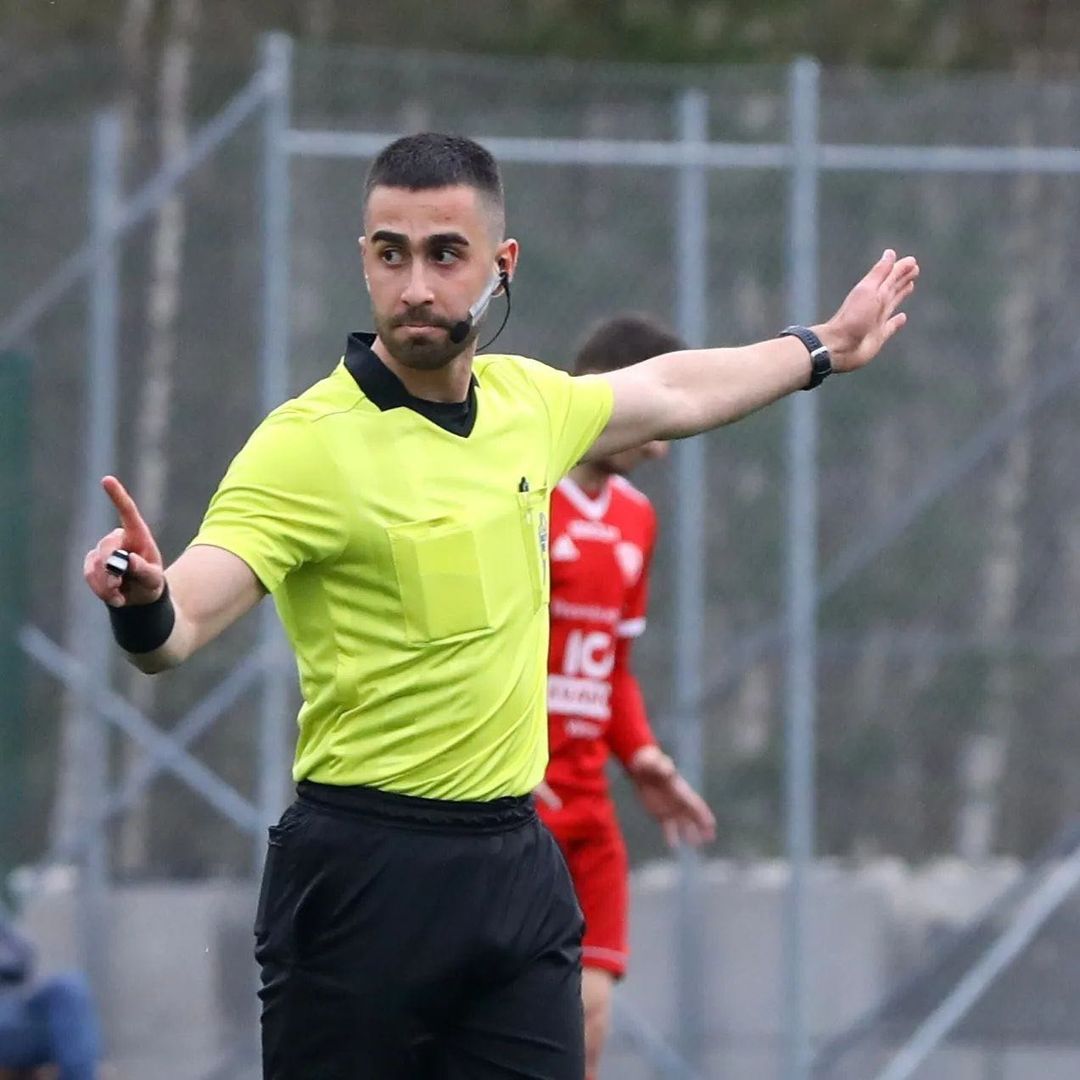
Foto: @vaisanen.nu på Instagram
Interview with football referee Gabriel Butros
Gabriel is a young, promising and experienced football referee with ambitions to reach higher up. He is active in Jönköping's Football Referees Club and helps with their sponsorship, towards new referees to support them even more when they start refereeing. We sat down with Gabriel to discuss how he started refereeing, what he thinks about the role of referee and how he views the lack of referees, which are now being reported from many areas and different countries also.– We know you, but just a little Gabriel. You have just graduated, right? Tell us more about yourself!
– Yes, I have a bachelor's degree and study a master's degree in economics that goes over four years. Last spring, I took elective courses and chose to write a bachelor's thesis, which means that I now received a bachelor's degree. Which means that if I want to, I can be ready now and live the adult life for real, haha. Or I will continue for another year and get my full master's degree in economics, which I intend to do. I wanted to broaden myself and increase the chance of, above all, a good summer job and build on it, which I also got and am very much looking forward to that job.
– Great, congratulations on that. You also have another job, or hobby, as a football referee. How did it start?
– Yes, I definitely see it as an extra job. I started refereeing as an local football club referee when I was 14 or 15 years old if I remember correctly. In the local club everyone had to do something to help the club where some was refereeing and I thought it was very fun. I thought it was fun, you got a little money for it, you trained and spent time on the football field even more and you became an even bigger part of football. When I got older and started high school, we got a tough schedule and finished very late and then I did not have time for my football training and felt that football, as a player, has not been as fun lately. I really did not want to leave football completely and at the same time felt that the refereeing is fun so I stayed in it a bit and went on for another six months as an association referee. After that, I applied to the district to take the next step and become a district referee, or senior referee. At that time, the recruiter had a wish that you were 18 and had a driver's license, but I had to go Step 1 in the winter of 2017 when I was 17 and after the that year I was approved and turned 18 so I was ready to referee fully. That summer I went and refereed at the Gothia Cup, a fantastic week that ended with an A-final at Gamla Ullevi. My God, what a fun week it was there, as a referee at Gothia! Then I have been a referee since then. It has gone well and it has been very fun at the same time as it has gone up for me. The following year, I was selected for the stage 2 training in the summer of 2019, as it was also at the Gothia Cup before the corona hit. In 2020 I got to test in division four as head referee, and since 2021 I have been a regular in division 4.
– Many referees have memories or special events from their time when they started refereeing. Do you have something you want to share?
– I do not i have, but I think more about the role when I was an association referee, youth referee. I really thought it was really fun to referee there and then. My brother also refereed, and still does, so I knew a little bit before I started. But when you came to the matches, you greeted new leaders and players, got to feel the association life even more. You also always had clear and distinct goals, new goals all the time. When you refereed 7-7, you wanted to go to next stage 11-11. When you refereed 11-a-side football, you wanted to referee the elderly and so on. So my memory of starting refereeing was probably that I thought it was so fun, I really went for it and you got involved. I remember some weekends there that I was almost more looking forward to going and refereeing a match than going and playing a match.
– You say that you looked forward to going to the match then. How is the feeling now, is it still there?
– It's the same, of course. You notice this especially during the winter when you have no football at all. I have literally shaken my body and look forward to the matches as much as today, if not even more. It does not matter to me if it is a division 4 men, divsion 2 on the line or ladies division 1 it is really fun to come out and meet people. It's fun to get away and now the matches are a little longer. I live in Jönköping but can have matches in Vimmerby, Växjö or as this weekend when I was in Malmö for division 2 match. You go in teams, with friends you know well now and get to see a lot of new things and get to know new people.
– What is it that makes that feeling even stronger then? Let's dig a little deeper Gabriel.
– I think it is that you can always get better and there is always something you can do better. No matter how good a match you make as a referee, you can always bring something with you that you can think differently about or do a little better. Sure, I'm in division four which is the lower middle of the divisions but it's starting to get more serious. But ... there are many divisions over this that I want to climb up to. There's probably a lot that makes the feeling amazing. Now it's the next match, the next challenge and now it's a new chance to train and improve a little more. I look forward to every new match.
– Since you were an association referee, what have you worked with and changed the most as a referee?
– You kidding, this is a difficult question, because so much has clearly changed. I probably would not say this that being and acting professional because I tried to be already then, even though it is on a different level now of course. My brother told me once, early on, and he said "it does not matter if you referee the youngest boys. You should come here on time and be a professional". It has always accompanied me. The biggest difference and which I have trained a lot on is being a match leader and leading the match. This theater, if we call it that, where you learn to lead a match and learn how to put out certain fires and think about when to talk and when not to talk. This is something that all referee are constantly developing, I think and that I still think about a lot.
– Is it theater then, to be a referee? Or are they qualities you develop as a referee? Because you do not become another person just because you referee... or?
– No, that's an important detail! It is difficult to train to be a match leader, but you do it by learning by mistake or thinking about how situations turned out when you say this or that. But basically, I think everyone can develop their own personal qualities and that is where the match management is. Your personal qualities and they can always be developed as a person. The biggest difference from being a new or young referee until now is probably that you learn how to use your own personal qualities. You learn to switch between knowing when to raise your voice and roaring or not saying anything at all or knowing when to take a reminder or explain something calm and nice. Sure, we may call it theater sometimes, but as you say, it is not theater that you become and are nothing but yourself as a referee. Without using the properties you have and you use them in different ways. To answer the previous question more, it is probably one of the biggest challenges to learn to handle angry players and calm down situations with the help of your qualities. For example, you not only blow the whistle but you blow the whistle, say something, use body language at the same time, are in the right position and sell in your decision with all that.
– Referees often have a lot of other things to think about as well. You work, have a family, referee several matches in a row, you study and more. A player alike. We are all just humans and can wake up on the wrong side sometimes or have a lot of other things to think about. Have you reflected on this as a referee?
– Yes, it has happened to me several times when refereed in the lower divisions and which I also received as feedback from observers and others. Learning to "calm down" as a referee is an important quality. This is something I have become much better at in the last year. I am an energy-rich person and sometimes I need to slow it down so that it does not become too much. If you have a bad day and one in the audience, a player or a leader who shouts at an entire match, you get angry, we are just people. Then maybe you roar back, but maybe you should not do that. Learning to master it and calm down situations, instead of firing on them, is important as a referee.
– When you are in these situations when someone shouts a little too much at you as a referee. What can you think of more then? Is there anything you can do to not end up there? Both before, during and after the match.
– Prevent, prevent and prevent and have a game plan. If you can. If someone shouts at you in match minute 60, it means that you may have missed something in match minute 10. Then maybe they thinking that we have permission to play at this level today, or that it is okay to shout at the referee today. I tend to be very careful with my assistants and my team, almost always saying "the first inappropriate behavior we see or hear, early in the match, we should take does and handle them right away! We should not drop such a thing early". If you do not do that, you do not prevent and they think and believe that it is okay to shout throughout the match. Pick such things early and you will avoid it later in the match, hopefully. Then when and if it still happens, it is important to keep a cool head. Back behind for a second, pause, and do not attack immediately. Do not run there or rush there, to the player or the leader. You can walk a few meters because then you have time to calm down as a referee and you have time to think about what the hell to say and how to say it. After the match, it is also important to have a respectful dialogue. If a player wants an explanation of a situation and they ask, I usually invite to that dialogue if they have a respectful dialogue and it is possible to talk at a good level. If they just want an explanation, it can help, but if they are there to argue or otherwise they are not welcome.
– You have a brother, Simon Butros, who is also a referee. Do you have a lot of talks around matches and other things?
– Oh yes. If we can watch each other's matches, we will do it and there we have a high tolerance, really. There we are not very kind, but very high tolerance between my brother and me. He looked at me as an association referee and told me that you should look like this, do this and so on. Even today we do the same thing against each other, we watch each other's matches often and have a good dialogue between us. For me and him, I think it's an important dialogue because we can say "that was really bad, why did you do that" while the next comment is "damn how good you did that". We are not mean to each other, but we do it with respect for each other so that we can develop and get better. I know he wants to go up and he knows I want to go up. We have a lot of the same strengths and weaknesses, but we are different people and refereeing differently, which means that we also think differently and getting other people's eyes on situations and matches is a good thing.
– You are a member of Jönköping's Football Referees Club, in the board, can you tell us more about what you do there?
– I am a responsible for the sponsor in the board, the sponsor in the club that helps new referees. I have been very clear with those who are sponsors, who then help the new referees, that their task this year is to work hard to get the new ones to stay. We, and many other referee clubs, have had extreme problems in getting the new referees to stay and continue. We receive a lot of new referees and expressions of interest. The problem is not that we do not get referees in, but the problem is that we have too many who drop out after one year. Then we have identified that we have a hard time keeping second-year referees. They referee alone 90% of the time, they do not get enough support from other referees or people around, they have too few observations and they may not enter the referee club in the same way. My task is to ensure that the sponsors, ie the experienced referees who help the new ones, have a good dialogue with these new ones. You will help them into the club, in the best of worlds you will talk to them a bit every week and check the situation, at our meetings you will make sure that they are involved in the dialogues and in the social around our community and that you should also look at the new referees just to feel that you are being seen. That you help with rule questions on the phone, ball some tips in the half and after the match. Simply to make the new referees feel that they are being seen and supported. Along with this, we do a few other things that make it easier for the sponsors, for example to increase the fee for the local referee observers, LRO as we call it, which means that we get more LRO. This in turn means that you more often have the opportunity to watch a match where you are the sponsor of a referee because we get more LRO in the business and that you should not watch two matches and referee two matches per week. It's too much. As a sponsor, you also receive a symbolic sum for what you do, reduced membership fee and it has yielded results so far. We have more LRO in Jönköping than in a long time and we are going against the trend a bit compared to other clubs. We hope that this is reflected in the fact that more new referees will remain.
– Nice! Last question before we finish. How are the thoughts of refereeing forward for Gabriel?
– I was born -00 and to be completely honest, I currently have no stops in my goals. I want to go as far as I can. I was asked that question the other day by a friend "if you had the chance to referee in the Allsvenskan and be a FIFA referee, would you have imagined doing it full time?". Without a doubt I replied, it would have been a dream. The goal is to get as far and high up as possible as a referee and that is the Allsvenskan I go for and then it's just a matter of commitment. It is important to train, to push on and to do the right things so that you are prepared.
– Thank you Gabriel. Interesting and we wish you good luck in the future!
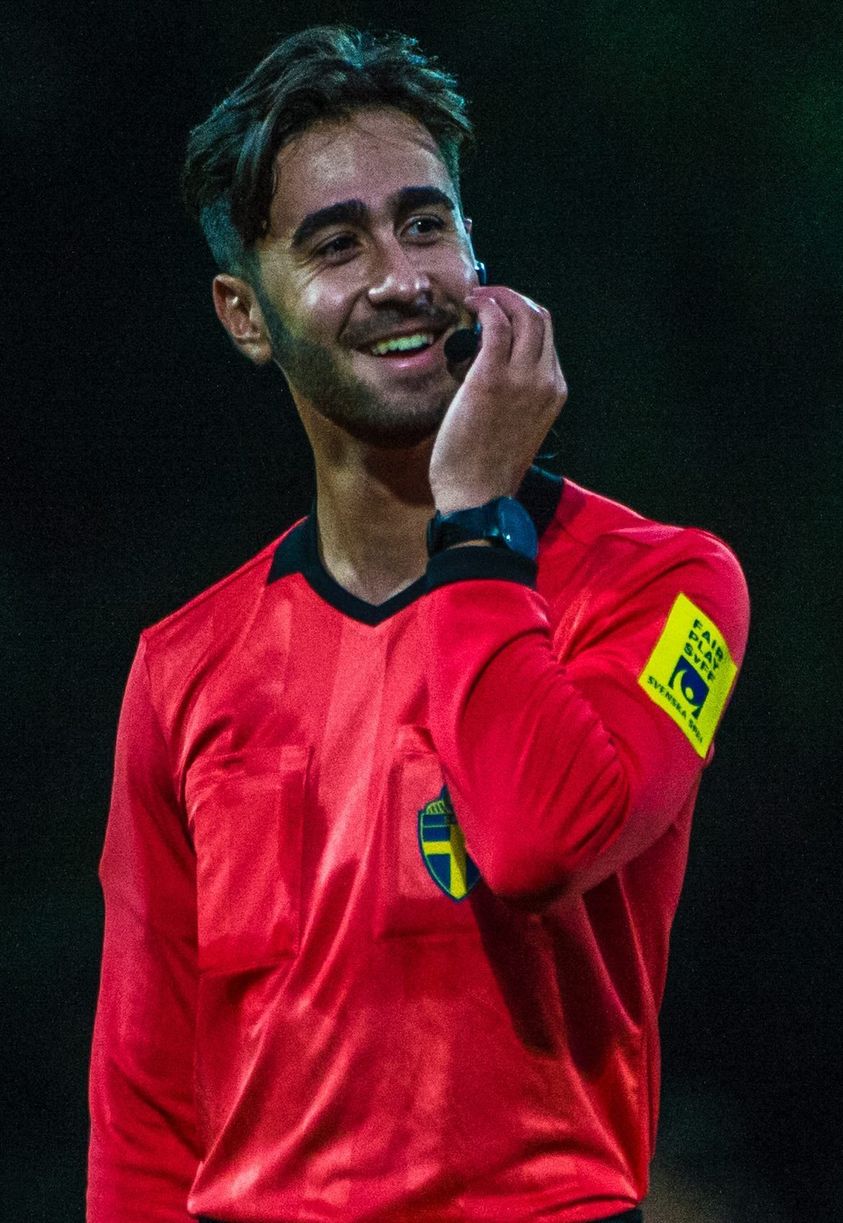
Foto: @marcusvilsonfoto på Instagram