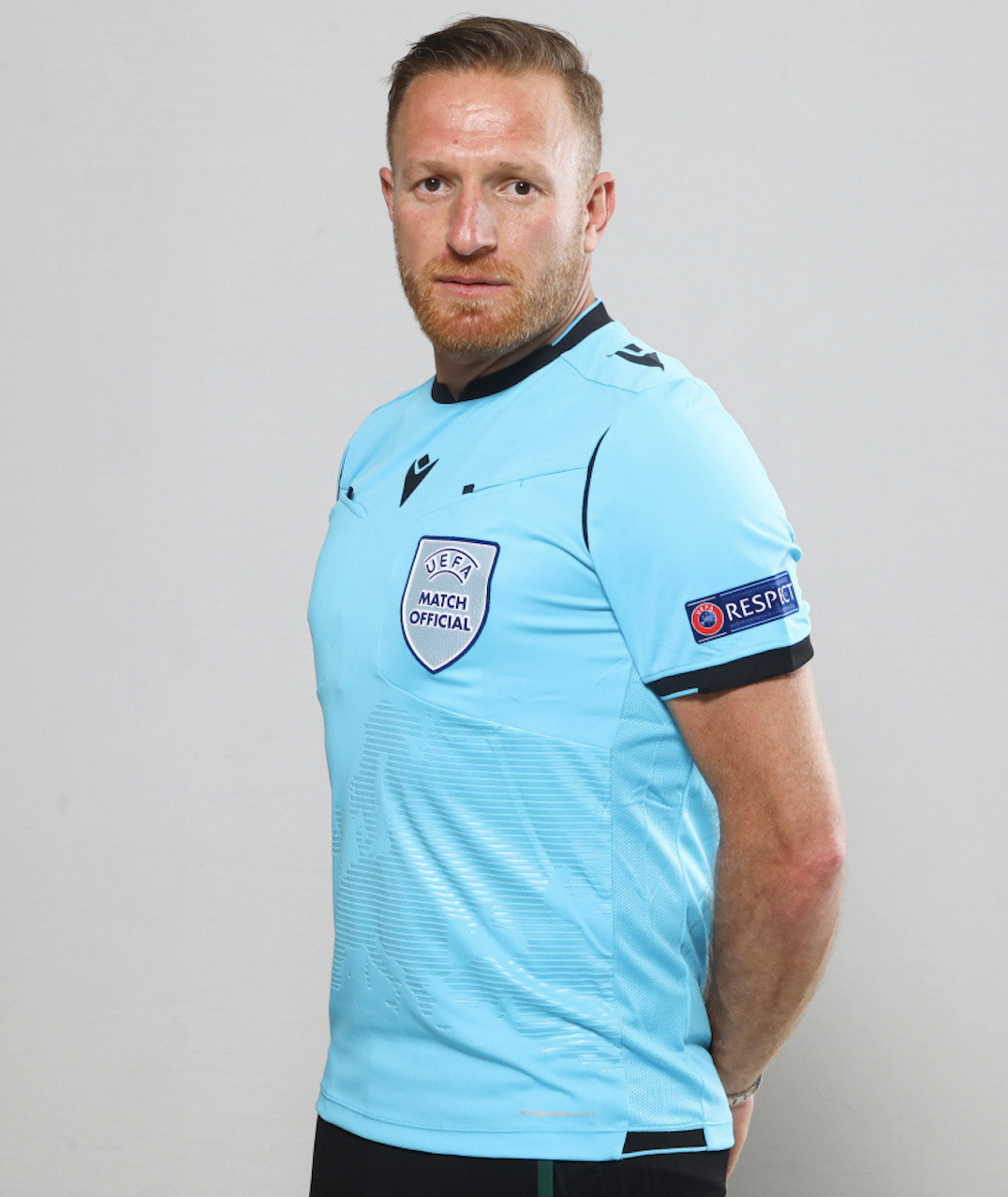
Interview: FIFA Referee Mehmet Culum 2022-06-09
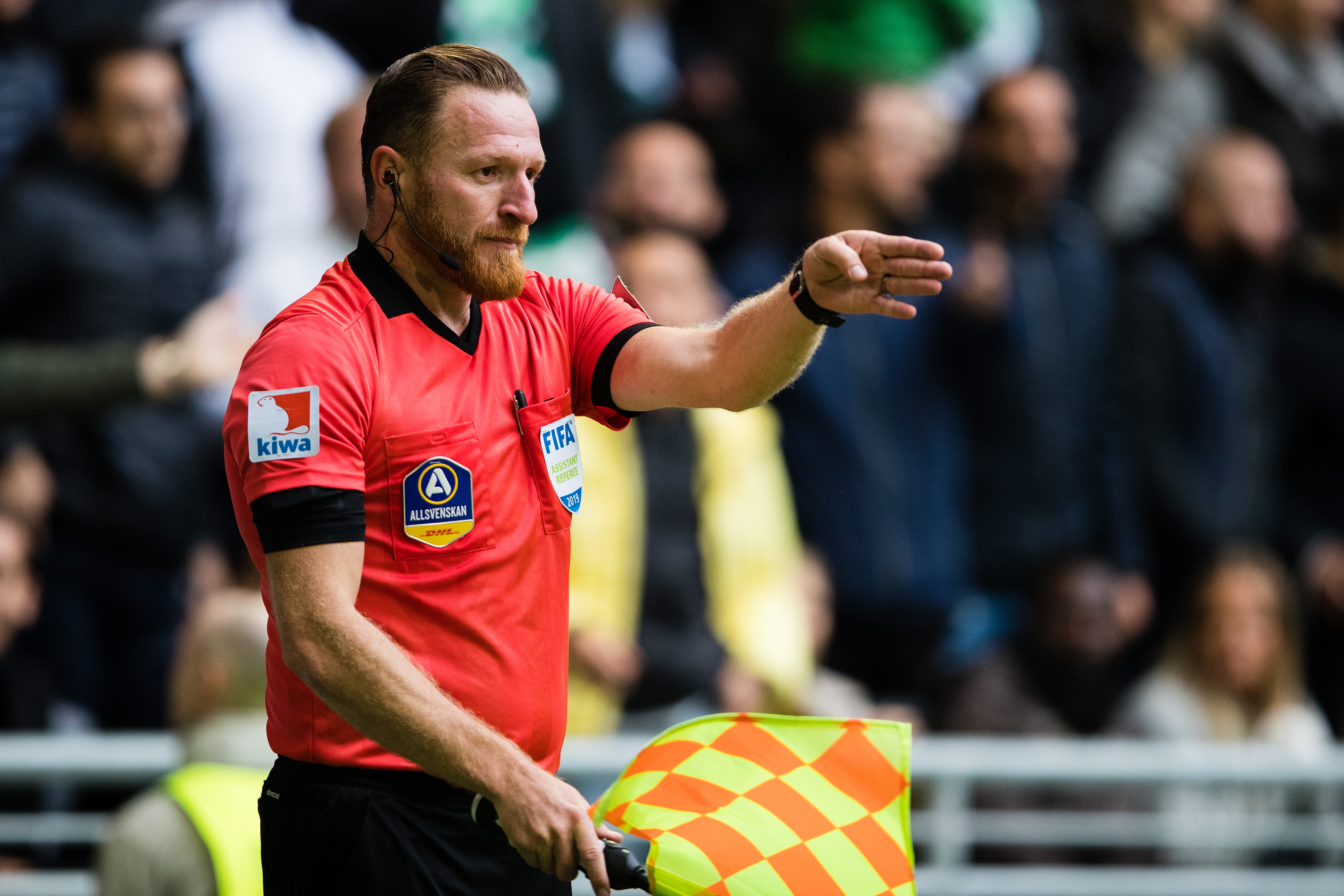
Interview with FIFA Referee Mehmet Culum
We had a long interview and chat with FIFA assistant referee Mehmet Culum. Mehmet is part of Team Andreas Ekberg, where the Team feeling is important. The whole team also spends a lot of time in their spare time and does not just talk football all the time. Now Team Ekberg referees at the highest level in Sweden and has won big matches internationally. The journey for Mehmet began as a 15-year-old when he was a referee at a school tournament and received a free coffee because he refereed. Mehmet is passionate about body language and Team spirit as a referee, read below and hear his thoughts.
– Hey Mehmet! Do you remember the feeling and the school tournament that made you start refereeing football?
– Exactly, I refereed a school tournament at my school where I went. I remember it because I refereed my schoolmates and I thought it was fun. I also remember very clearly that I would be invited to a free coffee the next day, because I refereed. The goal was a free coffee, the day after. The person who took care of the cafeteria was named Zivojim "Chiko" Milenkovic, who himself had been a federal referee and also an assistant in the Allsvenskan many years ago. He called me in a couple of days after this and thought it looked good and thought I should start refereeing.
– How did your thoughts go then?
– I immediately thought "what does he mean? Start refereeing? What is that?". Before, and after, this school tournament, I did not know what it meant to be a referee. The only thing I knew about football was playing football. When I played football, I was not a nice player against referees and thought I always got everything against me. Chiko explained to me that being a referee is fun, you develop as a human being and you get a penny for it too. So I thought yes, I'm going to give it a try and try it out. In short terms, this is how my journey as a referee began.
– Can you tell us about your journey as a referee from there then, what did you focus on?
– Yes, so what happened to me there and then was that I realized quite quickly if you only have the commitment, are engaged and have style and profile - then you got a lot of confirmation from leaders and players. I cracked that code quickly and ran as much as I could and showed that I think it's fun to referee football and it made me want to get confirmation that I do a good job and at the same time get better and better matches. If I get matches higher up, I also got paid more. If you get matches higher up, it was also even more challenging, more audience and I got to show even more commitment. Being engaged and showing that you want to referee, then it will usually be good, and then it was faster for me to get up in the series system as well.
– Where did you feel it became more serious and a different level?
– I would say that what is clear for every step you take as a referee, football and the game become more serious. In division 5, for example, you noticed a difference, because those who play in division 5 do not want to fall down in division 6. Directly in division 5, I noticed a difference because then there was a little more audience, they grilled on the sports fields and it was an event of the matches. As a referee, you had to travel further to the matches and it became a slightly more serious level. Then in division 4 in Skåne, it feels like Skåne's Allsvenska, the highest level on a local level. It is the highest series locally, before you belong to the Swedish series system. To be able to referee division 4 in Skåne, after refereeing the Gothia Cup was special, I remember. Then when I went to the division 3, the Swedish Football Association started emailing me about training, the next step, competitions and more. Then I felt that something was happening too! One led to the other and for each step I took I felt a "kick" and wanted to get higher.
– You get paid to be a referee and you mention that you get a "kick" from it. What else is it that makes you referee football Mehmet?
– What is so fun to referee football is when you are in the "pot". Then I mean regardless of whether you referee the Allsvenskan or division 6 and it is a great feeling when you live into the match. You run there on the pitch, you are in the game, you do not want to be seen as a referee at the same time as you go into the hot air for a short while when there is stuff sticking out of the box. This very thing about living into the match is a wonderful feeling and even more so in a specific decision there and then. I'll sell a verdict with everything that comes to my mind here and there, it's to live into the match. It does not matter which match you referee, but once you start the match, it is like any other match. I literally love to live into the matches and I do not think so much about what kind of match it is, but more that it is a match. I love it!
– And you literally smile when you talk about this Mehmet, fun to see!
– Let’s go back one year to the year 2021. It was a special year, I guess? What happened then?
– Truly a special year that will go down in history for me! It was the European Football Championship and we were there and refereed. UEFA and FIFA are working in a little special way and they do not call you as a referee and tell you that you have been selected for the European Championships. Just like that, all of a sudden, one day it says everywhere in the news who are selected. Andreas Ekberg calls me ... Shit, I'm just shaking I'm thinking about this now. But ok, Andreas Ekberg calls me and says "Culum, we have been selected for the European Championships". My answer is "are you kidding?". Then you go into the news and read and yes, that's right. We are selected to referee the European Championships! Then you got lots of text messages and calls from people who congratulated.
– Once we got there to the European Championships, it is special because they are really the best referees in Europe there. In our case, we are still young and new there, so we were there more to learn and listen. We had a match down there and when we came back to the referee camp in Istanbul after the match, many referees came forward and said that you have had the most difficult match of the European Championships. Many decisions and a difficult match. We got a lot of praise from colleagues and instructors, then we got some things to think about more and more together as a Team. After that we unfortunately did not get any more matches and were sent home. But being down there in the camp was fantastic and we take lots of things with us from there.
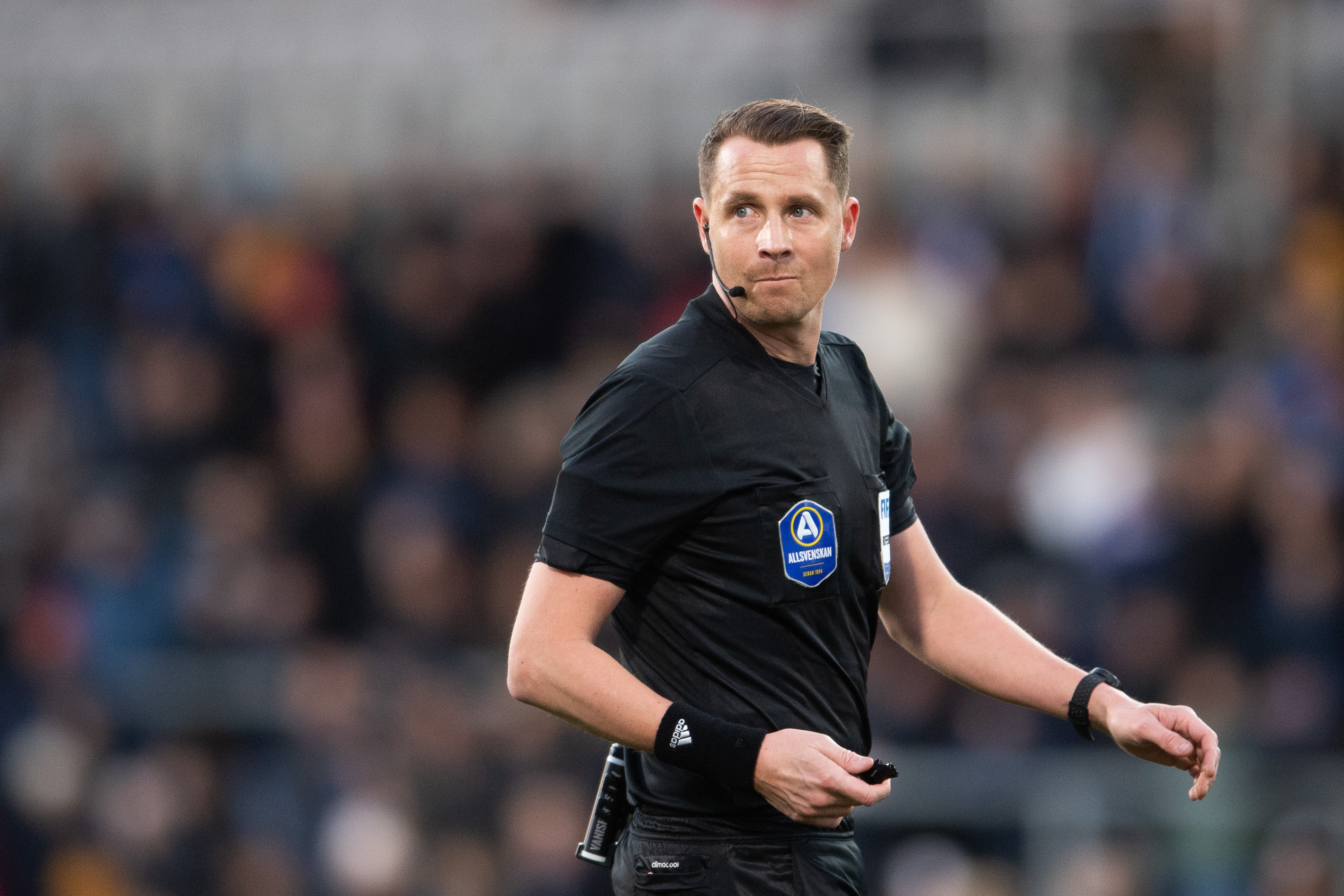
Andreas Ekberg
– Did you talk to any idol down there or any referee you met that you look up to maybe?
– First I just want to mention Andreas Ekberg. He is so good at building bridges and creating new contacts and relationships. Many also look up to him because they have met him in other contexts that UEFA has had. They already know Andreas a little more. But what we heard a lot down there was that you are young, new here, keep your feet on the ground, your time will come and just keep on fighting! I spent some time with the Turkish team with Cüneyt Cakir in the lead and took in as much as I could. We also had a match with Björn Kuipers where Andreas Ekberg acted as fourth referee and I as extra assistant referee for the Dutch team. We got the chance to hang out with them for three days. Björn came up with fantastic tips and ideas that I take with me. All the referees who are there and who have been there many times are there to help us too, it was a nice feeling and instructive.
– When we are still talking about some role models in refereeing then. Did you have a role model when you grew up, as a referee?
– I followed Anders Frisk when watching the Champions League, which went on TV3 when i were younger. He was a big profile from Sweden then. Then it is inevitable to talk about Collina who was a role model for me with his body language and how he handled matches. Then I also want to mention one person I looked up to when I was growing up and it is Zivojim "Chiko" Milenkovic who also made me start refereeing. I had a lot of contact with him and still do. I usually talk to him about some situations from matches. I will never forget a match that ended 18-0 and the next day when I came to school I told him that I felt sorry for the team that lost and I would have liked to have blown a penalty to them, so that they could score a goal. Then he said clearly "you should never do that. A match is a match and nothing else. You should not invent free kicks or feel sorry for a team". It was nice to have that dialogue with him, which has made me not be colored in any direction regardless of what it says in the match.
– You referee mostly as an Assistant referee. But what can a normal week and month look like for Mehmet Culum?
– A normal week and month, I train every day. Definitely training every day! I do a lot of interval training. If I do not referee a week, I train 7 times at least and then 4 of the 7 sessions consist of interval training. I have to keep up when a striker attacks and keep up with them. A normal week with matches, I referee the Allsvenskan and have a travel day there, then I also help on a local level sometimes and referee division 2 or 3, but then it is close to where I live, so that I can spend time with my family as well. Then I help at district level, but I usually take late, very late, rebids and then take matches in, for example, division 4. We have a shortage of referees and I can jump in and take a match from time to time. I get a lot for free in those matches because both the players and the leaders know who I am at those levels.
– And it must be very instructive for the referees who referee together with you, at the district level. Is that right?
– Absolutely. Now two weeks ago I jumped in and refereed a match in Malmö and took that match at half past one in the day and the match started at seven. The two Assistants I had I called immediately and informed that it is I who will be the referee. They usually have a review of the match maybe 60-75 minutes before the match, but I then chose to meet 90 minutes before the match. We talked for sure for 45 minutes, before we had to change. But we talked for a long time and they had lots of questions for me and I think it is important to be able to be available to them there and then. I have headsets and signal flags at home but I never carry them with me when I referee division 2, 3 or 4. I try to remind my referees about body language and with headsets at that level it is easy to lose it. When I go as an assistant in the Allsvenskan or internationally, I sell my decisions through my body language. A tip for referees out there who use headsets too often and perhaps at the lower levels is to do matches without it sometimes. Because it is easy to lose and forget the body language, which is one of the most important things we referees have. Use headsets and signal flags, because they are good help for you as a referee, but do not forget the body language! The best referees in the world have a clear body language and this is useful at all levels.
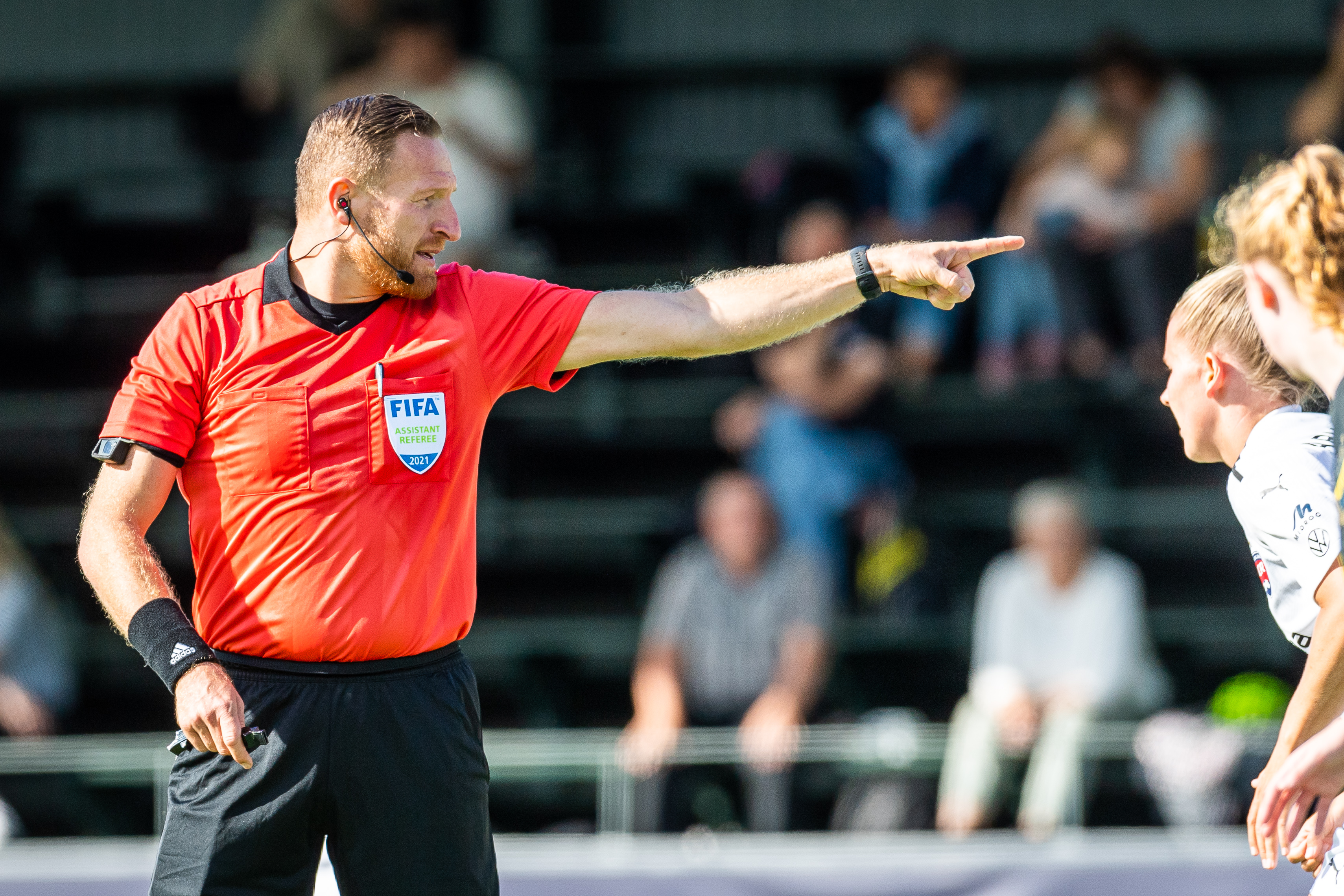
– When you referee as head referee then. Does Andreas Ekberg look at you and give you feedback?
– It has happened, haha. I refereed a match a few years ago in division 3, when he actually came and watched the match. Then we talked a little shit and he likes to push a little with me. He and I if any are good friends. We are best friends and spend a lot of time together privately. His children are in the same age as my children, so not only he and I spend time together, but the whole families together. When he comes and looks at me, I know he's there to push me a little ... haha. And then I usually joke that every now and then he is part of my Team, not me who is part of his Team and so the trashtalk goes back and forth. We have really good dialogue, important to add. If we are to add Stefan Hallberg to this as well, we are all three tight. Stefan was part of our team before but quitted before this year. We have been to a lot of international matches together and become super tight not only as referees but as people and friends. Andreas and Stefan are really like my other family. We are also good at talking about other things and socializing without just talking about refereeing things. I usually say that in order to succeed as a referee, you have to have a distance to it. For me, the refereeing comes as number three. The family is number one, job is number two and the refereeing is number three.
– The team feeling is important. Do you have tips for referees at lower levels who will referee important matches, perhaps even with an assistant you have never met?
– The match review is important. That you have a regular match review so that you explain and go through how you want the assistant to act in specific situations. It is important to have a GOOD review before the match. Let it take 5 minutes or let it take 25 minutes. The review itself should not be about what we are bad at or what we need to work on more but should be about you forming this team feeling. For example, go through a situation that could arise and present it like this "if this were to occur, can you help me think and look extra at this". That you are pedagogical before the match to build up the team feeling. Then it is also super important that we referees do not talk shit about each other. If you referee four or five matches a week at the lower levels with different referees, it will be easy to talk about other decisions where you think differently. In the referee's locker room, it may be easy to talk to an assistant or one of the two colleagues ... the other person may perceive it differently. Do not talk about our own colleagues.
– If we focus a little more on assistant referees and that role then. What is important to think about as an assistant referee?
– I would say the safety net and building bridges. When I talk about safety nets, I'm talking about an assistant having maybe one or two chances to save the team during a match. That when such a situation arises, one must be engaged and focused to take a penalty or assess whether the free kick was outside the penalty area. It can also be something behind the back of the referee but does not always have to be a warning or an offense, it can be a player who wants to provoke and then we can see it and prevent something more from happening. Then I would also say building bridges, where I walk a lot of assistant one on the bench side. Then it applies not only to the bench side but both with players and leaders who are close to you, as assistants, that you talk to them with respect. They ask you things and you answer back and that you tell them and then address them with respect. They should get the feeling that we treat them well. They have the right to be angry sometimes, but then we still have to be able to take them down a notch - that we simply build bridges with players and leaders.
– Now we are in overtime on this interview, but we will continue Mehmet, right? Really interesting.
– Go!
– Offside, we would like to discuss a bit as well. You often hear "Damn how long he waits with the flag" and then perhaps especially internationally. Can you tell us a little more about that?
– Now we are talking about two different things. Internationally, we have VAR and we do not have that in Sweden. UEFA and FIFA are very clear about one thing and that is: If it is a goal chance and I as an assistant referee thinking that it is offside, I say directly in the headset that it is offside. Then the referee and also the VAR room get the information that I as an assistant have assessed the situation as offside. Then in the next position when there is a goal chance and he or she scores, I pull up the flag and it then turns out that the player is onside. You may have one or two such situations where you immediately think it is offside and you then look at the replay that it is onside. That is why UEFA and FIFA do not want to flag to go up to early and kill the systems that are now available as help for us and the game. The problem if we pull the flag early and the referee blows for offside, then we have killed the entire VAR system, therefore it may internationally seem that we are waiting with the flag to long sometimes.
– The difference in Sweden is that we do not have VAR here. Then it's a lot about fingertip feeling. The players miss goal chances and even we referees miss and do mistakes. I am 110% prepared to raise my hand and admit on a couple of offsides during the year that I have been wrong, when you have seen replay pictures a couple of times. But here and there I think it was offside or onside. We are not talking meters, we are talking centimeters. That is the disadvantage when we do not have VAR here in Sweden.
– You who referee both internationally and in Sweden. Is not it difficult to referee one week with VAR and others without it
– Yes. For example, we refereed the cup final here in Sweden a couple of weeks ago, then we have another Allsvenskan match and the weekend after that we referee the Nations League and then we have to go into the "VAR mode". In Sweden I have to make the assessment quickly and raise the flag, while internationally I have to take the assessment, wait with the flag even longer and then raise the flag. Internationally I then say Delay, Delay on offside while here in Sweden we only say Offside in the headset. It is also a change, but again important to go through in the match review where we remind each other and go through. But waiting with the flag has been learned over the years and it spreads a little down in the series systems as well.
– Finally then. You have refereed the European Championships, or you as a Team have done so, and lots of other international matches. Do you or the team have a next goal?
– If you ask me personally, it is that Andreas Ekberg will be promoted to the Elite Group, ie the highest internationally. He belongs to group 1 now and we get challenges and difficult matches internationally and have had it for a long time now. Absolutely, that's the next goal for him and us.
– Thanks. Many thanks for this Mehmet and good luck!