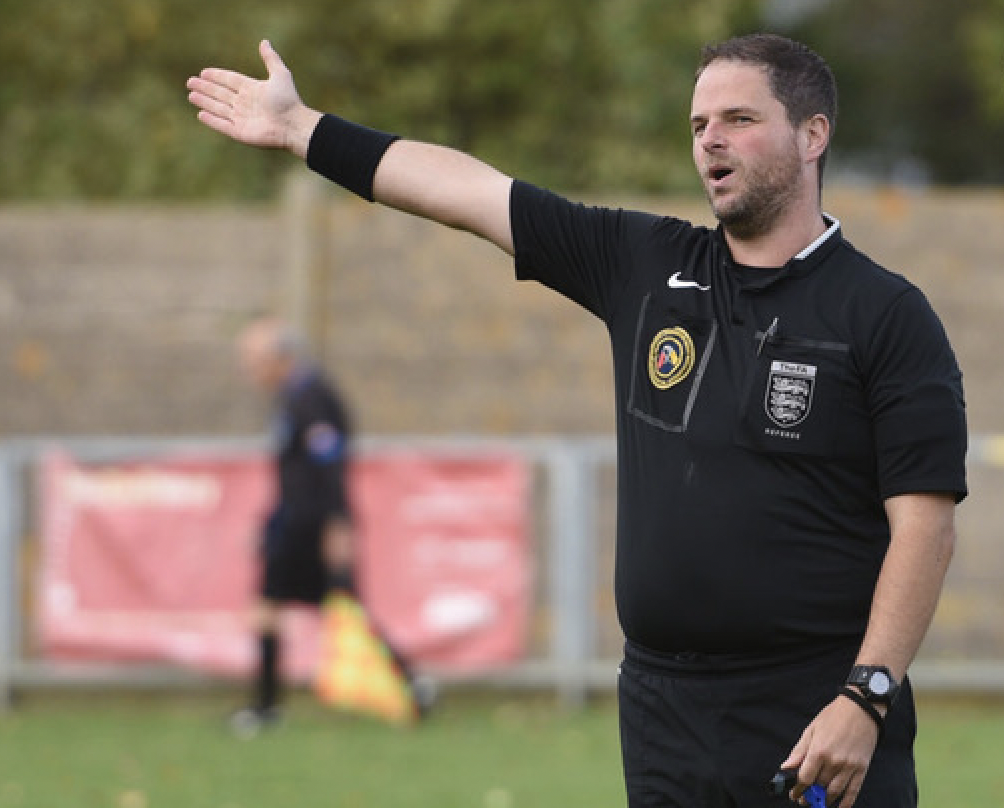
Interview: Owen Radley amputee football referee 2022-12-08
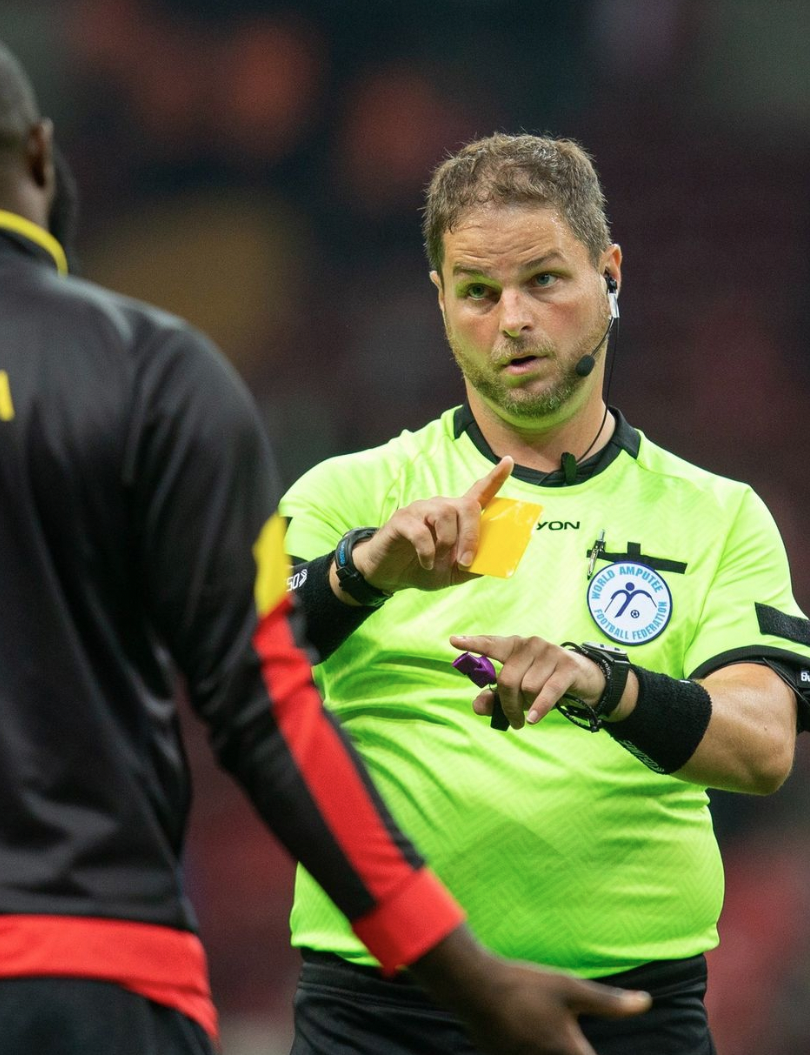
Interview with Owen Radley who just refereed the World Cup in amputee football
Amputee football is growing all over the world and we at Spintso got a chance to work together with English referees, who referee amputee football. Owen Radley is refereeing mainstream football also, but in amputee football he just where the referee in the World Cup Final for amputee football. Owen finds refereeing a bit relaxing and stress relief, find out more by reading the full interview below.
– Almost a month ago you refereed the Amputee World Cup Final in Istanbul, Turkiye against Angola, in front of 25 000 people. Can you describe the feeling before that match?
– It was an incredible experience, really. In amputee football we don’t get our appointments very far in advance. Normally it is in the evening before, but this final was appointed at the same day. And all the 24 teams played for their world rankings and knock-out stage from the first day until the last. We knew that some of the referees can’t do the final because they’re the same nation as the competing teams. The other sixteen referees were nervous and we talked a lot of who it’s going to be, and which game we might get. It was a strange last day without knowing if you be the referee or not. But ok, the same day as the final in the morning we had a meeting and everyone thought we are going to know then, but that didn’t happen. Around that meeting you could sense the tension. Later five referees were called-in to a meeting and they told us we will do the final. Great feeling but I also had a match as technical, like fourth in mainstream football, official so no time to rest.
– Ok, interesting. And then when you are getting ready for that match then. Can you quick take us through that day?
– The final was in Istanbul and the traffic there is just crazy. Getting to the Stadium is a challenge and we had to go with of the team busses, because they had police escort the whole way. At the Stadium the third-place match was ongoing when we arrived. Compared to a normal match we could not go out there and find our bearings and get a feeling for the pitch you know. That stadium was just phenomenal, it’s the home for Galatasaray team called the Nef Stadium. And then at the warm-up the crowd was loud and you could certainly feel that there was a final. One section were whistling at us referees, and you could not really know if it was in a negative or positive way. When we paused a little we all just felt… wow, and breathed out a little extra you know. It was quite something – what a feeling and experience.
– And then when you went out for the match at that Stadium Owen, do you remember the feelings and thoughts that went through your head?
– Yeah, it was so great. But it’s hard to describe of course. It went through my head that this is being broadcasted on television with a lot of people watching and here it’s over 25 000 people. And also all my colleagues are watching. They have been working so hard too, to get here and they will review all of my decisions out there on the pitch. It was of course one of the best experiences that I ever had, but it went by so, so fast. It’s one of those things where you are concentrating and focusing on every little thing and the whole match just flies by in a way. I remember very clearly afterwards when I was out in the stadium around the closing ceremony, just standing alone in a corner trying to take it all in.
– You went through the game with your colleagues and referee team after the game also? Something specific you talked about?
– Yeah, we did, and the Head Referee of Amputee football was there. The Head Referee was more interested in if we were ok and talked with us about how we felt and so on, nice to know that we had back-up. During the game I gave a penalty in the second half, a penalty for handball. It was from the crutch, which is handball in amputee football if you make yourself bigger or it is intentional. Just like football with the rules around handball, with the crutch it is almost the same. My colleague and I, we were operating a two referee system similar to Futsal, talked with each other in the Spintso headsets. I was somewhere around the goal line, looking back in and he was behind in the field looking ahead. We both blew the whistle and saw the handball, and he quickly gave a free-kick for it being outside the area. I was the lead official, and I had the last decision in those situations. I have more experience in amputee football, but he is a FIFA assistant referee in mainstream football, he knows what's he is doing. A really hard decision to take, and also in the final. I saw that he gave the freekick, and I walked in as convincing as possible and said penalty and waved my hand down to the penalty spot. He looked at me and said yes and also nodded and agreed. The team who got the penalty against them certainly did not agree, and in the end they lost 4–1, and it was 1–1 and early in the second half when I awarded the penalty. That is one of those thing as a referee when you go off the field you are only thinking “oh my god, I hope I got that one right”. That’s a massive, massive decision and also when I overruled my colleague. After the game when we sat in the locker room he said “thank you, thank you I got the line wrong”. I watched this one quickly and yes, I got It right.
– Handball with crutch in amputee football, is it easier of harder compared to mainstream football? That specific law of the game.
– For sure harder. There is so much more you must consider in amputee football around the crutches. I was a commentator on TV for one of the semifinals because of the unique rules we have in the sport. They wanted a referee who could talk about the rules and laws of the game. In the semifinal things happened, and I had to explain these laws around specific things, like handball. Which was good, because then it happened in the final. One other thing that also happened was a goal kick, that is not allowed to go over the halfway line, it must touch or bounce before. In mainstream football handball is hard, but getting clearer and clearer every year, I think. In amputee football we really have to consider more things than just making yourself bigger, if it’s deliberate. They do have to use the crutch to stand, and they need to be on the ground a lot of the time… Are you making yourself bigger if you just standing with the crutch? And we have to take quick decisions around these calls. One other thing is that the goalkeeper is not allowed to go outside the penalty area at all, because he or she has two legs.
– You are also refereeing mainstream football. Is Amputee football more challenging maybe, as a referee?
– Yes, it is. I feel when I go back and referee mainstream football after doing amputee football, I am so much more aware of the small things and my recognition of fouls is so much better. My position and movement are terrible because you move totally differently in amputee football. Most of the time you are looking at things from the side, compared to if you are a referee in mainstream football in the centre. We must work much more with angles and the small differences in positioning two or three meters in one or the other way. We have almost zero risk of being hit by the football, because we are one side each and almost all the match on the line, like Futsal referees more or less. But I think the hardest thing for me as a referee in amputee football is to take away any feelings you might have off sympathy for people. I know this may sound pretty callous. When I first started refereeing amputee football I found that people around this sport are inspiring. They absolutely are. When you hear their stories of how they come to lose their limb or something they have been born with, and also the life they have been going through – it is so inspiring. And then on top of that you see their skill, how athletic they are and the passion they have. When you start refereeing amputee football it is easier to see these things more than actually referee the game of football. The people and players in amputee football hate that, they absolutely hate it. In England we have around eight teams, they travel a lot, and their fixtures really matter, they are passionate about it. A new mindset for me was when I heard from the Head referee in European amputee football, Ian Clarke a good friend of mine now, and he said “amputee footballers are just footballers with one less leg. Just referee the game. Talk to players, coaches and others after the game or around the game and get inspired and make new contacts you know, but for 50 minutes of game we need to focus on refereeing the game". That is maybe the hardest thing for us referees to do, not only in amputee football but in all sports. Just referee the game. We can have issues with us from work, at home, had a bad day or whatever but have to focus on refereeing the game.
– Interesting Owen. Let’s talk more about you, Owen. Can you tell us more about who you are?
– I am married and I have two children. Two boys, the oldest in nearly thirteen and the youngest is five. I live at the south coast of England and close to the city of Brighton. I do not support Brighton & Hove Albion, my son does, but I am a West Ham supporter as my father’s family come from there. I was a police officer for 21 years, and I left the police in the beginning of this year. Now I work for a government department within pensions compliance.
– And how did you become a football referee?
– I was a referee when I was sixteen, and I have always been interested in football and played in school. I wasn’t great as a footballer. My friends called me “Statto”, because I always knew the laws of the games and things around matches. I wanted to be involved in the game and I tried it out and did some matches during college. After that I stopped refereeing for a long time because of my job and other things. Then a friend of mine, her cousin had died of a rare form of cancer. Her family set up a charity in his honour, and they ran a tournament every year. She asked me to come and referee but mainly to organise the referees and things like that. So, I said no problem. But I found out that I have to be registered at my county FA. I contacted them and they said that I have to re-do everything like exam, safeguarding course and more. I was surrounded by 16-17 years old guys and I was around in my 30s. But I qualified and passed, essentially just to help out with this charity tournament. And in this, the refereeing, I found out that I absolutely loved it. For me, refereeing, is stress relief. It’s sounds crazy, I know but hear me out. For two hours I do not have to worry about anything. When I was a police officer it was a stressful job and it followed me back home and in my thoughts. I saw some pretty horrific things. But for the two hours that I am a referee I focus on the pitch, the 22 players, blow the whistle, what’s in front of me, running, fresh air – and it’s just great for me. It’s great for me in terms of that mental well-being as well as exercise and other things. My youngest son is disabled, life in general, job… so I have a lot of things around me still without being a police officer. Some of the skills as a police officer you can definitely add on when you are refereeing, but if you referee with a smile on your face and you are enjoying it – people will see so many more positive things around that. At a match I had when I got back from the World Cup a player came to me and asked, “do you normally referee higher than this?” and I said no. He turned back at me and said “well, you seem so happy”. And I answered him “I do this, because I love it and enjoy it”.
– Thanks for the interview and you time Owen. Good luck and keep up the good work!