
Interview with Elite Ice Hockey Referee Robin Jacobsson 2026-02-10
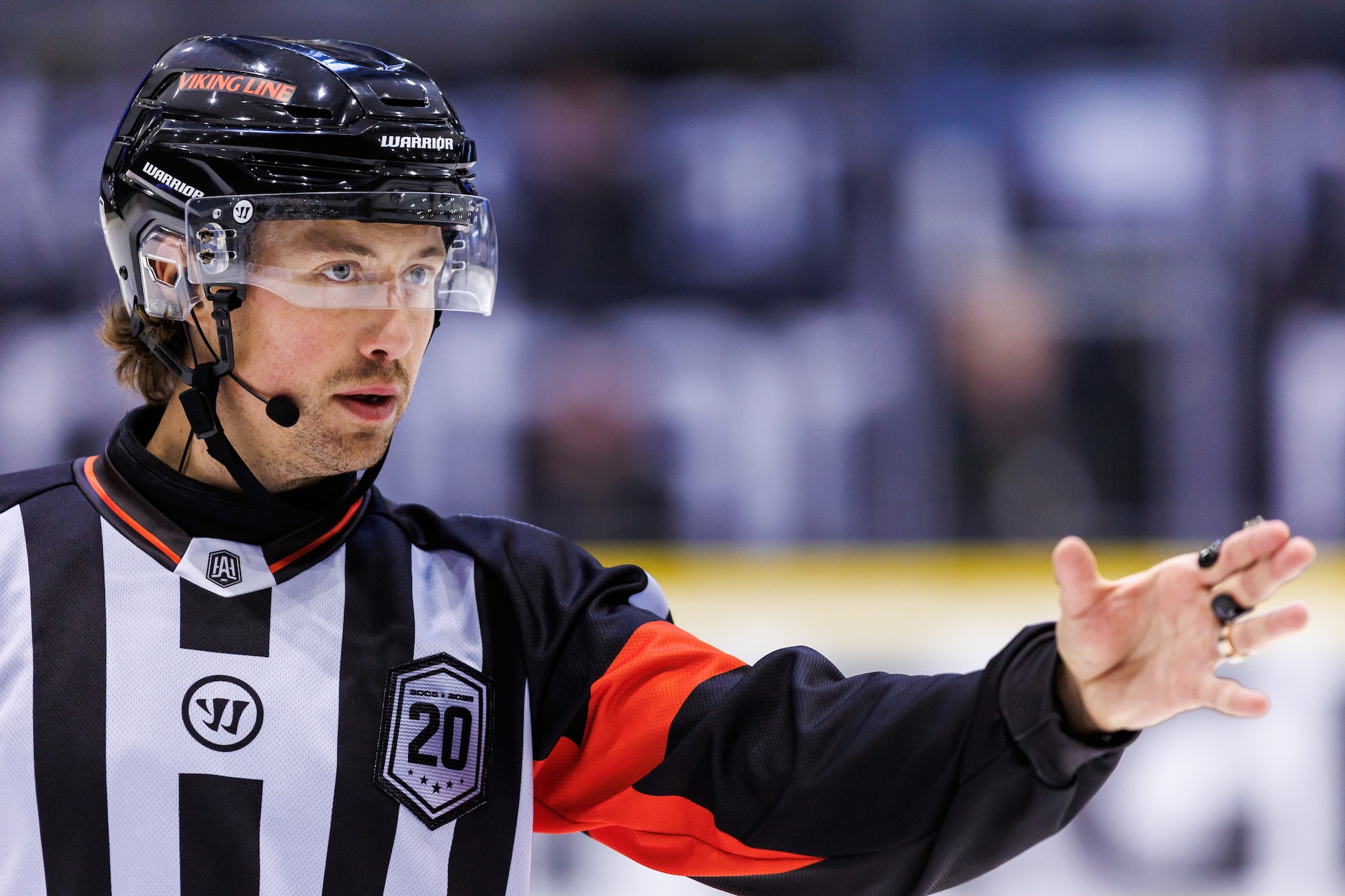
Interview with Ice Hockey Referee Robin Jacobsson
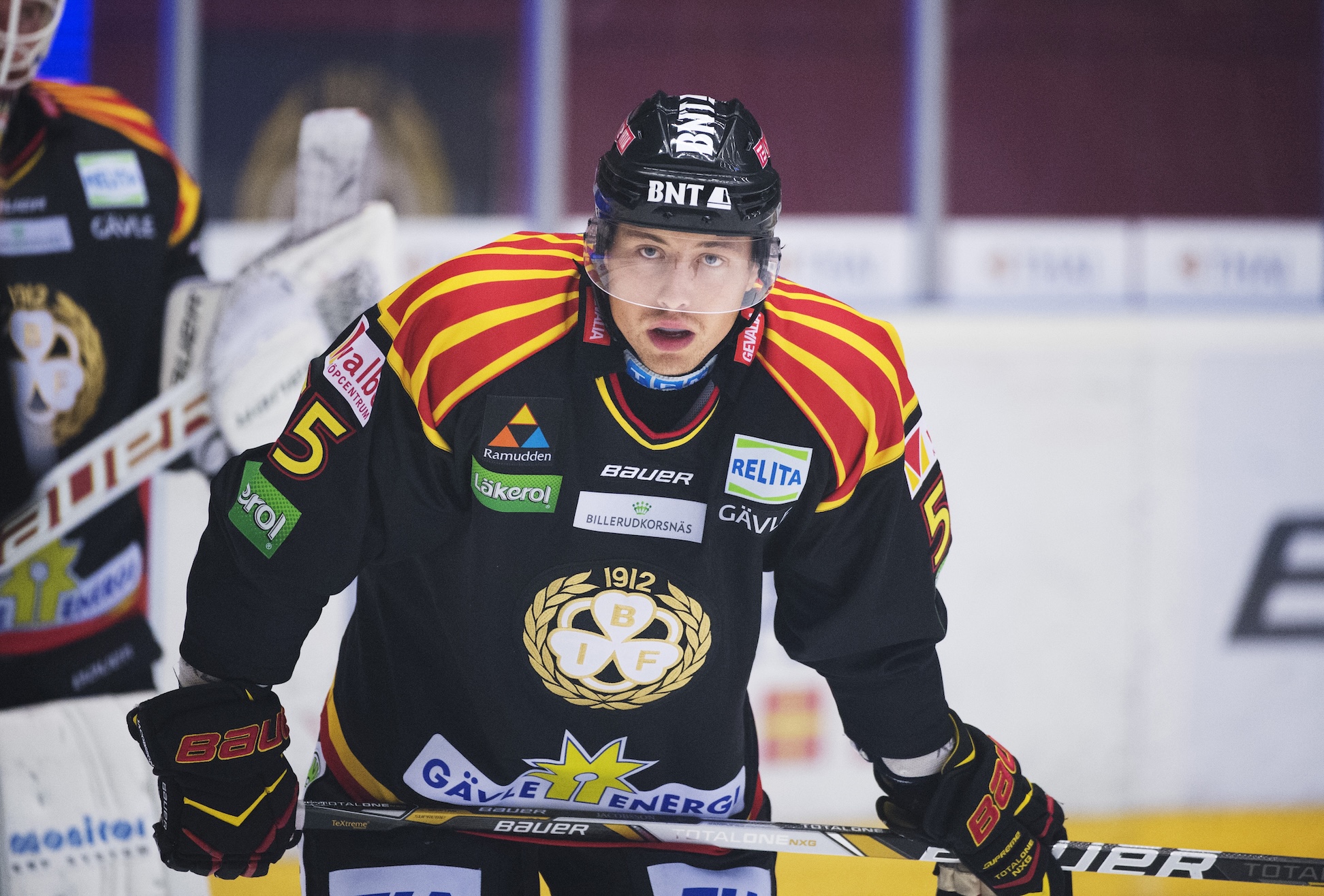
From a life as an elite player to a daily life as an elite referee. Robin Jacobsson has traded his stick for a whistle, but the pace, intensity and love of hockey remain the same. With a playing background in HockeyAllsvenskan, SHL, Liiga, EBEL and teams such as Luleå, Brynäs, Leksand, KooKoo in Finland and Graz99ers in Austria, Robin has become an excellent skater with experience in the heat of competition. He admits that he sometimes still feels a bit lost without a stick in his hand. The journey from player to referee has been fast, but never alone. Robin is humble about the road that has brought him to where he is today and clear about his gratitude to all referee colleagues who have supported, guided, and welcomed him into a new role. Here he speaks openly about the transition, his motivation, and why he loves leading games.
– Hi Robin. You went from being an elite player in the SHL to starting to referee ice hockey. How did that decision come about?
– The idea developed, in some way, but also when I knew the kids were going to start school and all that, I didn’t want to move around anymore. We’ve been in Finland and Austria when I played there, back when the kids were little. It was kind of time to come home and settle down. I moved away by myself at age 12 from Gotland, so I’ve done that thing of leaving childhood friends to go somewhere new. I don’t regret any of it, but I want to give my kids a calmer life without lots of moves. Here we are and here we live. As that mindset grew, I also began to think about what I could do after my playing career. I stopped playing when I was 35. At that time I absolutely could have considered being a coach, but that still means being ready to relocate. I have a cousin who has been a referee in HockeyAllsvenskan and I also played some SHL-Masters, fun golf competitions, and met referees through that. Chewed the fat with them a bit and the interest grew stronger. The initial commitment isn’t super big — you can start refereeing and trying it relatively fast and feel whether the role suits you or not. Then there was also an elite recruitment project for us players to transition to refereeing. I have enjoyed it from day one as a referee. It’s not the same as playing, but it’s pretty close!
– When you played before, you won games, lost games, won a duel as the tough player you were. But how does that compare to winning a game and celebrating it, versus leading a game? Do those feelings remain?
– Oh yes! It’s us as a referee team that win games. It’s virtually just the four of us giving each other credit. We don’t get applause at work anymore like I used to get as a player. But if we as a team can step off the ice and still feel that it was safe and fair, then we celebrate it as a win. That similar feeling stays with me. It’s different of course, but you get to be part of the heat and you work as a team and feel that you succeed with it — that we were in sync and worked as a unit. We had control, it was fair and it was safe — then it’s definitely like a win.
– Was there anything from your playing career that you had to change or “unlearn”?
– I would say the toughest transition was, and still is, resetting your head all the time. There are new decisions to make constantly as a referee, even if play is stopped you still have responsibilities like managing line changes, keeping the pace of the game, and things like that. As a player you could feel like you had a bad shift and then you could change, think a bit, rest a bit and then go again. But as a referee you always have new decisions to make. Maybe that’s why many goalies also become good referees? That role is maybe a bit closer to a referee than an outfield player role really is. That mindset shift was a big deal. And also maintaining a level throughout the whole game so you feel like you keep control. If you make a call in the first period you have set the bar somewhere, and to be able to be consistent and make it so players understand and know the level. That’s a direction we work on in the whole referee group, but it’s a challenge to keep a steady level, because every game is unique. You can never go into it thinking “now I’ll just fight my way through this game” as a referee, like you might as a player. All of that is a challenge, but maybe a bit extra so for me when I began refereeing, going from thinking like a player to becoming more comfortable in the referee mindset.
– Robin, you have amazing skating technique, of course with your background. But you’ve twisted it and your body language speaks very referee-like in your skating. Have you worked a lot on that?
– So, it’s still strange to skate without a stick. It’s something different. You can’t skate exactly the same. If you pretended you had a stick in your hand, you’d probably skate very weird as a referee. The skating technique itself — no, I haven’t changed it in any special way. As an old defenseman you’re used to transitions or opening up. Then I’ve challenged myself quite a bit in positioning as a referee. You can work differently with that. Maybe I’m the one who works more with it, now that I think about it, if people think my skating technique is good. I might move around more. And then the body language, together with the skating technique, is probably that I try to be efficient in my skating to see more and see better. How I get there isn’t something I’ve thought a ton about. Interesting. I’m also quite tall and have heard that I should take advantage of my height in the referee role. As a referee maybe you should and should skate more upright to have body language that looks confident. Instead of hunching over like you do as a player to get that last 2% extra in your skating. No, interesting indeed. Not something I’ve reflected super closely on myself.
– If you were to give tips to younger referees who haven’t been elite players but are starting to referee early, about skating technique — how can they develop their skating?
– The easy answer is to skate a lot. But not just skate, you have to challenge yourself, push yourself and try things you don’t know all the time. I understand that’s hard in a game because you might not always afford to challenge yourself as a referee. As a player you train at this in a completely different way, and several times per week. As a referee, it’s almost exclusively games where you skate — and in the game you of course have to hold your positioning and focus on that. So yes, the easy answer is to get on the ice often, train and challenge yourself. Then you can find moments in games where you can push, do it. There’s skating forward and backward, but it’s maybe in those tight situations where you quickly need the distance you want to the play. Not just feel you’re in the way and have to escape without getting away efficiently. When you end up in those tight spots it gets hard and you referee a bit of hockey — it doesn’t work.
– In those tight situations referees often end up. What’s the trick in such a situation? Is it to never really stand completely still?
– Well, for many people that might be the answer — yes, never really stand still. But I work quite a bit with tempo changes and I’m not at all afraid to stand still for a moment. Because I still have enough good push in my legs to be explosive on starts. That’s also something to train! Many people train maybe too much on distances, doing cycling and long runs outside. But working on frequency and push is less common. That’s a tip from me to train more! Jumps, quick feet and challenging edge control on the skates. Being very comfortable with turning and changing direction. If you get this and then can read the play, you more often get good distance to the play and avoid those tight areas where you just have to escape — we want to avoid that as much as possible. It’s tough, but if you’ve trained explosiveness you’ll get away from it quickly. To take it a step further — the higher your pulse, the worse your decisions become. A person with a high pulse makes worse decisions. If you can stay calmer with a lower pulse, it’s an advantage.
– What is the toughest situation or position to make a decision from in a game? From your role as the head referee.
– Right in those transitions in the zones where we need to switch responsibilities but also when the puck is near the goal. At my level we have help from video and don’t have to be 110% sure every time the puck is over the line, even if we obviously want that control. But when the puck is there, there are also many players and then we want an assessment of the goal and also assessments of any possible fouls. That often becomes a challenge for teamwork in the referee team. It has to click and work with switching tasks and zones, doing it often. Another example can be the far corner. If I’m down in the zone as the head referee and the puck ends up in the far corner, that zone isn’t just one referee’s responsibility — it becomes a transition. Then you have to read whether play is heading back toward me — then that’s favorable for me because they’re coming toward me. Or if they’re skating away from me with their backs, then it’s instead favorable that R2, or D2, referee two, takes over the play. It’s a shared zone we call it, and it also signals to the linesmen to help take responsibility for the rest of the areas
– What did you as a player think characterized a good referee, and what do you think today characterizes a good referee?
– Big question. Hmmm… as a player I appreciated someone who… well, let’s put it like this. You have to build trust capital as a referee. I liked referees who were confident people who could be humble yet with good authority. That’s my simple answer. A referee who is the opposite — players are met with raised voices, shouting, threats with penalties and poor communication — then it becomes a disaster. I’ve experienced that as a player, absolutely, and now as a referee I try to be humble in the task and have a sense of subtlety. To understand the game and have the whole picture. You don’t want to end up as a referee where players feel you only see the other situation and not the one that started it all, speaking of the whole picture.
– If a player, or a coach for example during an intermission wants to talk to you as a referee about something — do you always do that?
– There’s no straight answer to that question. But here it’s about having the whole picture of it. Does he just want to complain, or ask some questions? Is he angry, calm, am I angry or calm, and most importantly, is there something I can give him? In our game leadership and how we want it to look going forward. Maybe I can listen to him if something is said, give a good answer and then he can listen to me and I can give a takeaway to get a continued good match picture or a better match picture. Arguing about a 2-minute penalty won’t get us very far. We won’t change our decision anyway. Here it’s of course also case by case. What I think we should do, which is part of our task, is to be helpful, to explain. If they haven’t understood why, we gladly explain our perspective on it, but standing and arguing for it or what’s right or wrong won’t get us very far. Then there’s also an advantage to letting someone “blow off steam” a little and take it out on me for a moment, and maybe I just listen. But no, rarely beneficial to skate up to someone who’s heated — you can’t get anything out of such a conversation. If they want to talk about something small after a period, maybe instead we can suggest discussing it before the next period. Then that person has had time to calm down a bit. And maybe if we want to send a coach something to his team before the next period. As said, there’s no straight answer to that question but once again you have to be humble as a referee and be able to read a situation and remain calm.
– Is there something you wish that the audience, players, coaches and commentators knew a bit more about in a referee’s everyday life?
– That’s also a big question. But maybe it would be to actually understand how little you gain by arguing with referees. Because a referee is there because he or she also loves hockey. The goal for a referee is that it should be safe and fair. If it goes wrong, it isn’t unique. Players, people, the audience and all of us make mistakes. If it goes wrong, it’s not to be mean. When I talk to younger players, at a hockey school for example, we talk about ethics and morals. But to take an example — we stand as teammates, parents or coaches and yell at our goalie when they’ve let in a goal to get them to be better. That doesn’t work. Standing and yelling at a referee and thinking that now it will get better is a really interesting thought, but it doesn’t work. It doesn’t pay off at all to argue with a referee. Then we’ve taken it to quite a low level. Another thing that actually seems to surprise people is that we referees, or I as a referee, don’t decide how I want to referee hockey. It’s not me who decides that. Just as a player has his team’s directives, or a coach’s directives, I have my leadership’s directives. If we want to referee, we referee according to the rulebook and the directives we receive. It’s our best possibility to standardize ourselves and get as little difference as possible from match to match and from referee to referee. That can fail quite a lot compared to the audience or others thinking poorly of the person making the call. There’s a big knowledge gap there.
– Do you have any goals as a referee?
– It’s so hard to set a goal based on statistics or such, or what any one person wants to see in a match. I want to continue having this as a profession — that is number one for me. It’s fun to referee, and of course it’s extra fun to referee top games but they’re not always the most fun in the end. Every game lives its own life. We say this — yes, I absolutely want to try refereeing in the SHL. That would be really awesome. However, I enjoy it here — in the workplace I have today. I enjoy my colleagues and everything around it. To say I would enjoy it in the SHL would be naive, because it’s a different workplace than what I have today. But absolutely, I’m eager to try it. But here and now I just want to continue refereeing because I love it. I enjoy it, it’s my number one goal to continue feeling that way.
– What makes you continue refereeing, why do you love it and why do you do it?
– Because I love hockey and that’s the life I’ve lived. I’ve never gone to a game and thought it was hard or boring to be there. It’s crazy fun and just the refereeing and the way we do it with four referees, with new colleagues every game, is teamwork at its finest. There’s preparation to be done and an adrenaline rush when refereeing a match. It’s also a great backdrop in a league like HockeyAllsvenskan — it’s professional and at a serious level that I want. I think it’s damn fun to be out on the ice. Then I have some kind of fairness gene in me — I want a match to be fair. You can also dig into details as a referee, that was something I liked as a player as well. For me as an old defenseman, it wasn’t always about scoring goals but how I can disrupt the opponent — small details that helped me and the team. There are also a lot of small details to work with as a referee. I like that. There also arises a great dynamic between us old traditionally trained players who are now referees together with a trained referee. There a great exchange arises that’s inspiring.