
Interview: Tess Olofsson elite referee 2021-10-15
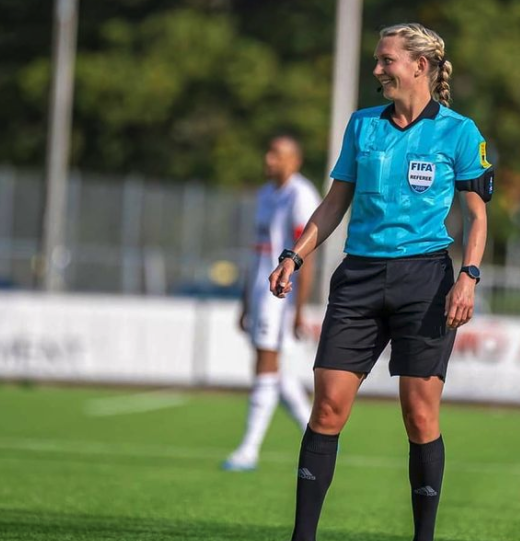
Foto: Said Ali
Interview with Superettan, Allsvenskan and international referee Tess Olofsson
We got an interview with Tess Olofsson who is historic in Sweden when she became the first woman to be a referee in the Superettan (second highest league for men in Sweden). Tess has also been awarded referee of the year in Sweden four times. She is passionate about football and breathes football. We wondered what her next goal in the refereeing career is. Read the interview below!
– Hi Tess. How are you?
– Hey! Everything is just fine here.
– Who are you and tell a little about yourself?
– I am 33 years old and live in Piteå, have moved north in Sweden with my family. I have my side of family in southern Sweden and the other half of the family is up here in northern Sweden. We thought it was better to live closer to that half in northern Sweden, because I travel so much. I am married and have a small child of almost 6 months. Otherwise and in my spare time, there is a lot of football, of course, not just refereeing. I watch a lot of football and it is a big interest for me.
– Great interest in football for the families as well? Both southern and northern Sweden?
– My twin sister and I played football, and when we were growing up, our parents were coaches. Ever since we were little, everyone was involved there in one way or another, except my little brother. Then my sister and I played in a team in Skåne, later I played in the girls' national team and my sister made couple of appearances in the Damallsvenskan, the highest league in Sweden. Later she stopped playing football and became a physiotherapist and I continued to play until I was 20 years old and moved to Härjedalen. Before that and there I had some injuries as a player and then invested entirely in becoming an referee instead and a bit as a coach on the side. I also made a couple of innings in division 4 and 5 men, when I was the goalkeeping coach for that team. The goalkeeper injured himself and then I was available. It was fun! But in other words, from the beginning I have had good support and help from the family. My parents were always there and watched and drove, which is very grateful especially when you are younger.
– That was a bit about you and football. We want to know even more about you! Tell us more about jobs and education.
– I entered the police academy in 2009 in Växjö and was a referee a little on the side, at the same time. Now that I am a referee, but even then, the police profession has been a solid foundation to stand on and a certain security for me. Already in high school when I both played and refereed, the thoughts were already then, and a dream, of becoming a police officer. I started studying for police quite early and finished my education when I was 23 years old. Then I moved back to Malmö and Skåne and there was an investment in becoming a referee for a higher level. When I was a police, I went up in Damallsvenskan (highest ladies league in Sweden). I realized that when I asked for time off from work to referee a Champions League quarter-final that I had to choose which of these two jobs I should go for. I felt that shit, I do not want to end up in a situation where I have to say no to international matches. Then I started working at the traffic unit within the police, which is easier to combine. In 2018, I went down and then started working 50% as a police officer.
– Okay. Now we know a little who Tess is, both as a player, referee and police. But how did this whole journey as a referee begin then? Back the band a bit.
– Exactly, it was in my mother club IFK Klagshamn where I started playing when I was 5 years old. When I was 13, I refereed my first match in a Cup. Our coaches and leaders asked us if we could referee, because it was a big cup and many referees were needed. I was probably the only one who continued with refereeing after the cup. It was a very tough climate, I refereed boys 11 years and I was 13 years old myself. It was swear words, gender words and everything. I heard I was blind and more. I felt right after the match that this cant break me. I wanted to show that I could referee! That's how it all started and decided when I was 20 years old to reach the top as a referee.
– What was toughest on your way up to elite referee in Sweden.
– I refereed boys first and then men in lower and then slightly higher divisions. I then experienced that it was easier to get matches as an assistant referee, than as a head referee. When I then went to the next levels, I realized the requirements and what it took to reach the top as a referee. That's where my motivation came from, I think. But from the beginning it was difficult to get the matches I wanted and experienced some problems with the appointments. However, I got good help from the beginning! If I remember correctly, it was Jörgen Berggren, who is active in Skånes Fotbollsförbund, and my mother club IFK Klagshamn who helped me a lot in the beginning. Maria Persson and Ingrid Jonsson, who were instructors in my step training, also contributed to my motivation and willingness to the matches at the highest level.
– Nice with a football club that pushes for referees! Have you thanked IFK Klagshamn?
– Yes, I was there and held an education and I have thanked both Yvonne and Anette who worked at the office during my first years as a referee. Then I have my dad to thank too, who has also been involved in that club. That club was and is the village's trademark. Then I have two referee clubs to thank, Härjedalen/Jämtland and Växjö which I was in both at the same time when I studied to be a police officer. They had golden people who took advantage of the referees and helped with my development.
– What is the best thing about being a football referee?
– Hard to choose one thing! The team feeling with the referee colleagues and those around them together with the feeling of going out on the field is important to me. And in all of this, you meet so many people who are so wonderful, the audience, the arena managers, the players, and the leaders/coaches. We all belong to the football family and that community is important, there is something special about it. Then by being a referee you get even more challenge with your own development and sometimes as a referee you may be a little alone, especially in the beginning. When I have matches in Team, we lose and win matches, just like the teams and players actually do.
– Do you take the "job" home with you? Do situations spin in your head for a long time or do you let go of things quickly?
– It has been some hard and sleepless nights. Have you made a less good match and you have made a wrong decision, or missed a penalty for example. You can dwell on such a thing a bit, but that situation must definitely not follow until the next match. You must have released it and processed it to make the next match better.
– How do you process such a thing then?
– I analyze such a match with, for example, where I was in the situation. Could I have placed myself differently or might I have been wrong in my assessment of the situation itself. Then I talk a lot with my better half here at home and with the referee colleagues.
– There is a lot of talk about a referee’s work environment and a bad climate. What do you think?
– A lot is written about and around matches and the referee's effort gets more space. Sometimes it is desired that when it is written, that those who write have more background information. That it does not just say that it is a wrong decision. What was the decision based on or is it even a wrong decision. It is always a question of interpretation and if it is, for example, a handball, which someone thinks is wrong, then maybe now and then with our interpretation we do not think so. In our world we know that a handball that comes from the own foot up on the hand is not a punishable handball, while someone else thinks otherwise and then writes a different opinion. In those situations, I wish you had more facts before writing anything.
– How do you elite referees and the Swedish Football Association help out with for example getting more referees?
– We on the girls' side have started a project to recruit more but above all also retain referees. It is important that we go in and find reasons why a referee quits. Is it for motivation, interest or this tough climate. We try to help each other in every way we can and we at the elite level often go down in the divisions to see what we can help with. It can, for example, be mentors and try to lift the referees in some way. I could think for myself when I was new, who should I turn to? That you have someone to talk to and air the match with or a specific situation.
– What is your biggest match you as a referee have been a part of?
– It's the Champions League, ladies, a quarter final that I am most proud of. The biggest match that was cool to referee was the international match Iceland - Brazil. It was powerful when the volcano was run all over the stands and good crowd atmosphere.
– How did it feel to be historic in Sweden? To be the first female referee to refereeing in Superettan, the next highest league in Sweden for men.
– It was really fun and unreal. It was difficult to "touch" from the beginning. Because I realize it's never happened before. What I most hope for is that it will inspire others to take the step.
– You have become the referee of the year in Sweden. Not just once but four times. What's the next goal in your refereeing career?
– It is to be a referee in the Allsvenskan in Sweden, the men's highest league in Sweden. Then on the women's side, it is to take me on to the European Championships and the World Cup internationally. It is difficult to rank these for me, but the European Championships are probably the closest and then comes Allsvenskan.
– Thank you Tess and good luck!
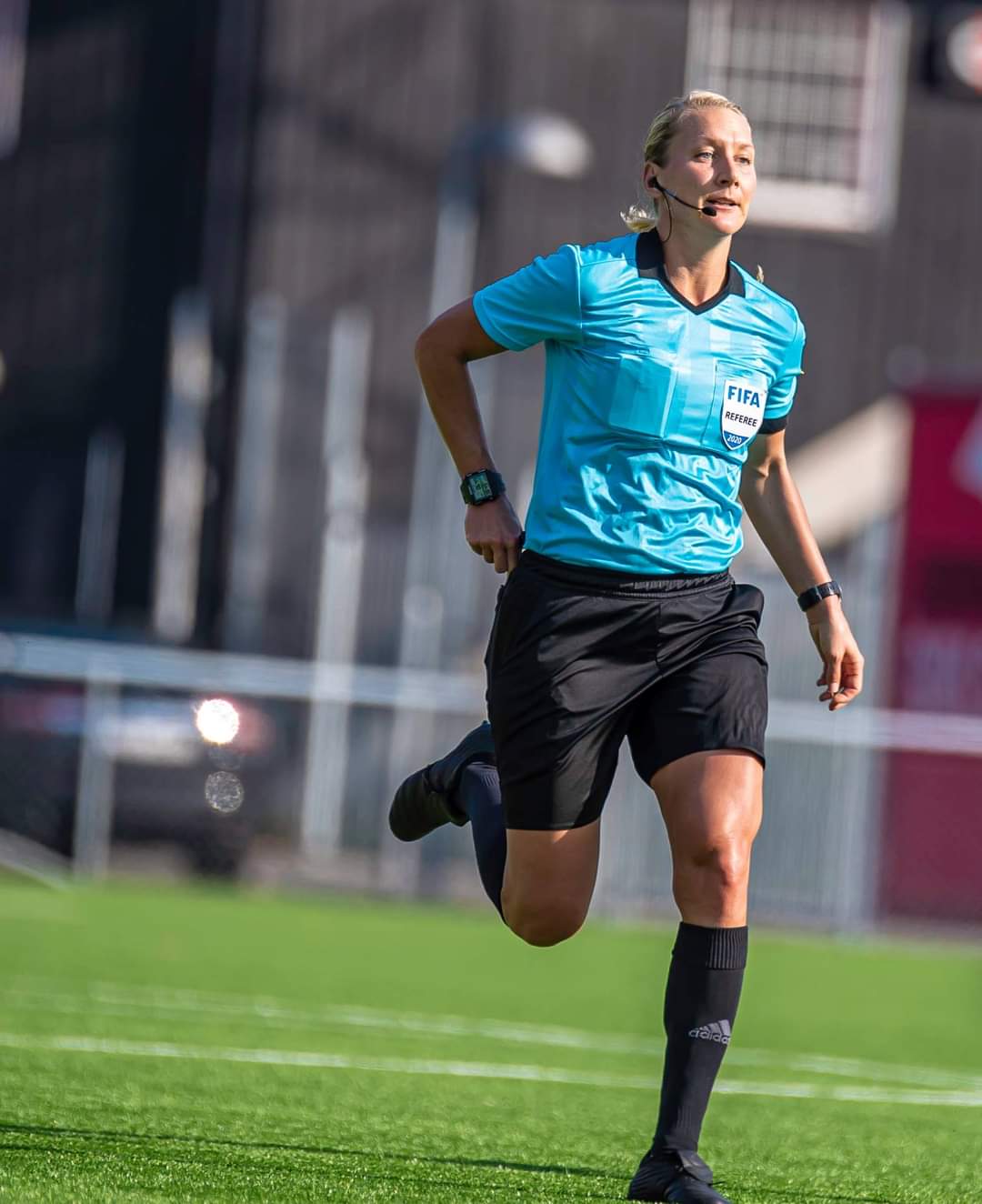
Foto: Said Ali