
Interview: Selma Griberg elite referee football 2023-09-17
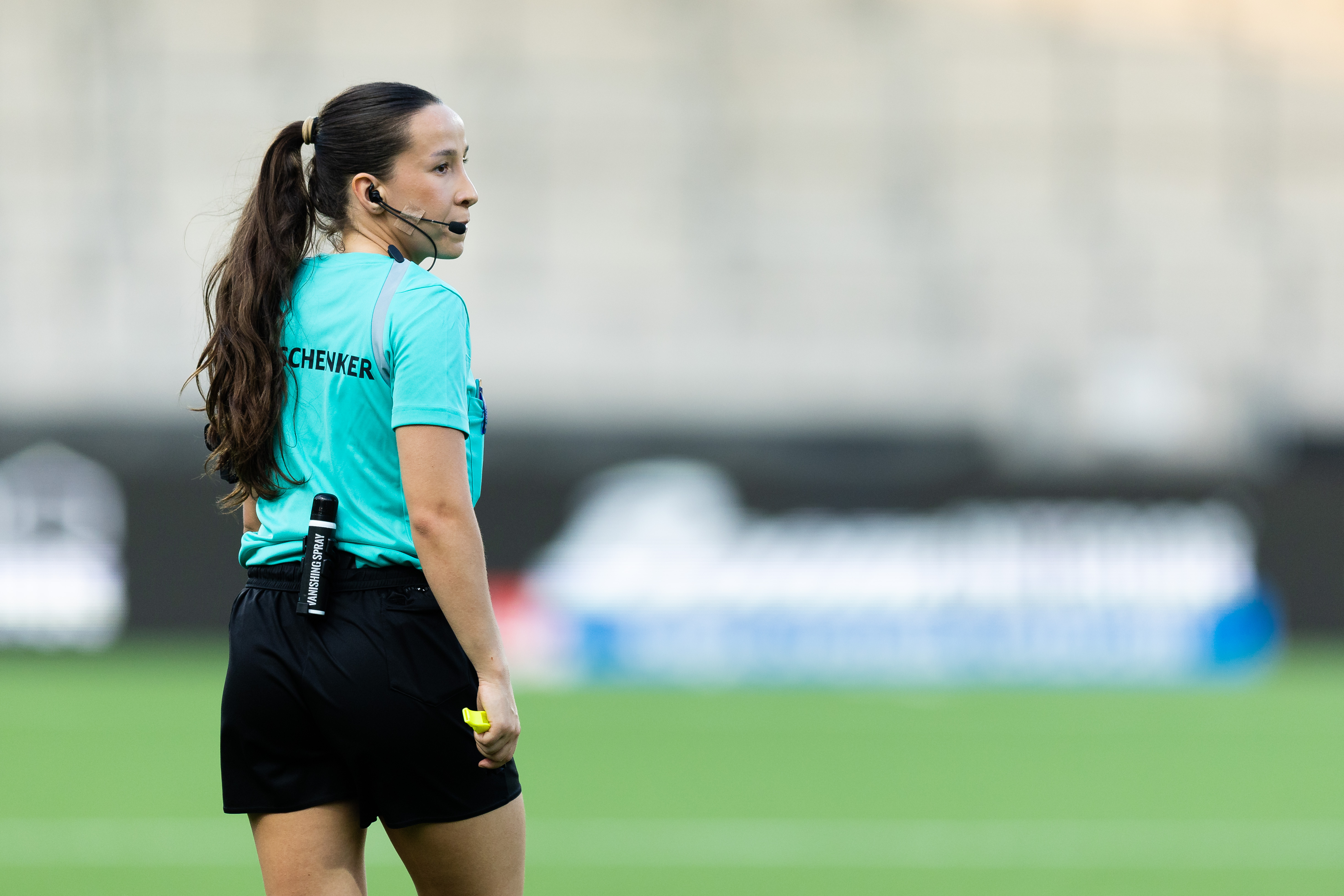
Interview with Selma Griberg, Elite Women's Soccer Referee
Football referee and elite women's soccer official Selma Griberg shares her journey from refereeing youth matches to officiating in the top women's league in Sweden, Damallsvenskan. Read the full interview below to discover how football and refereeing have shaped her as a person and match official.
– Hello Selma, how are you today?
– Today, I just received approval on an exam, and it was actually the last one I had left before graduation. So, it feels really good. I'm completely done with university, and now I can just focus on the job that has already started. It's very nice not to have to think about retaking exams or anything like that.
– Ah, that's great. Congratulations! What did you study?
– Business economics, and now I've actually started working at an IT consulting company with many offices here in Sweden. So, I work as a business systems consultant there.
– I thought we would start with a common question, although it can be challenging. Why do you officiate soccer?
– Well, the short answer is simply because it's fun, and it's something I've come to love. For me, it feels like being a part of something greater in everyday life and being a part of the game even though it's a different role. It's incredibly exciting to be involved. You can have really thrilling matches, and you're there, being a part of this game. It's a very, very powerful feeling. Another significant reason I continue to officiate soccer is that every day I still feel that it gives something back to me. When I was younger, it provided me with certain qualities. Now, as an adult, it has given me different qualities that I can constantly apply in my personal life or my professional life. That aspect, that soccer keeps giving you something all the time, is something I feel doesn't disappear. So, that's why I officiate football.
– Do you believe that officiating soccer helps you develop your personal qualities?
– Yes, I would say that. I feel that officiating football contributes to my personal growth. It pushes me to reach my full potential and strive to be the best version of myself. It's a constant endeavor to improve and have an upward trajectory in personal development. So, I definitely think that refereeing has significantly developed me. I can genuinely say that I wouldn't be the person I am today without the role of a referee.
– Everyone has their own style on the field. How would you describe yourself as a referee, what is Selma like as a referee on the field?
– Well, first, I would say that I try to be fairly adaptable. Of course, I am consistent, but no two matches are the same. So, sometimes, I might officiate a match where I really stay in the background, away from situations, and avoid unnecessary discussions, making sure no unnecessary controversies arise. Other times, I can be calm and speak gently. Then, there are moments when I can be assertive and make it clear that something is not acceptable.
Overall, I think I often act with authority, and I try to use my body language effectively. I'm a relatively short person, so I have to be mindful of using body language correctly. It's especially important for me to stand tall and exude authority; I would say that's a consistent aspect of all my matches. I would also say that I'm a referee who covers a lot of ground. I enjoy running!
It's hard to give a definitive answer because it really depends on the match I'm officiating. There might be a match where someone notices me, and you might hear that I had a tough and fair style. In another match, it might seem like I hardly made an appearance.
– Indeed. If we rewind a bit now, do you remember when you started as a referee? How was it?
– I remember it very clearly, actually. I was around 12, and the whole reason I even thought about becoming a soccer referee was because my older brother, who is three years older than me, was a referee. He would always come home on weekends with a handful of cash, and I thought it was such a cool thing to see him out there in the middle of a soccer field. I distinctly remember thinking, "I want to be a soccer referee too," because back then, I really wanted to be like my older brother. I looked up to him a lot, especially at that time. I really wanted to be like him, and that's where I got the whole idea. I practically begged my mom and told her that I had to start refereeing soccer. She checked into it, but I was still a bit too young. My soccer club said that there would be a referee course next year that I could join.
Somewhere around there, I started refereeing 5-a-side matches with the little kids, and I remember the first 2 or 3 matches where I received very positive feedback. Parents would come up and say, "...you're so educational, and if they make a throw-in mistake, you explain why and let them redo it." That's when I had the thought, "Wow, maybe I'm actually pretty good at this." So, I decided to continue.
– What did it look like after you started refereeing 9-a-side matches, especially within the district?
– Yes, it continued to 7-a-side, and I remember when I got my first 9-a-side match. I did many weird 9-a-side matches because I wasn't used to the new pace that came with it. I remember one time the coaches yelled. I thought they were yelling at me, so I blew the whistle, and everyone thought the match was over. Strange things happened because you start feeling more pressure while still being inexperienced. But in the end, most people understood that you were a child or a youth, and it went well.
In another match, I only ran on one side of the field, all along the touchline, for the entire match. I also had an observer who said, "Yes, you can move around the whole field...". I thought that was what the diagonal meant, just running back and forth on the left sideline. So, I ran like that for a whole match, haha. So, there were some strange things I did, but that was back when I was still learning. Later, things developed for me, and I grew. I took referee courses, and then I finally got to referee 11-a-side matches.
I remember that I refereed a lot in one particular club. I also remember that at the end of the year, they called me from the club and said I had done almost 80% of all our matches. I was there every weekend, and I could referee four matches in one day. It could be U15, and after that, I had U14, and after that, I had something else. I was refereeing like crazy. I probably took all the matches from all the referees there, I think.
So, there were a lot of matches. Then, I got help from the referee club in Karlstad quite a bit, and you became a part of something. It was a very fun thing. You did things with other referee colleagues outside of the field, like paintball or going on trips and doing other fun activities. That's when you started feeling like part of a family and that there was a support system. It was also a way to start meeting others because you didn't have assistants on the field in the beginning. Through the referee club, you made a lot of friends, and it became something that made it enjoyable to continue because you got a completely new sense of community.
There are also some matches where you've been exposed as a referee. I remember one time with very angry parents who rushed onto the field. The coach of the home team had to stand there, pushing people away with his hand. On the way home, I had to take the back roads to avoid passing any parents or so. But I was lucky because, first of all, my dad was always there watching every match. He thought it was the most enjoyable thing, but also, our federation handled it very well. I knew there was always someone to call, thanks to the camaraderie in the referee club. You knew there were others, and you knew that if something happened, you knew who to contact. That's what made it very easy for me to continue, even though I faced a lot of resistance. I felt I had a very, very good support system.
– Have you refereed any youth matches recently?
– No, not a proper kids' or youth match, but I did have a match at the Dalecarlia Cup. It was a lot of fun, and it was also enjoyable to be there and inspire the referees. It wasn't a 5-a-side match, though. I'll have to wish for that next time; it would have been so much fun.
– What level of matches are you refereeing these days?
– Right now, I'm going to have my third trial match in the Damallsvenskan. I'm still classified in the Elitettan, but I'm doing my trial matches, and on the men's side, I'm currently refereeing Division 3 matches and working my way up, solely as the main referee. It's worth mentioning that I was also an assistant referee in the Damallsvenskan for four or five years, then I chose to switch.
I was mostly the main referee when I was young, and then I received a request if I wanted to undergo a new advanced training, specializing as an assistant referee for the Damallsvenskan. Of course, I didn't turn down an opportunity like that. Even though it's as an assistant, I felt that I should gather that experience. I stayed in that role a little longer than I initially thought, I became very comfortable with it. I liked that role. I found it very enjoyable to be an assistant referee. Later, we needed to go through level 3 to become main referees because they changed the system. That's when I started thinking, and I realized it meant I would also have to referee as the main official. I talked to my coach a bit, and he was very encouraging about me switching roles, saying it was something I should do. I felt it was a bit of a "now or never" moment. I took that step, and I don't regret it for a second. I'm really happy that I did it! It's not very common for this to happen. This experience has helped me understand the relationship between assistant referees and main referees, especially in terms of what they expect from each other. It's important and valuable.
– What do your preparations look like before a match? Do you have any fun routines you follow before a match or in the days leading up to it?
– No, I don't have any super nerdy routines, but one thing I always try to do is prepare mentally. It involves visualizing positive outcomes. I visualize myself, whether it's on the field, how I run, which teams I'll be dealing with, how they typically line up, how they usually play... I do a lot of mental visualization, always focusing on the positive outcome. I find that it helps a lot.
I usually have a pasta meal before a match to replenish my carbohydrates, and I'm also very particular about getting to bed early the day before a match. I'm an energetic person with a lot going on all the time, so I make sure to rest whenever I can. For example, I'm always the one who falls asleep in the car on the way to a match if I'm not the one driving. But it's kind of a way for me to recharge in some sense.
– What do you look forward to the most when it's game time?
– I always joke that I just want to skip the warm-up and get the match started. I think what I look forward to the most is just blowing that first whistle, because then it's game on, and I'm in the zone for 90 minutes. But you should never skip the warm-up; it's crucial for the match to go well. I'm just really excited about the game.
– What about the equipment you take with you to the matches? I've seen in some pictures that you, as a referee, have two whistles.
– One thing is that I always have to have my pen in the right side of my right pocket. If you put it too centrally in the breast pockets, it looks really odd in profile... maybe a nerdy thing but it's important to me.
And then there's the matter of having two whistles, but I only use one. I never use the yellow one, but it's just there for grip. I always hold the one and blow the other. Besides that, I make sure my shoes are tied really tightly. I have to feel like my shoes are really hugging my feet; it makes me feel faster. It's a bit of a strange thing, haha.
– We've touched on this a bit earlier, but can you tell me about some things that have developed you as a person through soccer and refereeing?
– First and foremost, I would say staying calm under pressure. Another significant aspect is leadership. I would say that because of my role as a referee, I've often found myself in a natural leadership position. It can be about starting a new job with a new group and almost naturally finding a leadership role for the team, of course without stepping on anyone's toes. It has also developed my ability to take initiative easily, and I'm not afraid to be put in a challenging position.
– Now, onto my final question. If you were to meet someone who's considering becoming a referee, what would you say to that person?
– Refereeing soccer is a no-brainer; you won't regret it. I'm very confident in that, even if it only lasts for a short period, you will gain so many positive experiences. With the right support system, I should add, because some external factors you unfortunately can't control. Hopefully, in the best-case scenario, there are only positive things, and it's the absolute best summer job and job you can have in the world. You get exercise, you get paid, you meet friends, you go on trips, you have fun, and you challenge yourself in the best way possible! 100%, it's a no-brainer. Of course, you should start refereeing soccer.
– Thank you, Selma, and good luck!
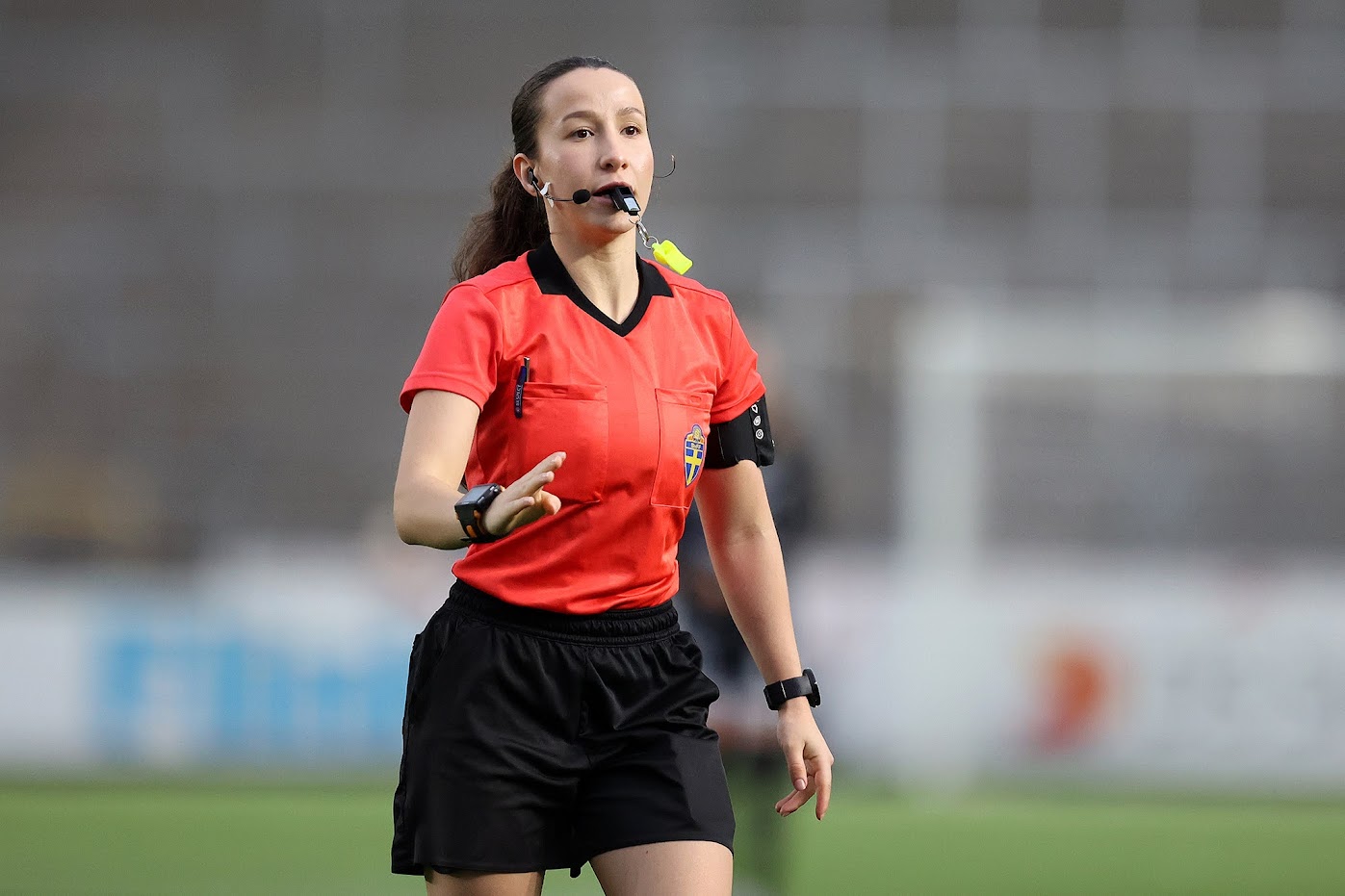
Photo: @fotbollslasse på Instagram