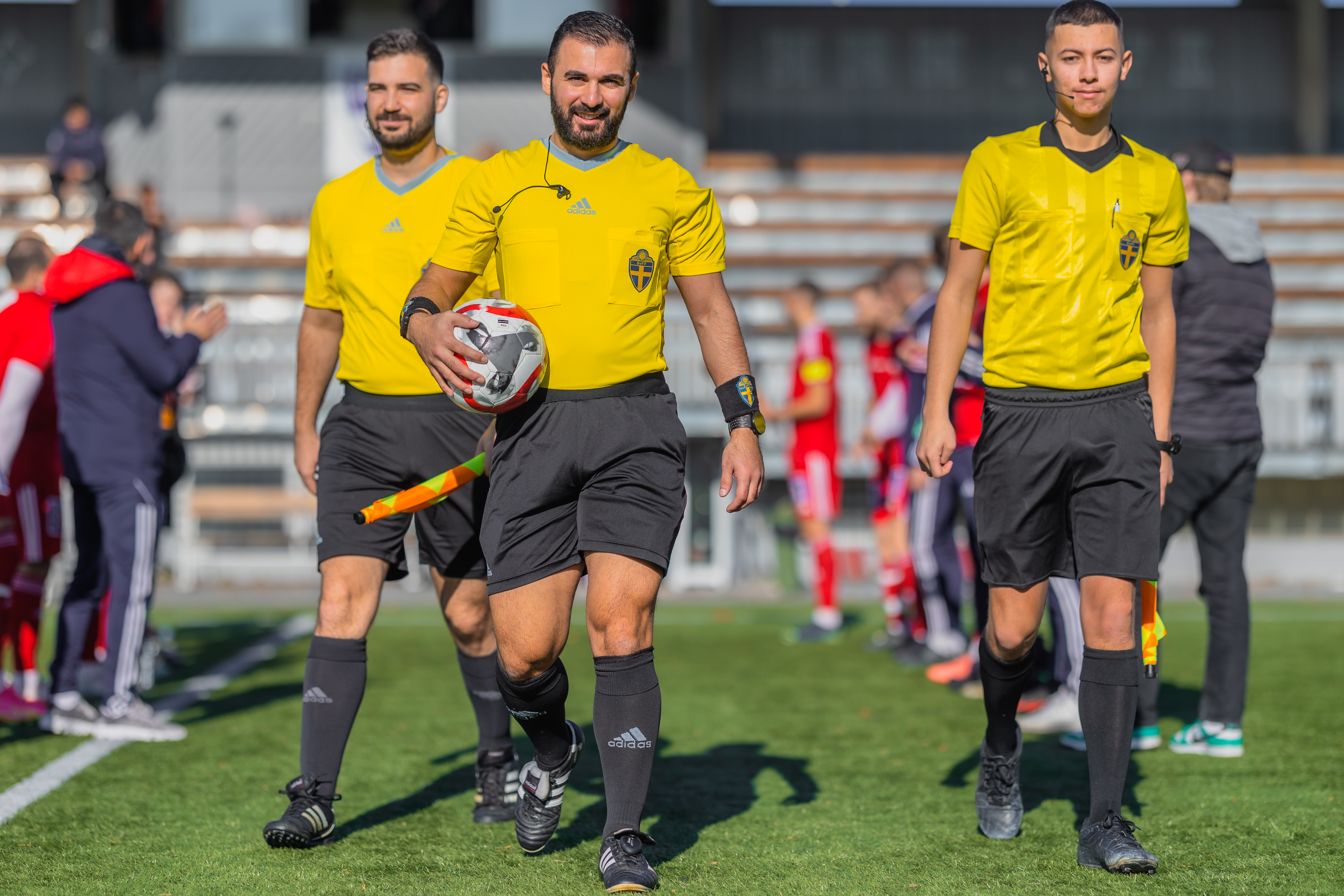
Interview: Roni Mezo Futsal and Football Referee 2023-11-17
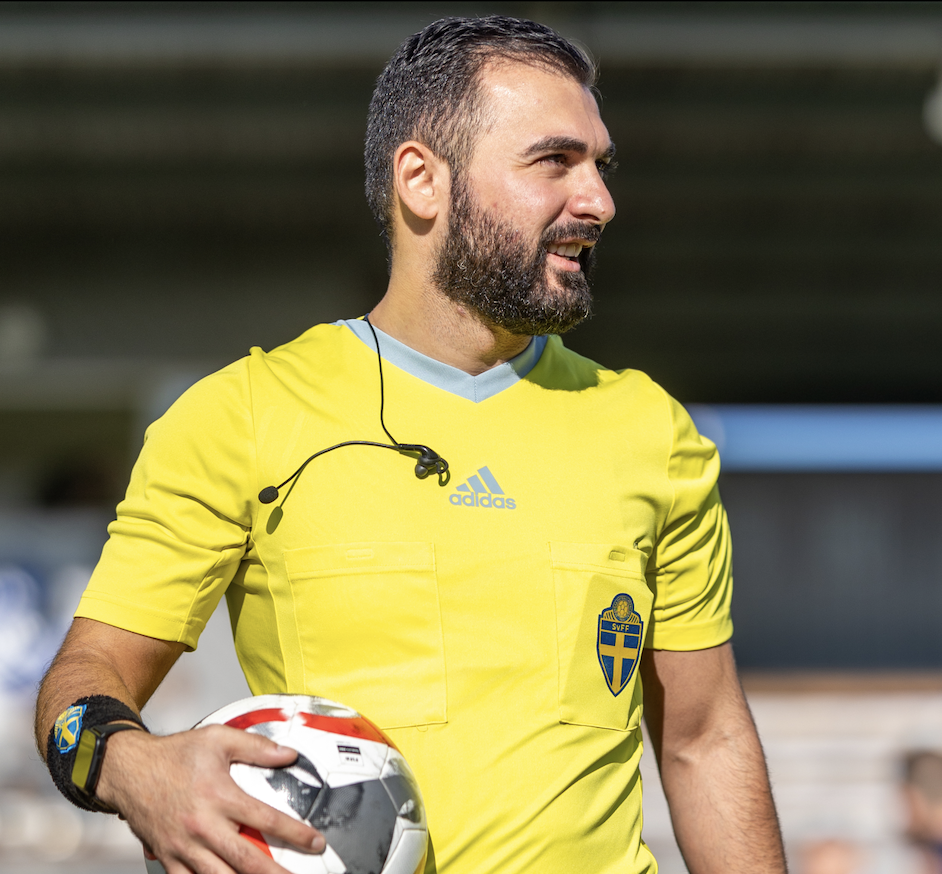
Interview with Roni Mezo
We had a conversation with Roni Mezo, who is a football referee and also officiates futsal during the winter. Roni is a loyal user of Spintso's referee watches, but as in all our interviews with referees, we wanted to uncover that extra something about this referee and person. Roni mentions with a smile that football is a part of his daily life and has been for over 10 years. Read his reflections below on the role of a referee.
– Hello Roni. Can you start by telling us how long you've been refereeing football?
– I started as a club referee when I was 14 years old, if I remember correctly. The whole team had to undergo referee training, which was conducted by Margonia Påhlsson, Sweden's first female referee in the Allsvenskan, and she was very inspiring! Now I am 28 years old. In between, there were some breaks. I started refereeing when I lived in Vetlanda. Then I moved to Linköping, and there was a break for a season. After high school, I moved to Gothenburg and had a short pause. I usually say that it was after that short break that it started "for real". In Linköping, I was also a district referee, mostly assisting in Division 5 and officiating youth matches. In Gothenburg, I have been refereeing for nine seasons now, and it has always been a part of my daily life in some way.
– Like some other referees, do you officiate another sport in winter?
– Yes, I officiate futsal during the winter. I started there quite recently, I think it's the third season there.
– Besides football, which is a significant part of your daily life, how does your other daily life look?
– Right now, I'm studying to become a social worker. I previously studied sports science and worked at a company that focuses on children and sports, where I was responsible for concepts. I have now completed four semesters and have three semesters left. I am also active in the Gothenburg Referee Club and am currently the treasurer there.
– What divisions and matches do you officiate now?
– In futsal, I officiate in Division One. In football, I referee in Division Three and assist in Division One. Right now, I referee 50/50 as the main referee and assistant. It's my first year in Division Three, and I completed Step 3 last year. This year has mostly been about experiencing regional football, so we'll see what the future holds.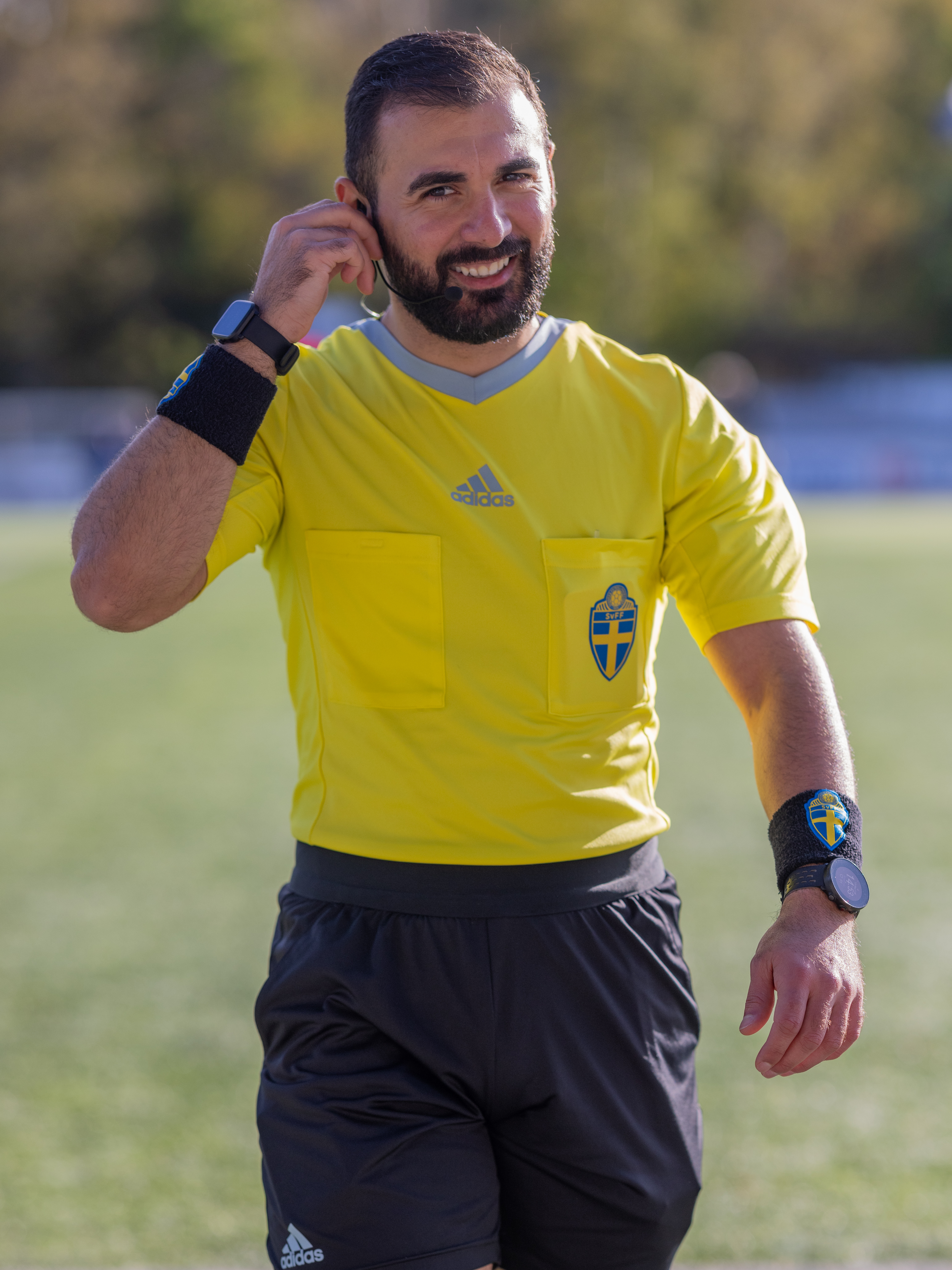
– Referees often talk about differences between officiating in different divisions. In your opinion, where are the biggest challenges for a referee?
– In terms of football and refereeing, I believe the biggest difference is between Division Two and Division One in Sweden. This is just my personal reflection. Firstly, you go from four regions and six series to one region and two series. You also notice that teams have a harder time staying in Division One. It costs more for them, and there are generally more expenses and fewer incomes for the teams. Refereeing-wise, Step 4 is required there, and it becomes a competition among four regions for those spots. Another smaller gap is between Division Four and Division Three. There's an attitude difference in players when they come under the Swedish Football Association's jurisdiction in Division Three. Again, just my own reflection. Referees can be a bit stricter on things around, and players also need to pay attention to details such as the same color of undergarments and so on. As a referee, you can lean a bit more towards the sharp details, and these things around might help with the match atmosphere as well. There is more order and discipline.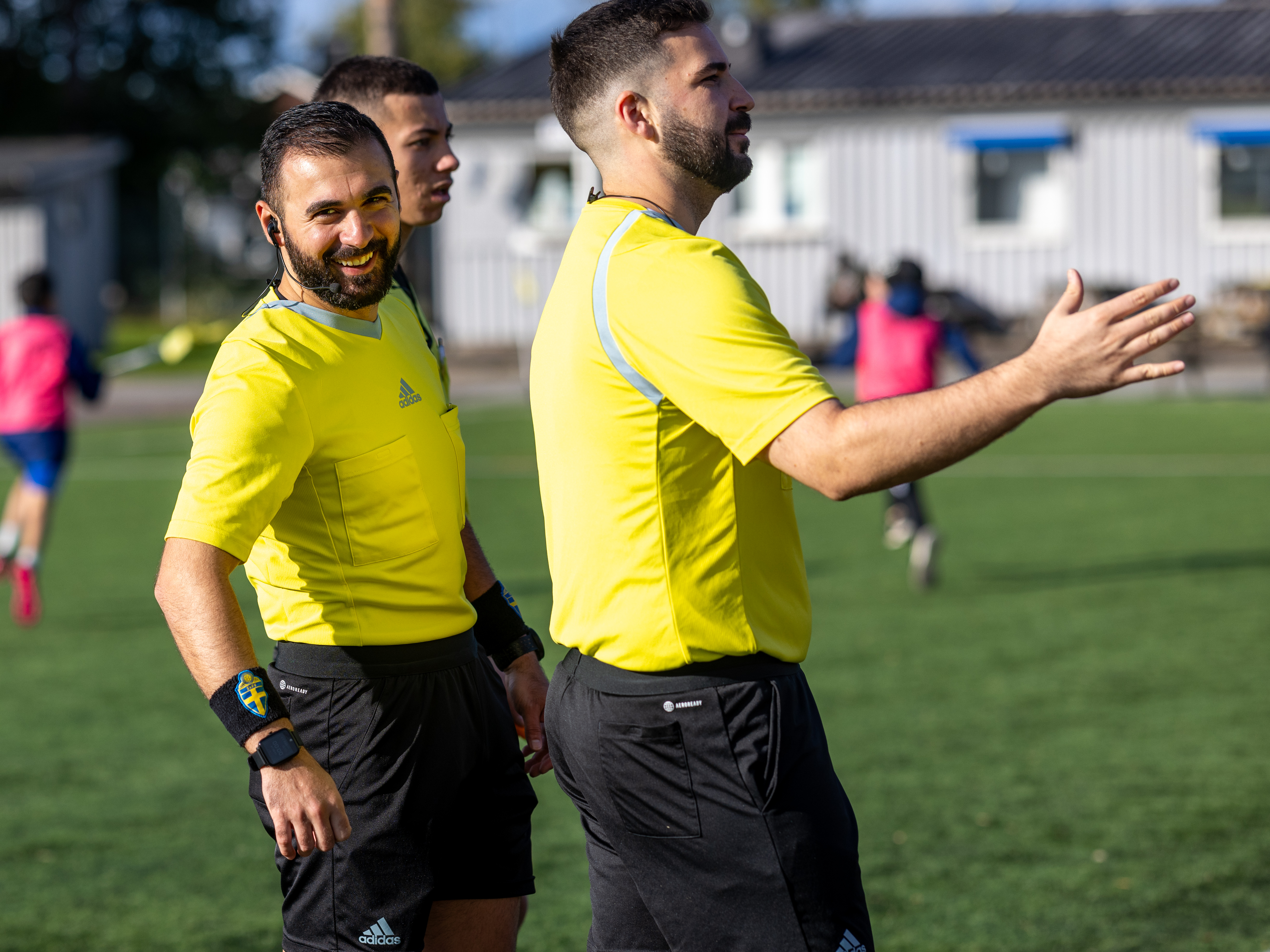
– You started refereeing when you were 14; do you remember why you started refereeing?
– The whole team had to undergo referee training. About 7–8 players joined and continued refereeing. Back then, they enticed us with the fact that you got extra money for something you hopefully find fun – football. What I remember as positive then was that we always had two referees officiating together. Even when we moved to 9-a-side and 11-a-side, we were still two. It made a lot of difference that I continued refereeing; you were never alone. It was fun because you were there with a friend. It still applies now, with team matches. Meeting new people and officiating together. The conversation after, the conversation before the match, and everything around it is wonderful.
– Do you often reflect on things during matches? What goes through your mind when you referee football?
– It's highs and lows. I try to have an overall view of the match, especially when nothing active is happening. For example, when a defensive line passes the ball or the ball goes out for a throw-in. Then I usually scan around me and find someone who is irritated or someone who is happy. Walk with him a little who is happy, take the opportunity to be happy with him. If there's someone irritated, maybe seek them out and try to make contact. I often ask the player's name during calm moments in the match. It's a good icebreaker, I've noticed. Especially with someone who has complained three times. It's usually, not always, but often a good icebreaker to ask "What's your name?" and then say "I'm Roni, nice to call each other by name, talk to me if you think something." It often has an effect when you can try to step out of your bubble and connect with the players. We referees are only human, and players are also only human. There, I think we try to find things that can break that irritation bubble. It helps us create a better environment for ourselves and everyone on the field. I often use a headset and want input from my assistants in situations where the ball is often not, when the game is calm. To create an overview of the entire field. It's about finding positive things and things that can be improved, not just focusing on situations where we have to warn or blow for a free-kick or penalty. Refereeing football is so much more than just blowing the whistle.
– Many referees are gadget enthusiasts. Are you one too? What referee gadget is the most important?
– Oh, you don't even want to know... haha. You know, one of those GPS devices that allows you to track everything. Literally everything. It's a new gadget I have that's extra fun. I have quite a few gadgets, yes, and like the latest ones. But... the most important gadget for a referee must still be the whistle, right?! I think. The whistle becomes like its own language, a shared language. I haven't used a headset for very long, I don't use signal flags, cards are boring and come out when they must – but I like the whistle. You don't need to say much; you use the whistle and that language with high versus low tones. Everyone understands it, or I correct myself: You, as a referee, must make sure everyone understands it. You should use the whistle in the right way.
– Interesting! What are your goals for the future in refereeing?
– The goal is to continue for as long as possible and as high up as possible. I've been officiating for and against for 14 years now and still find it super fun. My father-in-law referees in another district. He has been officiating for 40 years! I must be better than my father-in-law. He is strong; he turns 65 and referees in Division Four.
– Thank you for this, Roni, and good luck with everything.