
Interview: Niklas Nyberg, elite assistant referee
Interview with elite assistant referee Niklas Nyberg
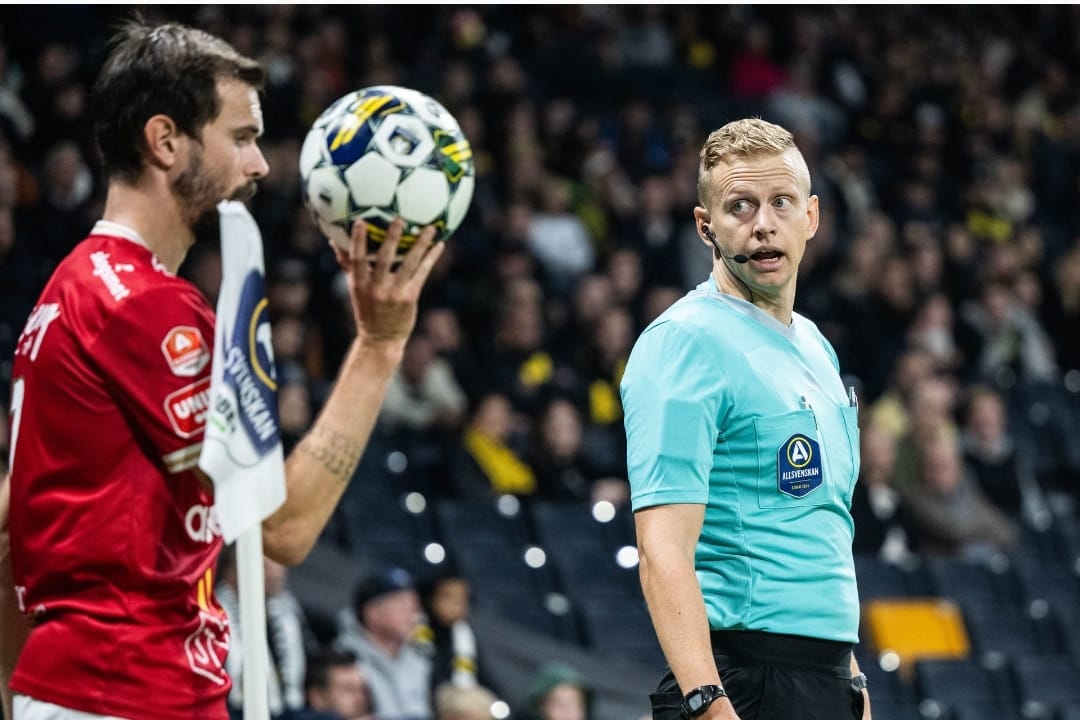
200 matches in Allsvenskan, international appointments and Champions League experience on his CV. For elite assistant referee Niklas Nyberg, the journey has taken him from learning which hand to hold the flag in to officiating at some of Europe’s biggest stadiums. We sat down with Niklas to talk about life on the touchline, teamwork within the referee team, new rules and why being an assistant referee involves so much more than offside decisions. For his matches, Niklas wears the Spintso S2 Pro on his wrist – and with more than 200 Allsvenskan matches behind him, he has his sights set on many more.
Earlier this year, you reached the milestone of 200 Allsvenskan matches as an assistant referee. When you stop and think about that number, what does it mean to you?
Well... I have to say it means a lot of different things to me. Of course, I’m proud to have reached it, but at the same time it’s a reminder that I’m now an experienced Allsvenskan official. It’s also a reminder that I’m starting to get older – I’m not exactly a young talent anymore, if you put it that way. But I’m humble about that number. I used to officiate a lot with Mehmet Culum, and a few weeks ago I worked with Mohammed Al-Hakim and Fredrik Klyver. In that company, you’re still the junior, haha. I’ve got a lot of matches to go before I reach their level, and I’m still learning. I turned 38 this year, and I suppose 300 matches is the next target. I genuinely think this is so much fun, so eventually they’ll probably have to drag me off the pitch. I’m looking forward to many more matches!
If you compare how you feel now when you walk out for an Allsvenskan match with how you felt in your first matches, what is different?
I’m so much more comfortable in my role now. You can focus more on helping the team. I also feel that my mindset is more, “We’re going to manage this match together,” compared with when I was new and perhaps thought more about making sure I got my offside decisions right. Offside is actually a very small part of the role. It’s an important part, but still a small one. I take greater responsibility for the team now, and I try to share my experience with those who are younger than me. But ultimately, we’re a team, and we all handle situations differently, which can make for an interesting mix sometimes. The short answer to your question is that there’s definitely a different sense of calm now. I think that calm contributes to better performances and a better overall approach. At the same time, you need to find the right balance between being calm and being too calm. You still need a certain level of tension and focus, and I still have that. But I also have to say that Allsvenskan is fantastic. I’ve officiated quite a lot internationally, but Allsvenskan is brilliant and great fun to officiate. Walking out to officiate an Allsvenskan match is still a real buzz.
If we go back a few years, how did you end up with a flag in your hand and become an assistant referee?
I was refereeing in Division 3, and Joakim Östling (now Sars), Granit Maqedonci and Fredrik Oppong joined our regional group. All three were younger than me at the time and performed well, so they moved ahead of me in the rankings. Back then, when I was refereeing in Division 3, I hardly ever ran the line. Almost never. At the time, the Swedish Football Association preferred assistant referees in Division 1 to have experience as referees in Division 3. So they asked those of us who were Division 3 referees whether we would consider becoming assistant referees. I had never even worked as an assistant referee in Division 2, but I said, “Yes, why not? I’m happy to give it a try.” I got the opportunity, and a referee coach came to watch me and explained basic things, like the fact that I was holding the flag in the wrong hand and things like that. After that, I made my debut in Division 1, spent half a season there and then progressed to Step 4 as an AR. The following summer I made my debut in Superettan, and the year after that I debuted in Allsvenskan. So things moved incredibly quickly.
Luck, ability, patience... there are a lot of factors you could point to. Going from a referee coach watching you hold the flag in the wrong hand to progressing that quickly, they must have seen other qualities in you that they wanted at elite level. Right?
Yes, absolutely. But you mentioned luck, and I definitely had some of that. At the time I lived in Gothenburg, and the Division 1 referee coach lived there too. He saw me quite a lot, which gave me an advantage. But as you say, perhaps they saw something else in me as well. I’m not really the typical AR. My movement pattern looks a little different, but I also had that decision-making experience from having spent so much time as a referee. They looked closely at decision-making. I know what I want from my own assistants, so perhaps I already had a good feel for that side of the role. I hope, and believe, those were some of the things they saw in me. At the Step 4 AR course there were eight officials, and in the end only four would progress and join the Step 5 officials. So half of us were going to be eliminated. I remember that in my first match on that course I started making the goal signal, where as an assistant you turn and run towards the halfway line. An AR coach knows exactly what to look for there – a couple of quick steps as you turn and start running. But you could clearly see, “Niklas wants the goal here.” Then I suddenly realised, “Damn, this is going to be offside.” So instead I stopped and raised the flag for offside. At that point I thought it was over and I might as well go home. But they looked at the decision-making in that situation and perhaps saw it as a strength. My God, I’ve made so many mistakes along the way. There have been plenty of times when I thought it was all over. But you learn from your mistakes, and I think they’ve helped me develop in a good way.
“My God, I’ve made so many mistakes along the way. There have been plenty of times when I thought it was all over. But you learn from your mistakes.”
— Niklas Nyberg, elite assistant referee
What is the most common thing that supporters, players, coaches and others don’t understand about the job of an assistant referee?
It’s that we do so, so, so much more than just signal for throw-ins and offside. Since communication headsets came in, you’re much more involved as an AR. I honestly don’t think I would have been an assistant referee, at least not at this level, without the headset. For me, it would have become boring. That’s one reason I didn’t work as an assistant referee as much earlier in my career. When I was out there working on my own in silence as an assistant, I wasn’t as good and I lost concentration. With the headset, you’re involved in a completely different way. You become a team. We can, for example, pick up a push inside the penalty area before a cross comes in. There are so many decisions during a match where the input comes from an assistant referee but is communicated only through the headset. Nobody knows about those situations except us, more or less. It takes courage from the referee, and trust, to blow the whistle for something they may not have seen themselves while still looking completely confident in the decision. Again, it’s about teamwork and cooperation.
You officiate internationally and you’re a FIFA assistant referee. Is there a particular match you sometimes look back on and think, “That was special”?
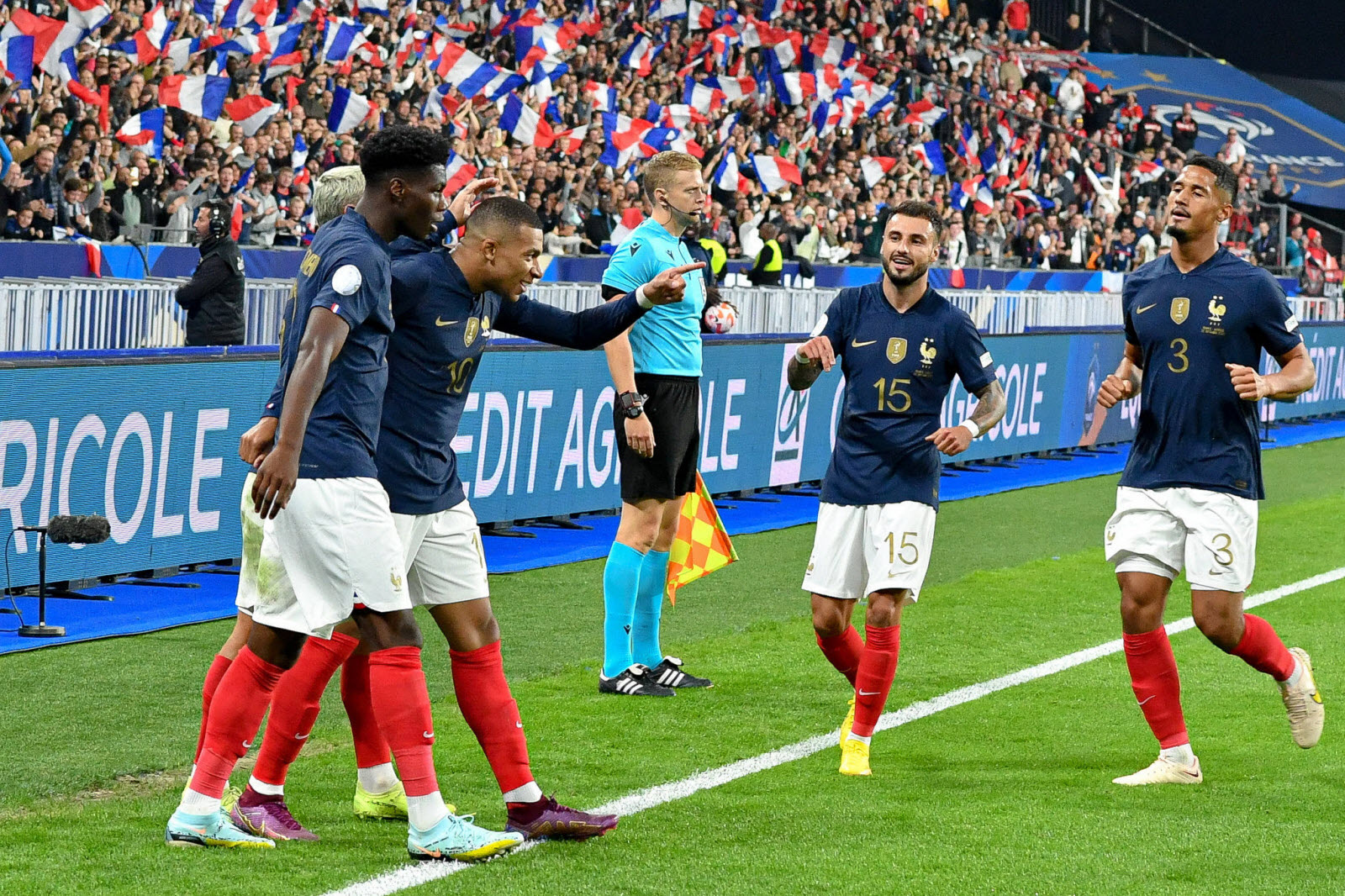
Yes, definitely. I’ve had two Champions League matches. Making my Champions League debut was huge. There were 72,000 people in the stadium at Benfica, and it was incredibly impressive. I got to take the match ball home with the officials’ signatures on it, along with the date and a few details. That was obviously a milestone. Another match that still gives me goosebumps when I think about it was France at the Stade de France, against Austria in the Nations League. It was the autumn before France reached the World Cup final in Qatar. That was incredibly special. Those are obviously the matches that tend to stand out. But I also have to say that it’s fantastic to experience other matches and stadiums. One example was Sligo Rovers in Ireland, at a small stadium, when they played Motherwell from Scotland. The whole town came out for the match, and the stadium was already packed long before we arrived. It doesn’t always have to be the biggest matches that are the most memorable. But again, Swedish football compares very well.
Whether it’s a big match or a small one, do you have any particular routines or superstitions? Maybe tying your right boot first, or doing something else in a particular way?
No, actually I don’t. Although I’m probably one of those officials who might benefit from having a few routines like many other referees do. I can be a bit careless sometimes. Something not many people know... haha... is that for my Champions League debut I had to borrow the fourth official’s match shorts. Who forgets their match shorts for their Champions League debut? Well, technically I packed the wrong shorts.
Let’s change direction a little. New rules have once again been introduced, and now that you’ve had some time to use them in Allsvenskan, we thought we’d talk about them with you. The aim is less time-wasting and more football. As a match official, do you feel they’ve produced good results?
Yes! Definitely. I noticed it immediately when we were in Wales officiating Wales against Ghana ahead of the World Cup. You can feel that there’s more football being played. I think it’s good. There are obviously some challenges for us as officials when new rules are introduced, but overall I think the intention is good and the result has been positive.
Do you divide responsibilities within the referee team and count the seconds, for example during substitutions, which now have to be completed in a certain way, with the player leaving the field within 10 seconds?
Yes, that’s right. But I think different referee teams currently have slightly different ways of handling it. You need to establish a clear division of responsibilities within the team before the match. There’s a lot for the referee to keep track of when you start adding the counting of seconds, and it affects the referee’s workload more than people might think. Anything we can share within the team to reduce the referee’s workload, we should do. For example, we can say, “The goalkeeper has control of the ball now – NOW you start counting.” With substitutions, the seconds should start being counted when the substitution is clearly announced. But does the player who is being substituted see it immediately? You need some feel for the situation here, and perhaps you can also prevent problems by having the referee get the attention of the player who is being substituted. We don’t count out loud from one to ten in the same way, but we work together to make sure it’s handled correctly. You also have to remember that the substitution must be clearly communicated to the player who is coming off. What we do as ARs is communicate the time when the substitution is announced, so we can keep track of it if the player doesn’t manage to leave within those seconds. In that case, the substitute has to wait 60 seconds and until the next stoppage in play, which could take several minutes.
If there’s a referee in the lower divisions reading this interview, Niklas, who dreams of officiating in Allsvenskan, at Sligo Rovers or in a France international, what would you say to him or her?
I’d say don’t focus too much right now on whether you’re a referee or an assistant referee. Just officiate football and expose yourself to as much football as possible. Referee matches, play football if you do that too, and watch a lot of football. Look at what other referees do well and look at what they could do better. There’s so much to learn. If, for example, I went back and refereed in Division 3 today, I’d be much better at it because I’d bring with me all the tools I’ve learned along the way. You can watch matches and officials at levels above your own division and take things from them back to your level. Try things and dare to fail. Fight your way through setbacks and learn from them. I would definitely say that refereeing in Division 6 can be tougher than refereeing in Allsvenskan. You might be the only referee there, without the same support structures, and problems that exist in society can perhaps be reflected more clearly at that level. Full credit to every referee who handles that – you have to be strong. But don’t let it scare you. You’ll learn from it and grow both as a person and as a referee.
Thank you, Niklas. Best of luck with everything ahead!