
Interview: Jesper Olsson, ice hockey referee 2025-01-24
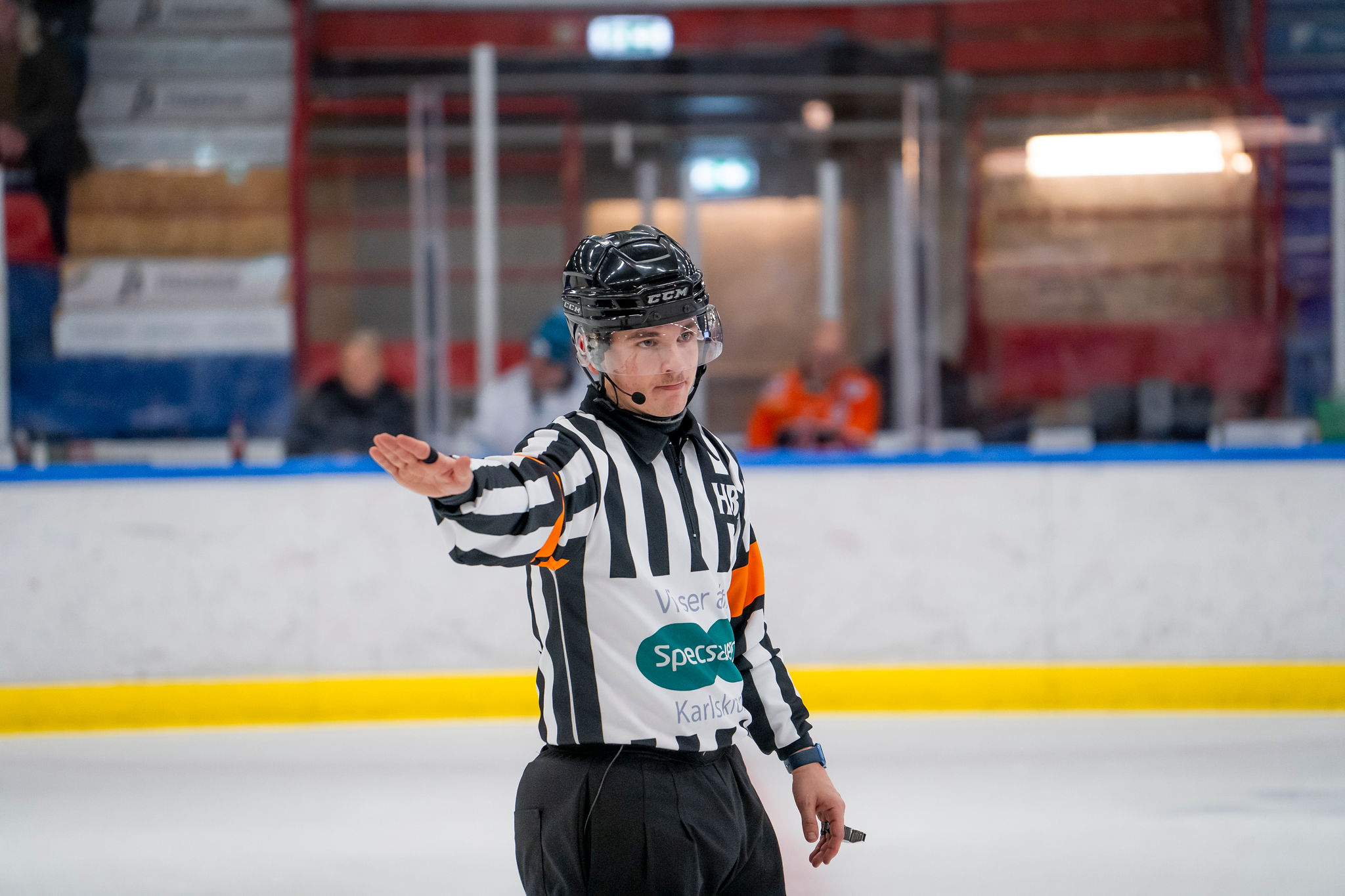
Photo: Filip Malmström
Interview with Ice Hockey Referee Jesper Olsson
From goalie to striped hero on the ice! Jesper Olsson has transitioned from guarding the net to officiating hockey games as a referee in Hockeyettan, in Sweden. In this interview, he shares everything from his first experience refereeing "backyard hockey" to his dream of reaching the elite level. Jesper talks about movement patterns, his thoughts on why hockey leads other sports in referee respect, and much more. Dive in and read the full interview below!
– Hi Jesper, can you briefly introduce yourself?
– Yes, my name is Jesper, and I live in Ronneby in southern Sweden, Blekinge. I’m almost 25 years old and have been refereeing ice hockey for 11 years. Currently, I referee in Hockeyettan. Hopefully, there will be opportunities to go further, but we’ll see what happens. It’s a long journey, and you must show what you’re made of. A goal of mine is to reach the top levels in Sweden. I played ice hockey as a goalie until I was 19, first with KRIF Hockey and then one season with Tingsryd AIF before retiring.
– Interesting! Tell us more about how you started refereeing ice hockey.
– It all started when I was 11 years old, refereeing casual games on Sundays just for fun. They printed jerseys and played just because it was fun, led by Stefan Oskarsson. Those guys thought it was NHL, but it was far from it... haha. It was really low-tier hockey, but that’s where I started refereeing alongside playing hockey. Later, I became a club referee and got in contact with Morgan Claesson, another well-known referee. When I quit playing hockey at 19, I was asked to referee in Division 2. Some people encouraged me to focus more on refereeing, and that’s how it happened.
– When starting as a hockey referee, do you referee alone or as a duo?
– As a club referee, you usually work in a two-referee system, meaning two referees and no linesmen. As you progress to district level, the three-referee system comes into play, and you begin working as either a linesman or a head referee. I chose to focus on being a linesman and spent two seasons at that before moving to the regional level, where I’m now refereeing in Hockeyettan.
– What is the most challenging aspect of refereeing ice hockey?
– Right now, for me, it’s that we’re three different individuals on the ice, managing a game and trying to do it as well as possible. We all come from different backgrounds, and we must work together without cameras or communication systems for now. That’s always a challenge.
– But you do use communication systems occasionally, including our new Refcom II?
– Yes, I use it sometimes during training matches. We have a policy in ice hockey to keep things equal for everyone, so we don’t use headsets at the federation level yet. Those who’ve tested the system in training games love it. I’ve been in dialogue with the federation and Spintso about testing it at my level.
– Different sports and referees have varying movement patterns. How should ice hockey referees think about positioning?
– With three referees, you have two linesmen and one head referee. The head referee skates from goal line to goal line across the entire rink, essentially forming a figure-eight pattern. Linesmen move between the blue lines and also diagonally to create as many angles as possible. Like football referees, we focus a lot on angles. We aim not to look at the same situation from the same perspective. At the top level with four referees (two head referees and two linesmen), the rink is divided into four areas, each referee monitoring a specific zone. Communication and collaboration are critical to avoid overlaps or gaps.
– As a linesman, how do you switch sides and diagonals without a communication system?
– It can be tricky. Before the match, we go through these details. Usually, I referee with people I’m familiar with, but we’ve had new guidelines for linesmen to make it easier to work with unfamiliar colleagues. Generally, you handle one side of the rink and face-offs on the opposite side. After 10 minutes into the second period, we switch sides entirely. However, in certain situations, like when I’m trapped at the blue line, the linesman on the far side automatically takes over my blue line, and I reposition.
– What’s the best part about refereeing ice hockey?
– I love the sport. I still enjoy playing hockey, driving the Zamboni, or watching games from the bench or stands. My passion for hockey has been with me since I was a kid and will likely stay. Refereeing is the part of the sport that I’ve truly connected with. It allows me to make tough decisions, solve problems, and play a leadership role—similar to a team captain but as a referee instead.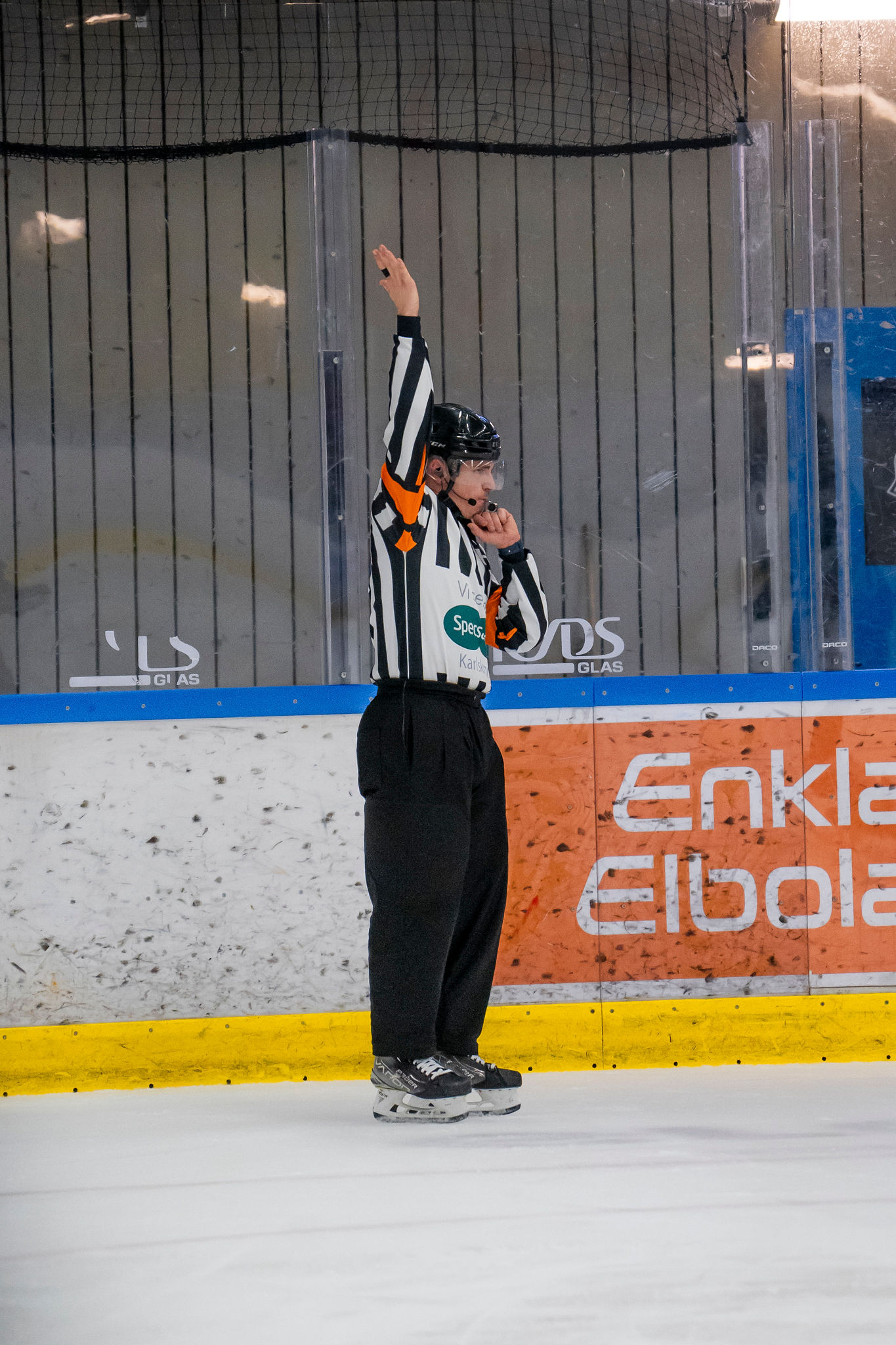
Photo: Filip Malmström
– How important is physical fitness for a hockey referee?
– It’s crucial. We have annual fitness tests, like in many other sports. We also need to build our physical profile for difficult games. Our main test involves sprinting back and forth six times between the goal lines, resting two minutes, and repeating four times. There’s also a technique test involving forward, backward skating, and stopping. Passing these, along with a rules test, is mandatory.
– How far does a hockey referee skate during a match?
– I don’t always track my distance, but my smartwatch shows I burn around 2,000–2,500 calories per match. My average heart rate is about 145, and I cover around 3 kilometers per game. While the distance isn’t huge, the frequent starts, stops, and high intensity make it challenging.
– Ice hockey has stricter discipline compared to other sports. Football is testing rules where only captains can talk to referees. What’s your take?
– Watching football, I sometimes panic at how everyone has opinions about everything and shows no respect for referees. Comparing that to hockey, where even a small gesture can lead to penalties, hockey is far ahead. It’s about mutual respect, and hockey has nailed that.
– Would you like to see any rule changes to simplify games for referees?
– Communication equipment, without a doubt. As someone who’s worked with Spintso, I think communication systems should be standard across all divisions in Swedish hockey. At lower levels, we don’t have video assistance, so why not use other tools to improve game management? However, I also believe referees need to master the basics and not rely on headsets every game.
– Last question. Hockey is growing in popularity, with more fans and televised games. How do you feel about the current season?
– Absolutely, hockey is gaining traction. There’s a strong culture in Sweden. Personally, the season has started well. I passed the tests, had some good games, and feel physically and mentally prepared to compete for a spot at a higher level.
– Thank you, Jesper, and good luck!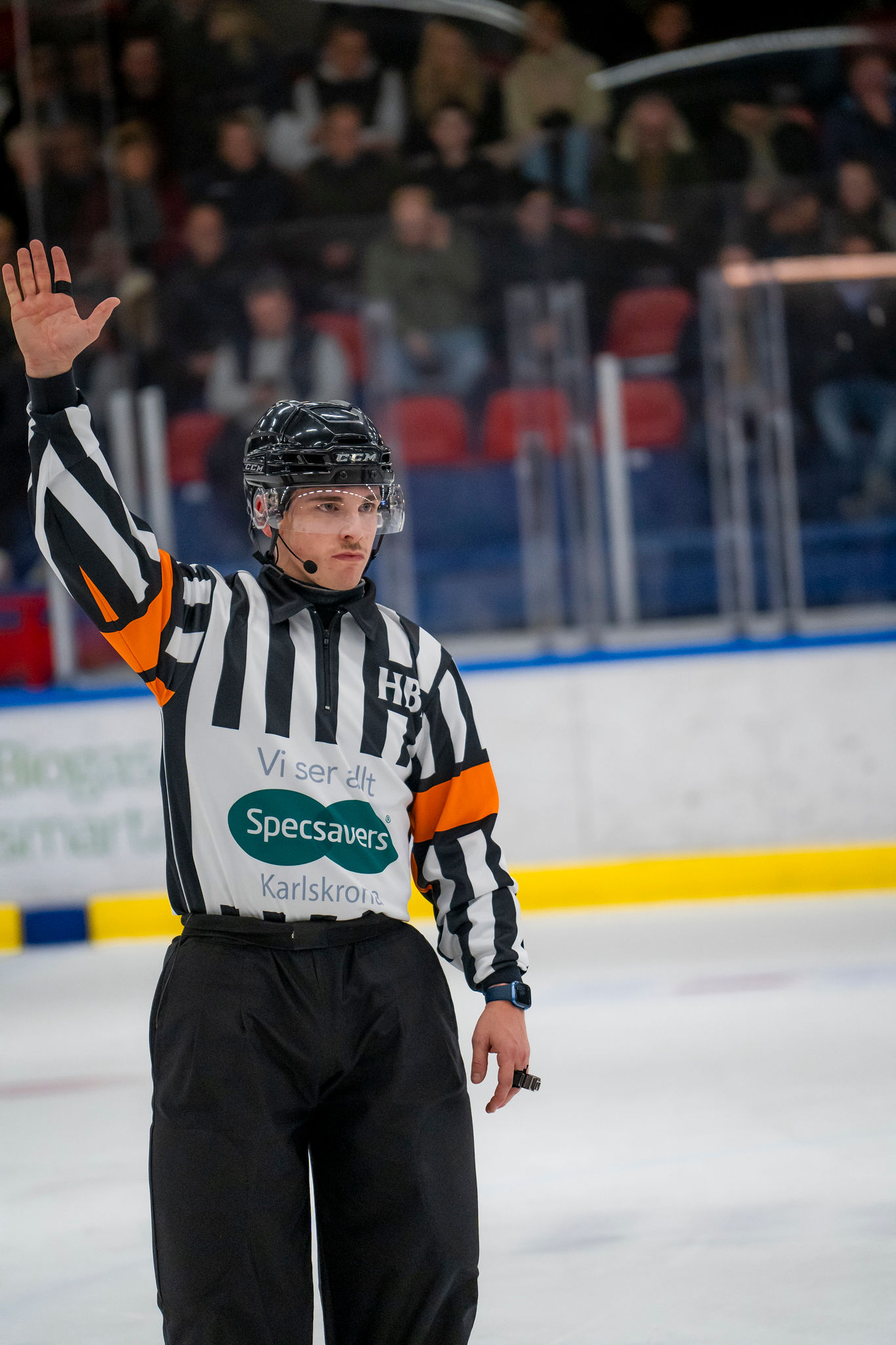
Photo: Filip Malmström