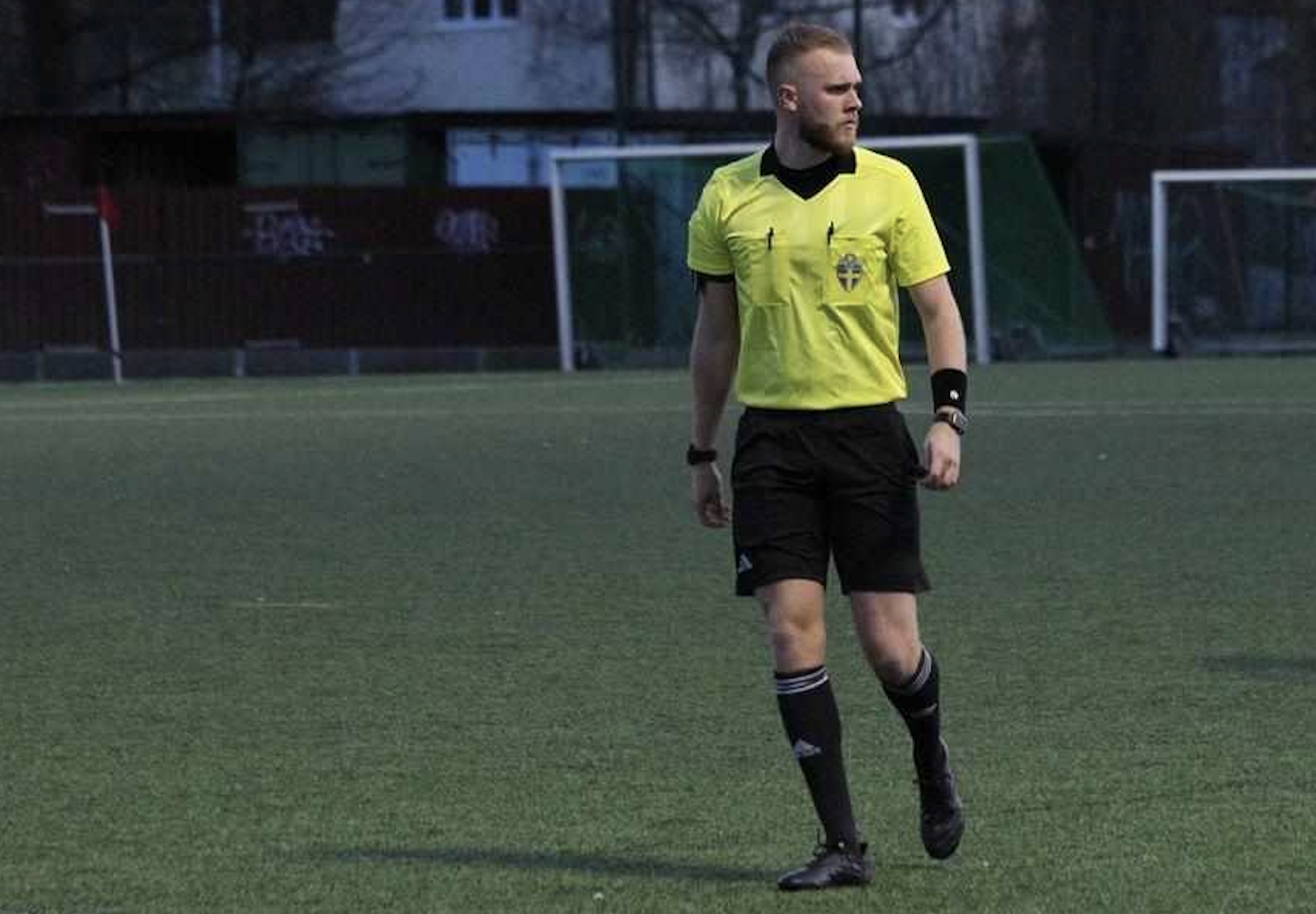
Interview: Football referee Simon Petersson 2023-12-19
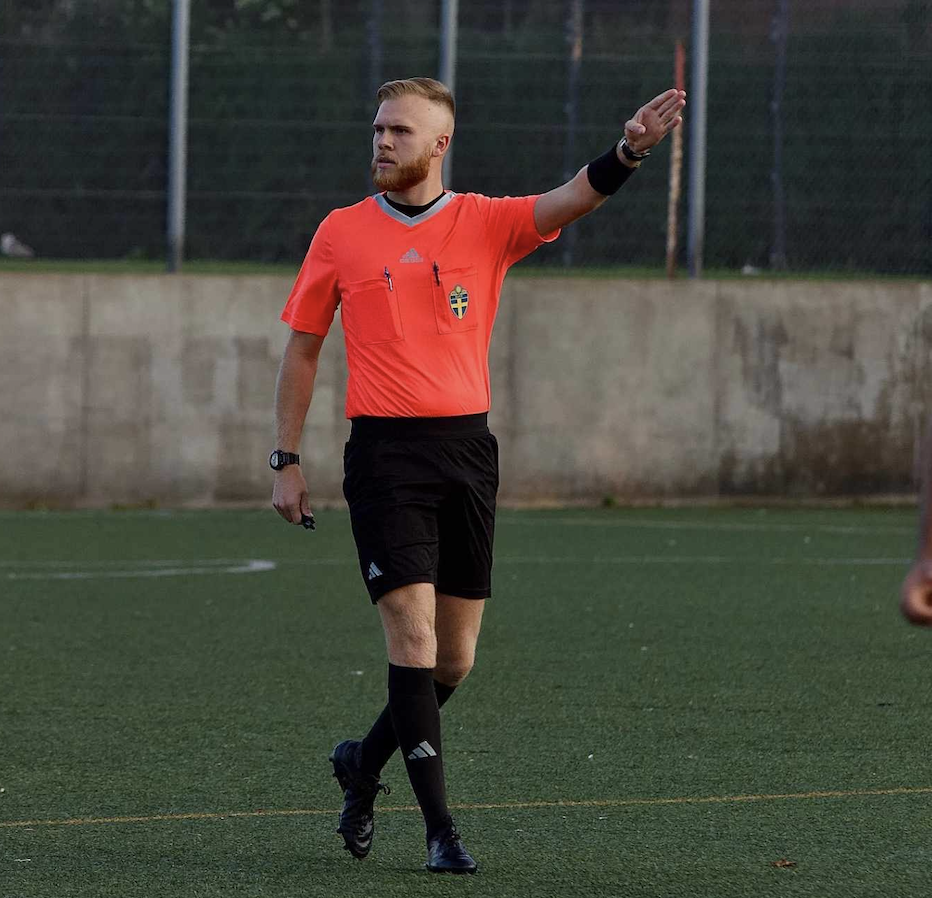
Interview with Football Referee Simon Petersson
Simon Petersson is a passionate football referee from southern Sweden, sharing his journey as a referee and insights below. From playing the sport himself to becoming a dedicated referee with clear goals, Simon talks about the importance of leadership on the field. He shares his focus on making every decision trustworthy and how patience is key for both players and referees in intense matches. By being humble yet confident, Simon creates acceptance and conditions to lead the match in the best possible way. Read the full interview below.
– Hello Simon, you're a football referee, but what else do you do besides officiating football?
– I'm in my second year at Malmö University, studying IT/Economics. I completed military service and started studying right after that. I served in the air defense in Halmstad.
– Can you briefly tell us how you started as a football referee?
– I played football until I turned 15, and in my age group, we suddenly had only two players left. We had to choose whether to play with the younger ones or move up to the senior team. I chose to move up to the seniors, then in Division 6, and personally, I didn't feel the referees' engagement was enthusiastic, to say the least. At the same time, I thought I could get a part-time job, so why not become a referee? I thought I would show those guys how it's done. I wanted to demonstrate the importance of being involved and the difference it can make in a match.
– Did you research this on your own, or did someone help you start?
– I refereed as a club referee before this in the club where I played, and the responsible people there suggested the Step 1 training to me. They wanted me to try it out to see if it suited me. So, I took that course, the district course, around the turn of 2018/2019. Then I was selected for Step 2 and the Gothia Cup in 2020.
– As a football referee, you need to be good at many things. What is Simon best at?
– Leading by example. My engagement is evident in every detail, from throw-ins to big and small decisions – every decision, basically. My goal is for it to be evident that I want to be there, that every run and decision clearly shows that I want to be there. I want people to think that I have a good angle, a good position, and placement to make that decision. Not that I've built up a buffer for the times I'm wrong, but every time I make a decision, it should be trustworthy. That's what I consider the most important for me.
– What are you working on developing the most as a referee?
– It's the caution/yellow card procedures. Deciding when to make a bigger procedure for a yellow card. I had a trial match late in the season with many clear cautions, in my view, for reckless play and stopping promising attacks. Some of these players were so alone there, by me, and the situation made me choose a quicker procedure for them. But after consulting with my observer from that match, I learned that sometimes, not always, but sometimes, you need to make a procedure for the caution to emphasize it more or make it clearer. That's what I'm currently working on developing the most.
– What do you think players and coaches need to develop or think about more?
– Essentially... patience. Being able to see the bigger picture in a hectic match. Having the patience to think once more that maybe the decision was correct. It's easy to always go with instinct, and it gets heated and aggressive because maybe there's a lack of patience. Emotions show up in that way. Generally, players and coaches should think about having a little extra patience sometimes, which I believe would be better for the sport. It would give us referees better conditions and make it more enjoyable for the audience, for football, for the players, and everyone involved.
– What about patience? Doesn't that apply to us referees sometimes too?
– Of course. Not looking for mistakes or being influenced by players who believe there should be a caution in a situation, perhaps just because that player already has a yellow card, for example. It's not something I, as a referee, can consider in the assessment of that situation or for the match. If it's a caution, it is, and if it's not a caution, in my opinion, it's not. Here, too, we can think a second extra sometimes. Absolutely, we referees must have patience to see a bigger picture sometimes. We work on, as I mentioned before, caution procedures to create the best possible match picture and prevent situations that may arise. It's not our match; absolutely no one is there to watch us referees.
– Both players, coaches, and referees make plenty of mistakes during a match. But how does a referee create good conditions and acceptance for decisions?
– Be humble. Nothing sells a decision better than being a bit humble. 99 times out of 100, you gain understanding if you are humble and can admit your decisions. It often works. Then you must have confidence in it, along with a bit of humility. As a referee, you must believe in your decisions and think your decisions are right. That's where you have to start. Then you self-evaluate from there. But again, create the best conditions for making these decisions. You must be involved and have a good angle, proximity to the situation; otherwise, you don't even have the conditions to be humble in a situation. All these factors must interact well.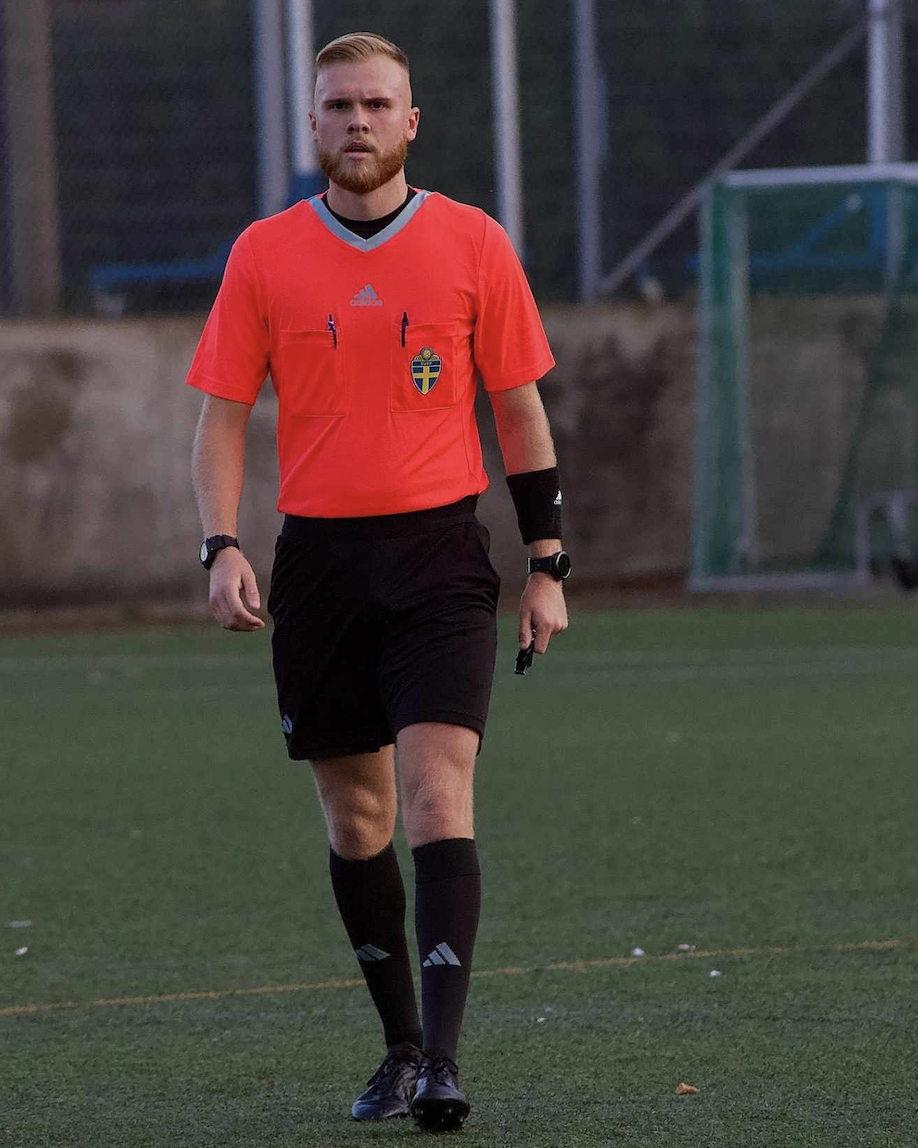
– Have you ever changed any major decisions as a referee?
– I have changed a big decision once. In a trial match in Division Five, there was a defensive free-kick, while my assistant wanted it the other way. It's a situation where the attacker is heading towards the goal, just outside the penalty area, and the collision or impact, I perceive, happens simultaneously, but the goalkeeper was first to the ball with his hand. I initially blew for a defensive free-kick, but my assistant was sure that the hand was on the ball first outside the penalty area. Then I changed it to a free-kick for the attacking team and a goal-scoring expulsion. A good example where you might need to take a second extra and have a bit of patience.
– Which referee characteristic or tool is the most important in your opinion?
– Hmmm... The body. The mouth and communication are important, and maybe all players hear what you say, but everyone sees the body! The audience sees it, your colleagues see it, and the players on the field see it. If the match is also shown on TV, you can see the referee's body language through the TV screen. I consider that the most important tool for being able to radiate confidence and, above all, engagement. There are many good tools, such as a whistle, headset, flags, but we must not forget what the most important tools are, in my opinion, body language and how we talk. Both how we talk to our assistants and everyone watching the match. One should be careful not to rely too much on aids. Just like for players, a pair of football boots is good, but it's with your feet that you play football.
– What are your goals for officiating, Simon?
– In the short term, it's to be selected for Step 3 before I turn 25. If I can think a bit freely, I want to reach Allsvenskan in 2029, 10 years after starting, and the ultimate goal is to officiate in the World Cup after that.
– Important to have goals! One last question: Which color of referee jersey is the most stylish?
– The jerseys we have now and the turquoise/light blue of that generation are really nice. It's a shame that almost only the elite "should" have it.
– Thank you for this, Simon, and good luck with officiating!