
Interview: Floorball referee Moltas Gunnarsson 2025-04-01
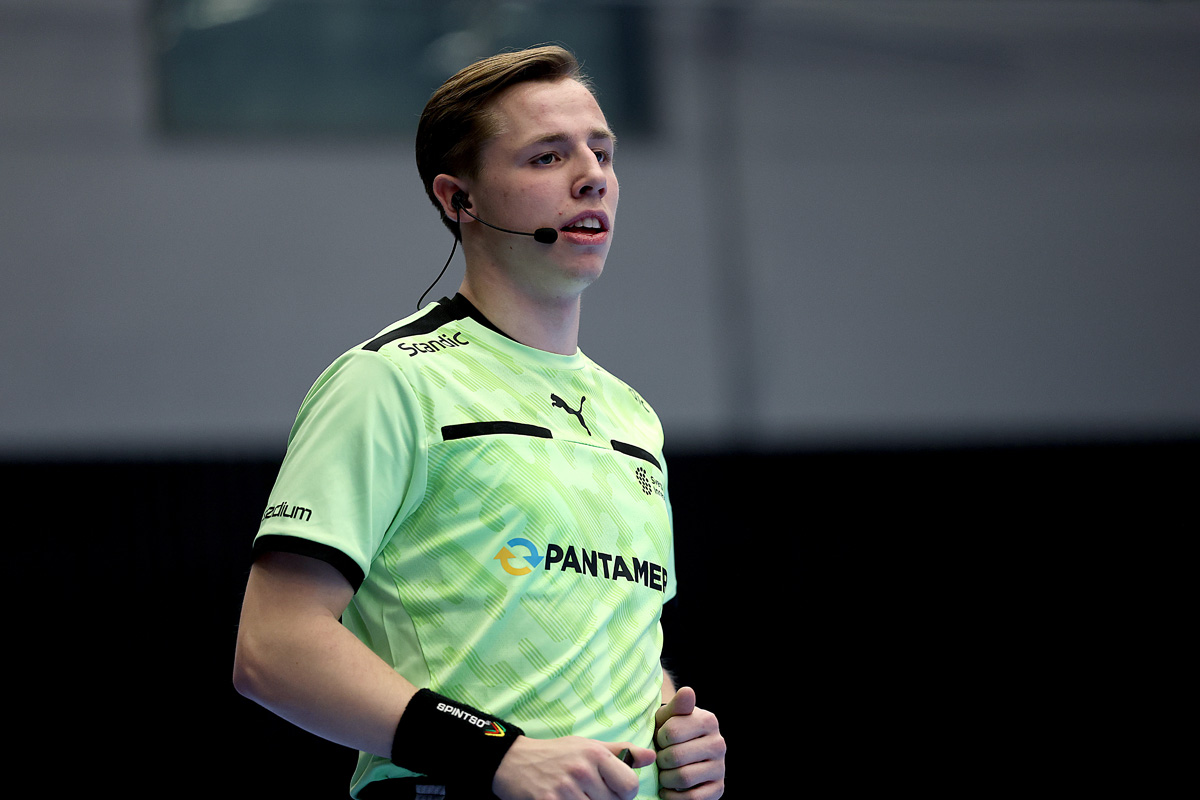 Photo: Per Wiklund
Interview with Floorball Referee Moltas Gunnarsson
He’s only 19 years old – but already a regular referee in both the Swedish women’s floorball highest league and Division 5 football. Meet Moltas Gunnarsson, a driven and ambitious refereeing talent who juggles two sports, fitness tests, theory, and match planning with great energy and joy. In this interview, he shares how he balances floorball and football, what it takes to referee at a high level – and why communication systems have become a natural part of his life on the field.
– Hi Moltas. You’re both a floorball and football referee, right?
– That’s right! Those are the two sports I’ve stuck with. I also officiate a bit of futsal, mostly for fun and at some local tournaments. In football, I’m a regular in Division 5 and a Step 2 referee, and in floorball, I’m new to the Swedish Floorball Federation. I officiate regularly in the women’s Allsvenskan, highest league, and men’s Division 1.
– You have a bright future ahead – you’re only 19! How long have you been a referee?
– I think I’m entering my fifth or sixth year in floorball now, give or take, starting as a club-level referee. And the same goes for football – I started both at the same time.
– So you started as a district or senior referee when you were around 15. That’s pretty early, especially since you don’t have a driver’s license at that age. How did you manage?
– Yeah, it’s not that common. It was a bit of a puzzle, to be honest. I really have to thank my parents for driving me to all those matches and making it possible. It’s definitely paid off. I love refereeing!
– How do you manage to combine both sports? Sure, they’re summer and winter sports in Sweden, but does the scheduling work out?
– Yeah, it’s a bit of a scheduling puzzle – the calendar and my planning brain are my best friends. It works out, especially when the seasons overlap at the end or beginning. Then I have to prioritize competitive matches over friendlies. There are seven days in a week, and it’s doable if you want it and plan well.
– Let’s focus on floorball a bit. What’s the requirement profile like to be a floorball referee?
– I’d say it’s pretty demanding, especially now that I’ve moved up. We have very clear directives on planning and managing things well. There’s also more emphasis on how we present ourselves off the field, since there’s a lot of media around the sport in Sweden. You need to be physically fit – we have two or three fitness tests per year that we must pass. Some of these we now record ourselves and submit, and we’re scrutinized pretty closely. If you fail, you lose your classification immediately. The same goes for the rule tests. To summarize, you need to be physically fit, available (at least five out of eight weekends – preferably more), and you must pass the theory exams. The expectations are high, and there’s good competition. That said, there’s also a strong sense of community – we help and push each other, to improve and to enjoy our matches together.
– What are the fitness tests like?
– We have two options. Either the Cooper test with a sub-13-minute requirement for the top league, or the Yo-Yo test, which I’m less familiar with in terms of levels. I choose the Cooper test – it suits me better.
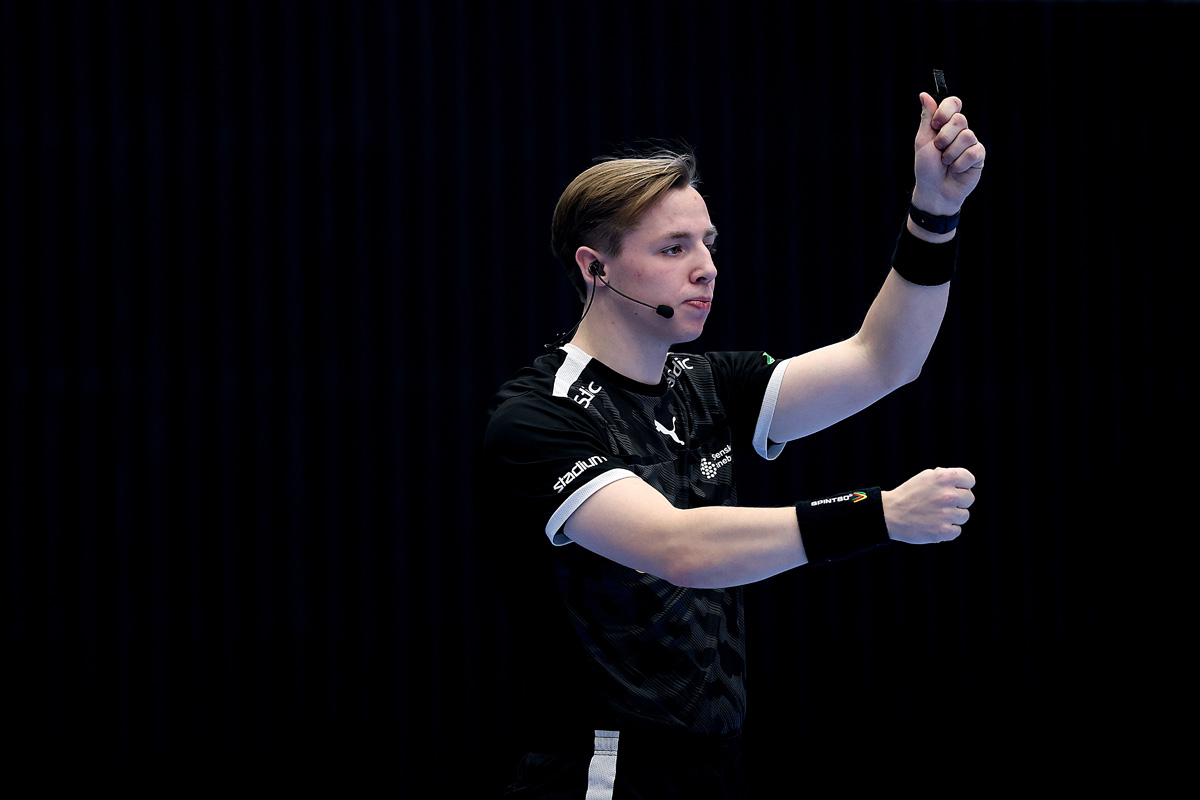
Photo: Per Wiklund
– What’s it like for you at the end of a season – do you overlap matches and training?
– Exactly. I focus more on explosive training for floorball, since we move in small spaces with quick bursts. Football is more long-distance in comparison. For me, they complement each other well – the training I do for one sport helps with the other. Floorball is clearly more explosive. So when the seasons overlap, I combine matches with prepping for the upcoming season in the other sport.
– From a referee perspective, can you benefit from refereeing in both sports?
– In floorball, we’re physically closer to all players. In football, we might be close to just a few. There’s also the bench and technical area in floorball, but the communication is way more... compact. That means we’re communicating constantly – before, during, and after situations. I bring that into football and notice that both the ref team and the players appreciate it. My leadership style is very communication-focused – I talk fast and analyze as I go. So yes, being a referee in both sports is a huge plus. My leadership has developed a lot. I can now process what my team says in football while acting on it at the same time.
– In football, positioning is about proximity and angles. What’s the focus in floorball for a referee?
– Also proximity and finding angles – so pretty similar. But in floorball, we’re two referees, so we have to divide the rink. There’s some of that in football too, but the division is more fixed. In floorball it’s more fluid, so cooperation is key. We might each see half the situation, and together we make the call.
– Isn’t it easy to get stuck in the same corridor during a floorball match?
– Oh yeah, absolutely. That’s one of the common challenges in district-level floorball. That’s why we usually work in fixed pairs – it helps us find and share our zones better. That’s why communication is so important – those gray areas in the corridors where we have to remind each other. Whether you have a headset or not, you have to communicate. If you don’t, you can easily get stuck. When I’ve had observers during my development, I’ve often heard “You’re watching the ball too much.” You keep learning and growing, but you really have to learn to see the whole rink and divide it properly between the two refs – especially because everything moves so fast.
– What’s the best part of being a football referee?
– I was just talking about this with some friends. Football is super accessible – lots of people are into it and anyone can play. Being part of that culture is awesome. I’m part of the football family and there are tons of opportunities to grow. I went to a sports high school, and many of my classmates there really opened their eyes to the referee role once they realized how much more there is behind it. I’m really happy to be involved in the sport, even though I don’t play football myself. That’s definitely the best part of refereeing football.
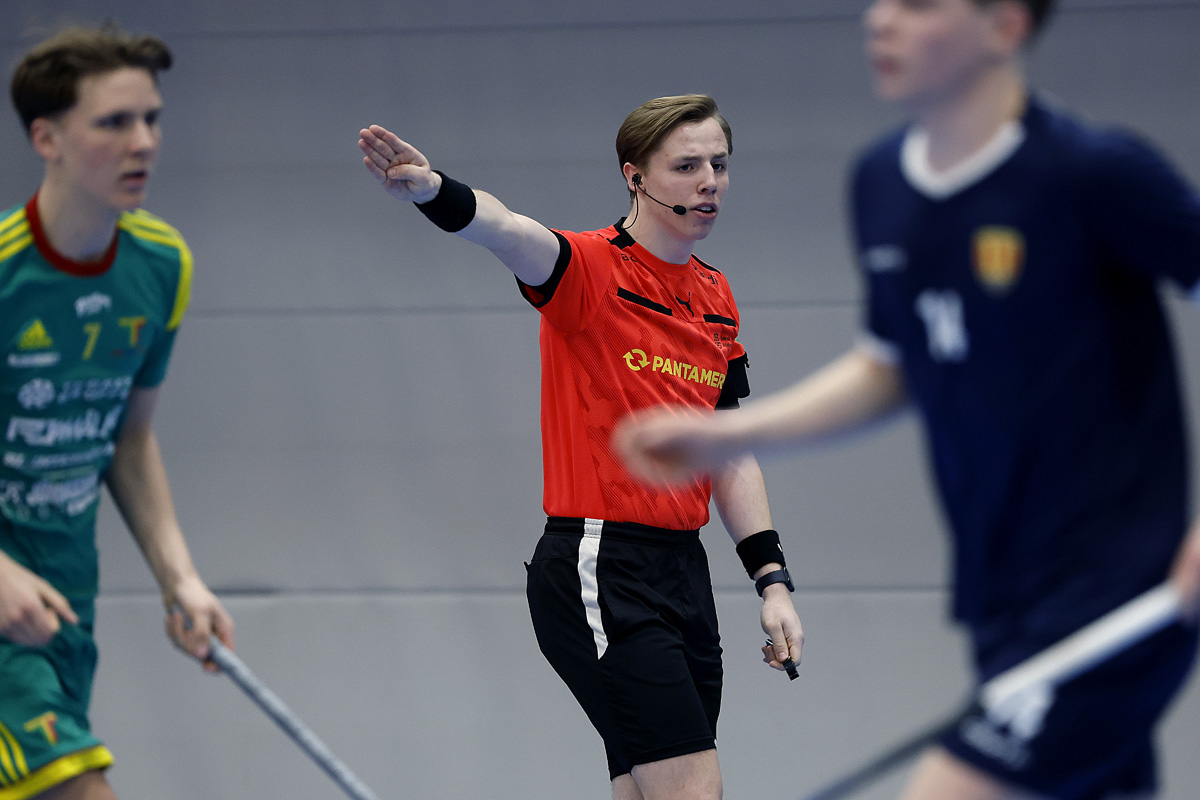
Photo: Per Wiklund
– And what about floorball? What’s the best part of being a floorball referee?
– Pretty much the same answer, honestly. Not a big difference. The perk for me now that I’m in the federation is being close to the elite level. I get more involved in the elite scene, meet and talk to my role models and learn from them. It’s incredibly educational. We go through the same stuff in courses – some referees have been around a long time, but we still learn from each other. It’s a fun exchange that gives me a lot! And I meet twice as many people since I referee both sports. That’s easily one of the best parts of refereeing in any sport – meeting new people. That drives me in my referee role.
– 19 years old – or 19 years young, we should say – and already officiating the women’s Allsvenskan in floorball. We definitely consider you a young, talented referee, Moltas. What are your goals in the referee role?
– I definitely feel that I’m young, and I’ve made a point of not rushing things. You need to face setbacks and make mistakes to grow as a referee. I absolutely want to reach the elite level someday. That takes experience and lots of matches. I want to try something new every season now to get new perspectives on the role. Things have moved fast for me, but I’ve had great support from coaches and observers who want to help, and I’m very grateful for that. With that kind of support and ambition, I think reaching the elite level is possible.
– Before you moved up to where you are now, did you use communication systems? Now you use Refcom II from Spintso.
– It’s becoming more common in floorball, even at the lower levels. I tried it out quite a few times. More and more people are realizing it’s a valuable tool. Of course, you shouldn’t forget the basics and should still learn to referee without a headset. But if you want to reduce “ball watching” and divide the court more effectively, a communication system is a great tool. I think it should be introduced more naturally in courses and match debriefs for new referees, so they learn to use it correctly when they do try it. It’s a tool that helps us – not something that gets in the way.
– What do you think about Refcom II then?
– Being able to use it in both sports is a huge benefit! The difference from my previous system – which wasn’t very good – is huge. I use a custom-made earpiece too, and it’s super comfortable. It stays in place and feels natural. Nothing gets in the way, no technical issues. The biggest difference is how clear it is – I hear my colleague clearly, and we don’t have to waste time connecting the devices before the match or worry about issues during play. We can focus all our energy on the product we’re delivering on the field!
– Thank you for the chat, Moltas, and best of luck in your refereeing roles.
Photo: Per Wiklund