
Interview: Elite Referee Oscar Johnson 2024-08-30
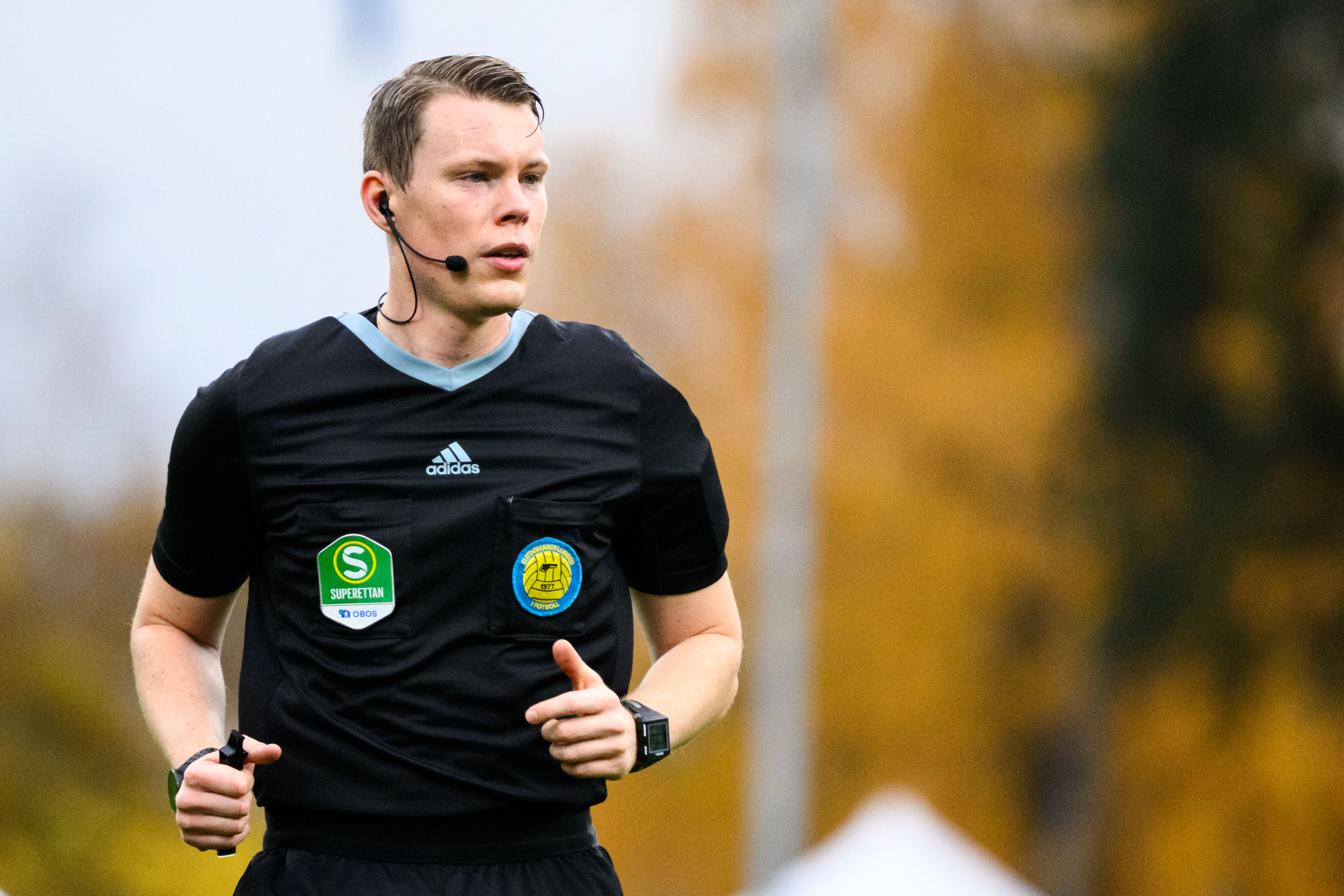
Interview with Elite Referee Oscar Johnson
Oscar Johnson is officiating his first season as the head referee in the Allsvenskan (highest league in Sweden), with trial matches in 2023. The path to the top has not always been easy. From the first steps as a club referee at Dalby GIF to his debut in the Allsvenskan, Oscar has worked hard to realize his dream. Over the years, he has developed a strong sense for the game and an ability to analyze both himself and the matches on a deeper level. In this interview, he shares his experiences, challenges, and the key factors that have helped him continually improve as a referee. We follow Oscar a bit more closely because he previously used our Retro Pro watch and has now switched to the S1 watch. Read the interview below to get some inspiration for your own role as a referee.
– Hi Oscar. You're entering your second season in the Allsvenskan as the referee in the middle. Can you take us through your feelings before, during, and after your first match in the Allsvenskan last year?
– It was the match between Degerfors and Elfsborg. What can I say? It was incredibly thrilling for me. In a way, it was a dream come true to be standing there as a referee. There's a lot of hard work behind it over a long period, and of course, it's super fun to referee football; that's why I do it. But like with anything you want to become good at, it requires dedication and a lot of things around it. But when you get to step out there as a referee and make your debut, it's a real validation. It was incredibly fun.
– Like a dream come true, you say. Have you been thinking about and had this as a goal for a long time?
– No, well… for me, it's always been about joy and having fun. The joy of football, that's why I continue as a referee. First, I was a player, then I did some coaching, and during all those early years, I was also a referee in my club. You're competitive, and of course, you feel like you always want to take steps forward. It's an art, that thing about taking steps and climbing upwards. Sometimes it's good if it takes a little longer, if you're ready for it. It's so different. But for me, I've probably never had any goals like reaching a certain level or anything. My goal has always been to get better. And if you get better, then everything else comes along with it. If you perform well over a long time, you move up, and you'll get the chance in a higher division. I want to get better, learn from my mistakes, ride the wave when things are going well, and then get back up on the horse when it gets tougher. It gets tougher for everyone during certain periods, that's just how it is. Then it's about coming out of it stronger.
– You briefly mentioned that you started as a club referee. When did you start there, and can you tell us a little about that time?
– Yes, I remember, it all started at Dalby GIF. I was around 12 years old, I think. I thought it was a lot of fun to referee as a club referee. I was still playing, but there was something in me that was drawn to being a referee even back then. I played until I was about 20 years old, and that was my main focus at the time. My dream as a football player in my younger years was always to become an elite player, but around the age of 20, I realized that "no, it's not going to happen." I wasn't good enough. I had been refereeing alongside playing in the club, and the year I turned 21, I took the district referee course, step 1. That's when I felt that refereeing was something I wanted to do fully; this suits me. For me, in the beginning, as a club referee, I remember it didn't go so well at first, and the organization for us youth referees wasn't functioning very well back then. I remember always setting my alarm on Saturday mornings because I knew the coaches would call me early because the referee who was supposed to officiate hadn't shown up. Then I would quickly jump on my bike, get there fast, and always referee at least one match because they had also forgotten the referee for the next match. Many fun memories from that time!
– When you finally took the Step 1 course, how did it feel compared to being a club referee? Did you feel even more then that "this is what I want to do," and did it go well?
– We had people who were out at the matches, watching us and supporting us. I felt they picked me up as a referee early on, and that motivated me to try to get better. I got very good feedback early on, and that contributed greatly to continuing to develop as a referee. As a club referee, you officiated without thinking too much about it, but as a district referee, you constantly thought more about the details and the things – the things you did well and the things you did less well. But as I said before, I didn't set any goals in that way. No clear result-oriented goals. Instead, I thought more like, now I'm going to try all these tips I've been given, either they work for me, or they don't. I thought it was so much fun, and my motivation was very high all the time, largely thanks to the support I received. I worked as both a head referee and an assistant. I remember very clearly when I was an assistant that you would officiate with a head referee who was much better than you, and you would learn a lot.
– Many referees struggle with that very thing: "that someone supports them and picks them up. What do you think made them notice you?
– Oh, that's a really tough question that you should probably ask them. But I think I was perceived as a driven person and referee. I wanted something with it, and I guess they saw something in me that I didn't see myself at the time, that I had some form of talent and was a bit moldable.
– What do you think are the keys to continually getting better as a referee? To keep developing and thereby climb upward.
– The foundation is to have fun! That's how it is. Without that, there's no point in continuing; make sure to have fun in your matches. Even everything around it should be enjoyable, like training. Try to train with your friends and referee colleagues so that it also becomes fun. That's the foundation. The keys, I believe, are that as a referee, you have to learn to notice when things aren't going as planned and also the opposite – to recognize when things go well in matches. What did I do here that contributed to it going well? You need to learn to analyze yourself, simply. Take help from your colleagues whom you trust and respect, listen to them. I believe one of the best keys to getting better as a referee is to learn to analyze yourself. Then, of course, the other basics are important – train, keep your fitness for more than 90 minutes, know the rules, and many other things.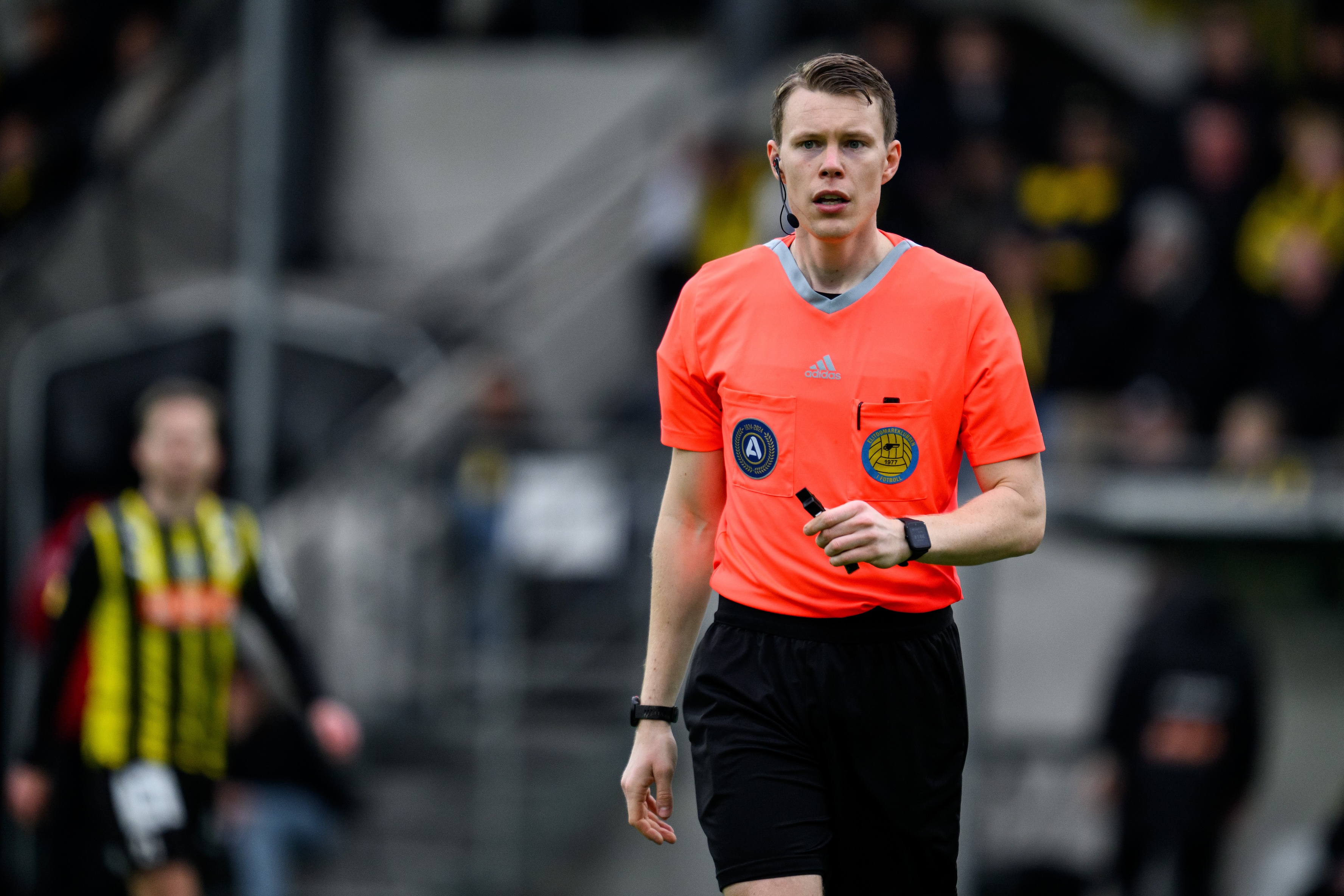
– Okay. Next tough question: How does one learn to analyze oneself better?
– By always having the mindset that you can learn, especially when you're new as a referee. Not just thinking it yourself but also having that approach outwardly. As I said before, listen to those around you and take in what they say and try it out, dare to fail to succeed. For me, it's always been a strength because I'm quite humble about my performances. But it's also been my biggest weakness. I've often doubted myself, overanalyzed myself, and spiraled even more into that track. That has, of course, also contributed to my development. Over time, you'll develop things you must notice that you're getting better at. For example, if you referee more matches, you'll get a better understanding of the game. Feel it, analyze it, note your mistakes to succeed in similar situations in the future. Your self-analyses aren't just about whether you're right or wrong; note your positions and constantly think about how you can stay one step ahead. If you're in the wrong position and unsure about a decision, what happened just before that situation? Where was your position then? Try to anticipate, read the game, and stay one step ahead.
– How important is the role of a referee coach or observer in what we're talking about now?
– Very important, I would say! Definitely. Important. Super important. For me, a really good observer is someone who can put into words the feeling you have but struggle to describe yourself. An observer should make you think and analyze your own match and pinpoint the feeling you have inside. An observer plays a crucial role in what we just talked about – the previous point. Learning to analyze your matches and performances in a good way is where an observer must contribute and develop those skills in a referee.
– You mentioned earlier that everyone has tough periods, that you need to get back on the horse and keep going. Are there periods or things you've had to work on a lot that you'd like to share? How did you move forward from them?
– Sometimes your ambition to improve takes over, and after a few matches that didn't go so well, you focus more on what went wrong and start overanalyzing it. I've been there a few times, focusing on those things instead of feeling more like "I can do this, let's go." Then it even got worse. For me, experience and refereeing many matches have helped me move in the right direction, especially with getting back on the horse. I've fallen off many times, but I've always gotten back up. When you referee a lot of matches, you become more confident in who you are and what works on the field. That confidence has grown in me, and it's become easier to shake off tough matches and periods. Believe in yourself and keep going, simply.
– How do you prepare for a match?
– Training is always there, and we have the privilege of having a fitness coach who sets up how we should train and what we should focus on, more or less. It's basically training every day, with maybe one rest day a week. But training every day with varying intensity. Training is a form of preparation. Before a match, I like to analyze the teams a bit. Watching their most recent match can help identify important things to bring into the next match. For example, specific events in matches, set pieces, team form, player form, and so on. The best way is to referee the teams and learn from that, of course, and build on that, build relationships with players and coaches. That way, you know a bit about the type of football they play and things that stand out.
– Do you have any quirky must-dos before a match, routines, or similar?
– Well, no… not like some others. I'm probably not very good at that. Maybe my thing about wanting plenty of time before the match is a quirky must-do, my colleagues could probably confirm that. Sometimes my time plans are a bit too generous. I really don't like stress before a match, so I try to make sure there's plenty of time for travel and to take it easy before the match.
– Thank you for this, Oscar. Is there anything you'd like to share with all the referees at various levels reading this before we say goodbye?
– Keep going. It doesn't always have to be the most fun to referee at the highest level. I think it's fantastic to referee in the Allsvenskan right now, but I can miss refereeing in other divisions. There's a good charm at all levels. It doesn't have to be better and more fun higher up, for you. Set your own goals, and don't just set goals to reach the next division; set sub-goals for yourself as a referee or person. Work on them and work for yourself.
