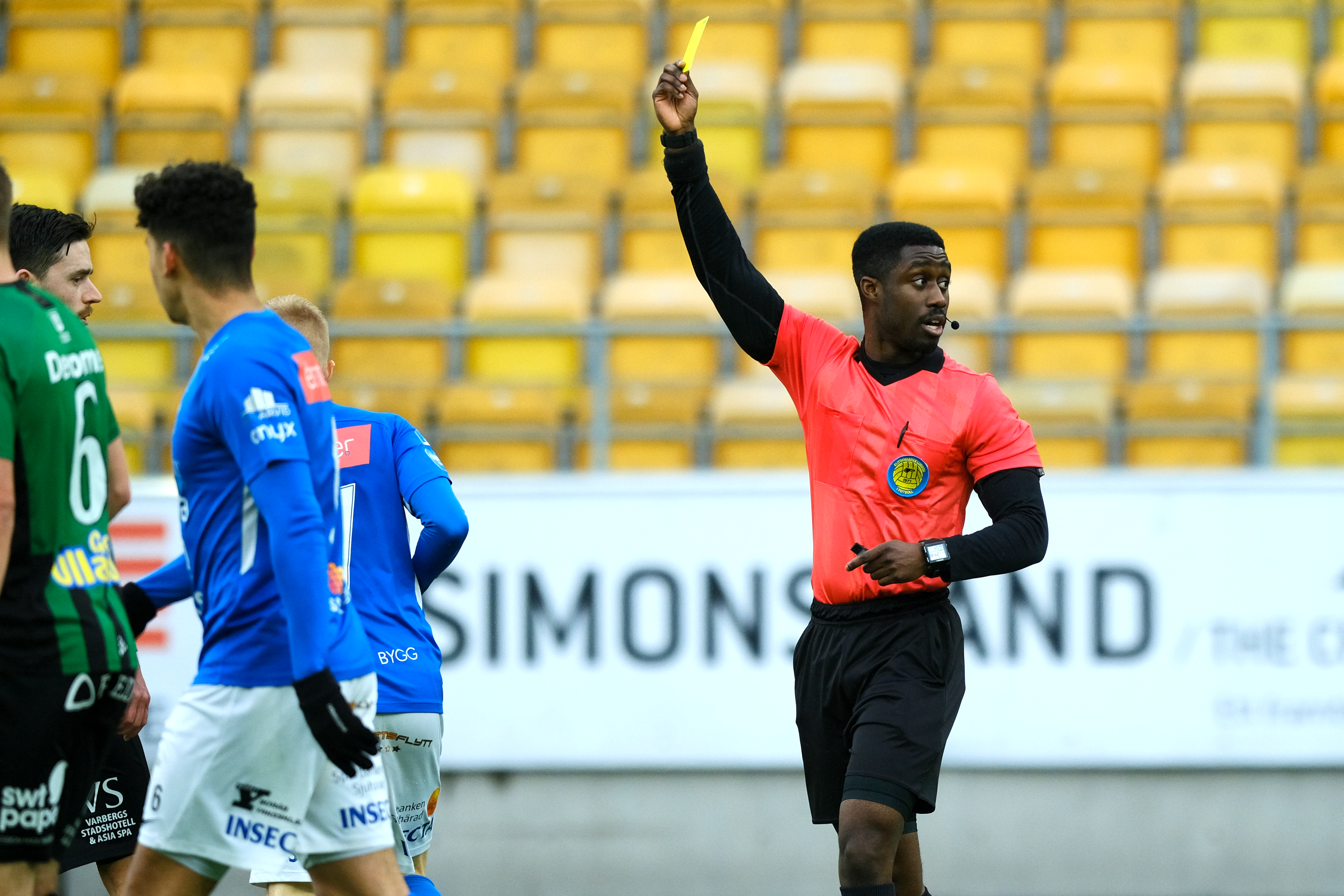
Interview: Fredrik Oppong Elite football referee in Sweden 2023-05-12
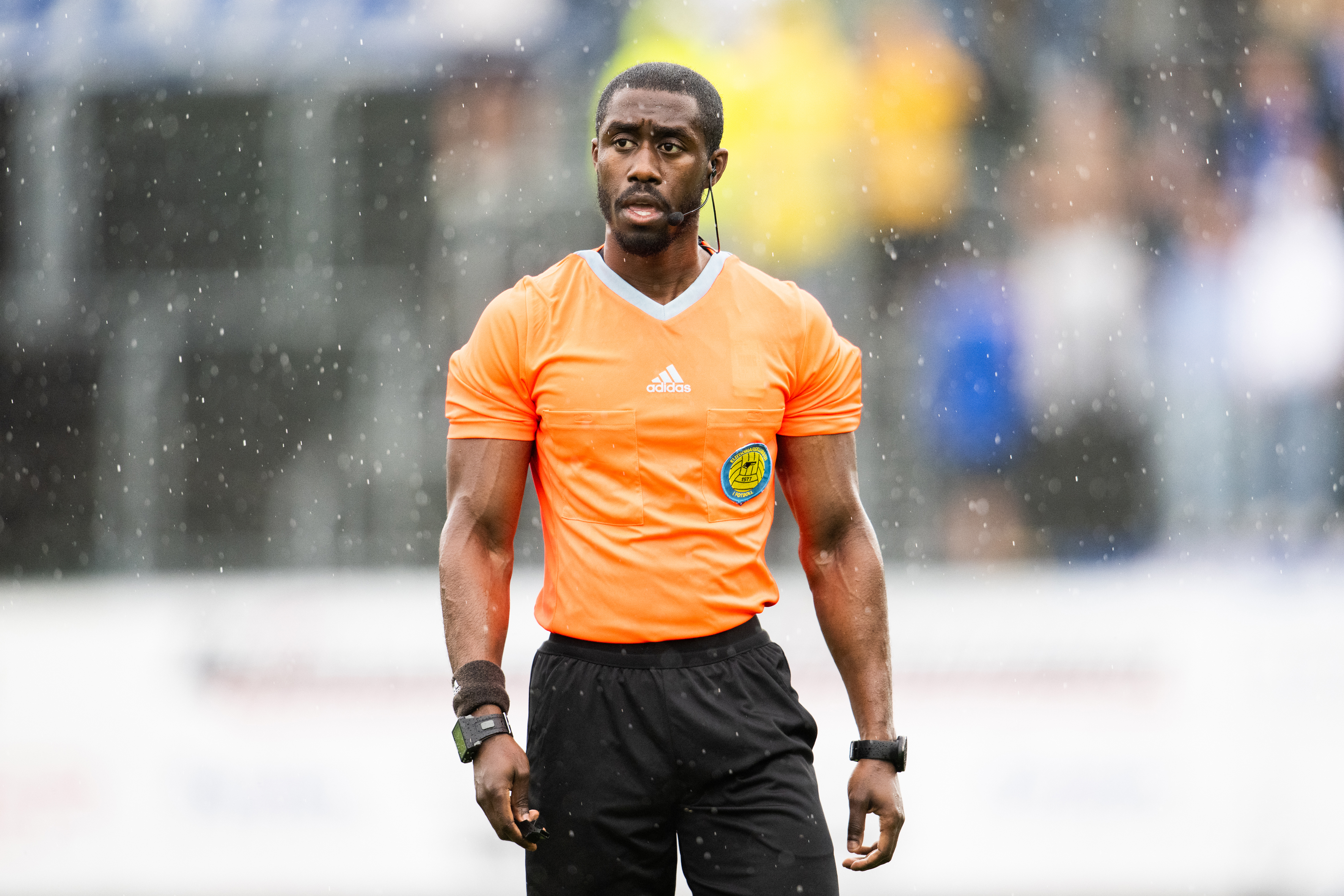
Interview with elite-football-referee Fredrik Oppong
Fredrik Oppong is an elite referee in Sweden and has been officiating since 2010. Fredrik started refereeing because his older brother Dennis Oppong, who was also a referee, asked him if he wanted to start officiating. Fredrik is entering his third season in the Superettan and speaks loudly and extensively about the importance of being humble as a referee. Read the full interview below.
– Hi Fredrik. Do you remember when you started refereeing football?
– Yes, I do. It all started with my older brother Dennis being a referee. Around 2010, he mentioned to me that they were looking for district referees and asked if I was interested. I didn't think much about it, I just said, "Yeah, that could be good." I didn't realize at that time that it would be the path that would lead me to stop playing football. I joined the step 1 training in 2010 and refereed my first match, if I remember correctly, at Heden in Gothenburg. I don't really remember which teams were playing. But I remember that I stepped in as the main referee and it felt completely natural. I don't know... it's hard to describe, but the feeling was completely natural from my side, and it's something I wanted to continue with. I had a leadership role and could lead a match, and it felt good, simply put.
– Why do you think it felt natural for you? Can you tell us more?
– Well, as a football player, I barely noticed the referees. I played for Västra Frölunda, and my coaches always emphasized that we shouldn't focus on the referees. If the referee made a call, they made a call. I recognized some referees, but I focused on my game 110%. I don't think I've ever yelled or said a word to a referee as a player. I've never had a grudge against referees. I remember a referee encouraging me, before I started refereeing, to become a referee, but I clearly said "no, never." I started refereeing when I was 19 years old, and I think the thought of quitting playing football made me consider refereeing, or at least entertain the idea. But it was those first matches and actually taking the step to try refereeing that made me realize that this is something for me. Then I discovered new acquaintances, found new friends, still being part of the football family, but most importantly, I had my older brother Dennis as a great support for me. He helped me a lot in the beginning, and I'm very grateful for that.
– So you were a new district referee in 2010. When did you realize that this might be something I should pursue even more?
– I realized that I had some talent as a referee in the same year, actually, in 2010. It was during the Gothia Cup, and at that time, I had only been a referee for 3 months. I was also playing a bit of football, so I was both refereeing and playing in the Gothia Cup. I remember clearly that I had a lot on my plate. First, I refereed a match, and then I went off to play myself. When we were selected for the knockout matches there, as referees, I found out that I was being considered to be a final referee and ultimately got assigned a P18 B semi-final, if I remember correctly. It was a big deal for me at that time, being a new referee and almost the same age as the players I was officiating. I had an Observer in that match, and there was a decision I made where I stood my ground. The players were arguing and not listening, so I issued a caution for their lack of respect, and right after that, I awarded a penalty. It caused chaos and a lot of commotion. But the Observer praised me afterward, and the decisions were correct. He said that I showed courage while remaining humble. Those two things, courage and humility as a referee, have stayed with me. Then a couple of years went by, and in 2012, I got the opportunity to attend the elite camp in Halmstad. That was the first time I came into contact with the Swedish Football Association, with national instructors, course leaders, and other elite referees. To be honest, I wasn't very enthusiastic about it at that time, I'm not sure why. But it went well, and after 2012, I felt that "this could work, as long as I want it and keep fighting for it."
– Courage and humility. Do you have any other tips to share with other referees who are striving to progress?
– I received a lot of tips from my referee consultant. He always told me to be humble, even if there are observers who say things you disagree with. Try their suggestions, but if it doesn't fit your leadership style, you can discard it. Try new things and implement the tips you receive. When you officiate with referees who are higher up than you, for example, when you serve as an assistant referee, observe their body language and how they lead the match. You might find things that you can incorporate and make your own. Give it a try as well! Every match is important, and you are only as good as your last match. It can also be a tough environment in youth football and lower divisions for referees. There are parents and coaches who become overly involved and may even enter the field. If you can't establish your authority, don't hesitate to suspend the match and seek assistance from people around you. The best tip I can give is to be humble, and I can't emphasize it enough. Be humble towards players, coaches, and fellow referees, and remain focused during your matches.
– You mentioned a tough climate. Why do you continue, and can you share something with a referee who may be considering quitting?
– Well, when I'm running on the field sometimes, I think, "Why am I doing this?" Am I supposed to referee a match with 22 players on the field, coaches shouting, and spectators cheering? I can have those thoughts at times, questioning why I'm actually here. I've also had difficult situations where I didn't always know how to handle them, but you have to allow yourself to feel down sometimes. After such situations, I believe it's good to feel a bit down, but then you need to rebuild yourself and focus on the next match. You can't think that you can always do everything perfectly. Allow for mistakes and learn from them. I review all my matches afterward, looking at how I run, blow the whistle, my body language, and I analyze every aspect of what I do. That's where I process my mistakes in a way that allows me to learn from them. No situation is the same as another, but you gain more experience and routine with each match. If you keep making the same mistakes and continue in the same way, you won't progress. Here, you also need to be humble and open to learning something new in order to develop yourself.
– Out there somewhere, there might be a new Fredrik who is 19 years old, someone who has never refereed football before. Why should he or she start refereeing football?
– It's really fun! It provides good exercise, you get to go out and run, you make lifelong friends, and you develop leadership skills within yourself that you might not have known you had. You build qualities within yourself that will help you in your personal life and in your current or future work. For me, having the role of a referee on my CV has been invaluable when applying for jobs and other opportunities. Employers view it as a positive attribute. Even though there are challenging moments, the positive aspects of being a referee outweigh the negative ones. For me, maybe 5-10% of being a referee is tough, while the remaining 90-95% is pure joy. You have to flip the perspective and often think about why this is enjoyable. If you're considering starting to referee, or if you're already playing football like I was, I absolutely think you should give refereeing a try. You might discover, like I did, that it's something for you. And if not, at least you've tried it and perhaps learned something new along the way.
– This is my third season in the Superettan, and my goal is to establish myself even further and become one of the best referees in the league. That's one of my objectives. I want to gain more experience and routine, which builds trust from the teams. Once I've solidified my position, I definitely aim to secure one of the Allsvenskan matches available and get the opportunity to referee in the highest league. By then, I'll be more than ready and deserving of that match. It's important for me to fully focus on the present, on each match, and referee the next match as if it were my last.
– Thank you, Fredrik, and good luck during the season!