Interview: Football analyst Phil Weimer 2024-04-26

Interview with football analyst Phil Weimer
Introducing Phil Weimer, the Video Analyst for Wiesbaden football club, where every move counts in front of a crowd of up to 15,000 spectators. Phil orchestrates the game from his perspective, with a keen eye for detail and a strategic mindset. He utilizes the Refcom II system from Spintso to communicate directly with the bench. Phil has a higher perspective than the bench and from the sidelines, shaping tactics and solutions in real-time. Read the full interview to learn more about working as a football analyst, navigating the challenges of finding solutions and problems live during a game.
– Hi Phil. Can you tell us more about who you are?
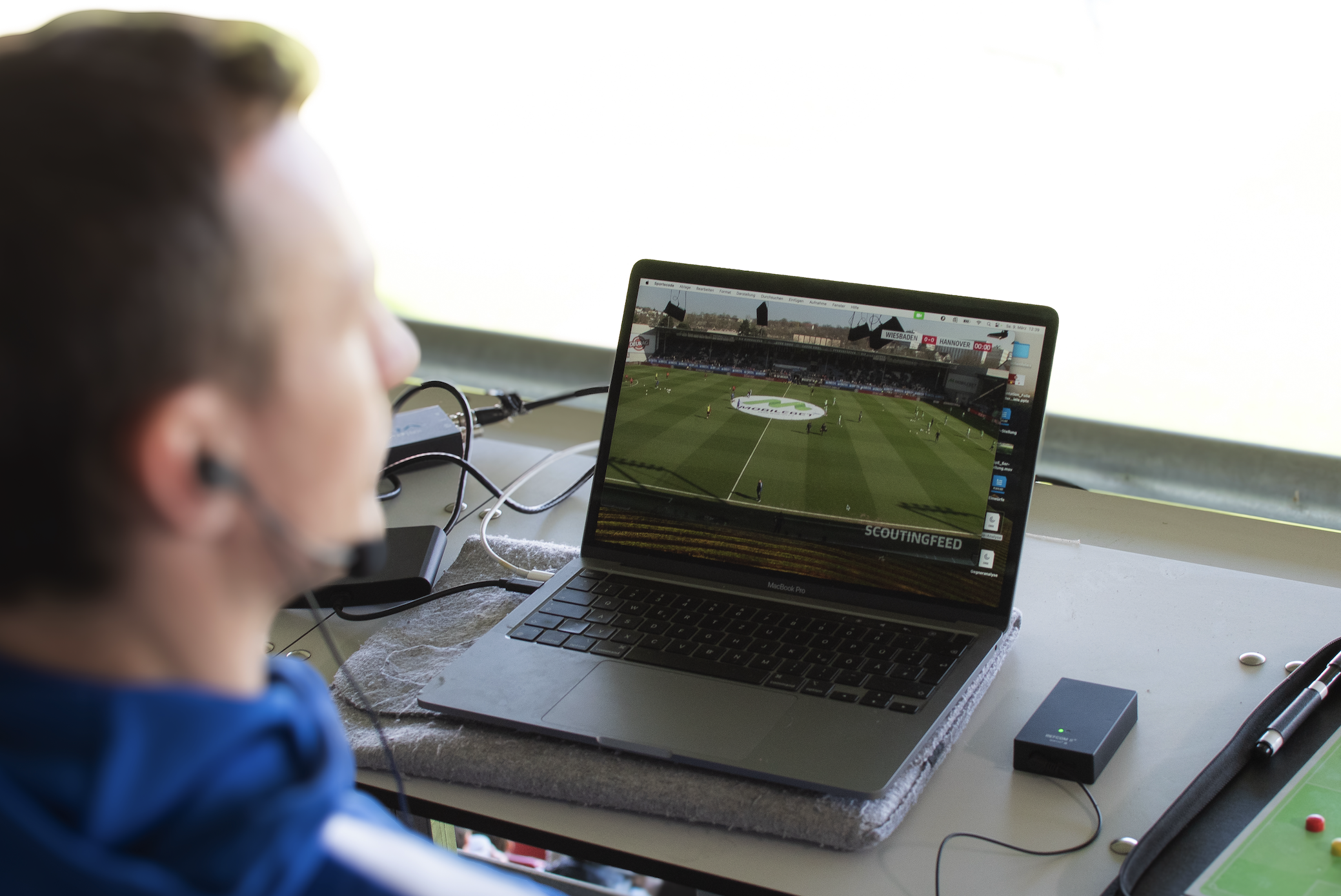
– My name is Phil Weimer, and I am the Video Analyst of Wiesbaden football club. I am part of the coaching team. I am responsible for the pre-game analysis, the post-game analysis, and some individual work with the players. During live games, I watch the game from a higher perspective in the stadium. With a video feed on my computer, I share the insights with the assistant coach on the bench. For the direct and effective communication between us, we use the Refcom II system.
– Tell us more about how you started working with this tool in a coaching staff team!
– We have been searching for an affordable communication system that works during live games. Our Team Manager, a former referee, gave us the tip to try it with a referee communication system and so we now use it for our tactical exchange from the stand to the bench.
– And your live communication with the bench is with…?
– The assistant coach. We share information about the game, and he talks to the main coach about possible tactical adjustments.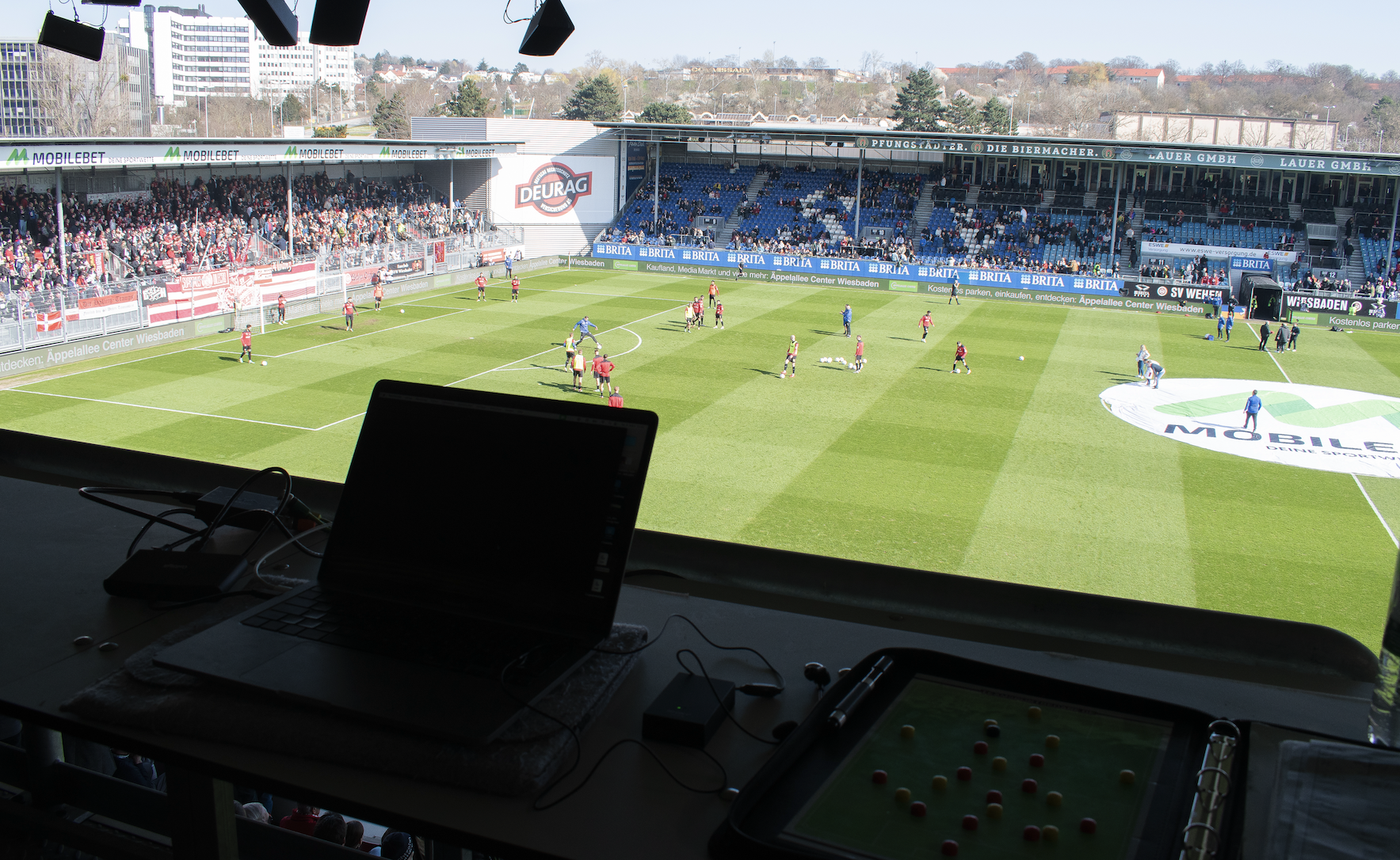
– Super interesting. What are your main focuses during a game?
– We are searching for problems and solutions! Normally during a game, one team tries to create better situations than the other team. Always searching for better spaces in ball possession and also to block important spaces of the opponent. In a game, the coach has nearly the same perspective as the players on the pitch. You don’t see the spaces and these solutions to the problems as easily if you watch the game from a higher perspective. I have a better view of the whole team and the whole pitch. But yeah… mostly, I am looking for solutions of what we can do better, more than just naming the problems. With the help of the Refcom II system, I can discuss problems or possible solutions with the assistant coach.
– How important is the communication equipment, do you think?
– For the whole success, it is very important. Because if I could find problems or solutions, it is important to communicate this to the bench, the coach, and the team in a good way. Also, we are trying to use this for other staff members in our team. Like the medical staff, for example. If someone is injured, we can communicate even faster what is the problem with the injured player. Is it a hit in a tackle, a bend over or maybe two players knock with their heads together, they will know it already on the way to the player and know what they must look for. Communication between staff members can be easier, faster, and more effective. This also applies to our athletic coach. Up to now, changing a player is a small problem. Because the athletic coach is somewhere else, warming up with the players, and we must make a quick change. If you don’t have these communication solutions, you might put up his shirt and show which one you want to change, there can be a lot of miscommunications here. When we have a communication system like Refcom II, we can make it much easier. We can give him a heads-up and plan the substitution, and here we are talking about important minutes or seconds.
– And you've been using Refcom II for like 6 months now, what are your thoughts about the system so far?
– For me, it’s a very good system. It is very easy to use. I just put the headset in my ear, start the system, and it connects automatically. The fast and easy usability and not struggling with connection is important for us because the assistant coach, to which I connect with the system, comes out to the game 3-4 minutes before the game starts. The timeline here is very short, and he only starts the unit up, and we are good to go. It is easy to wear, and the weight of the units is very light.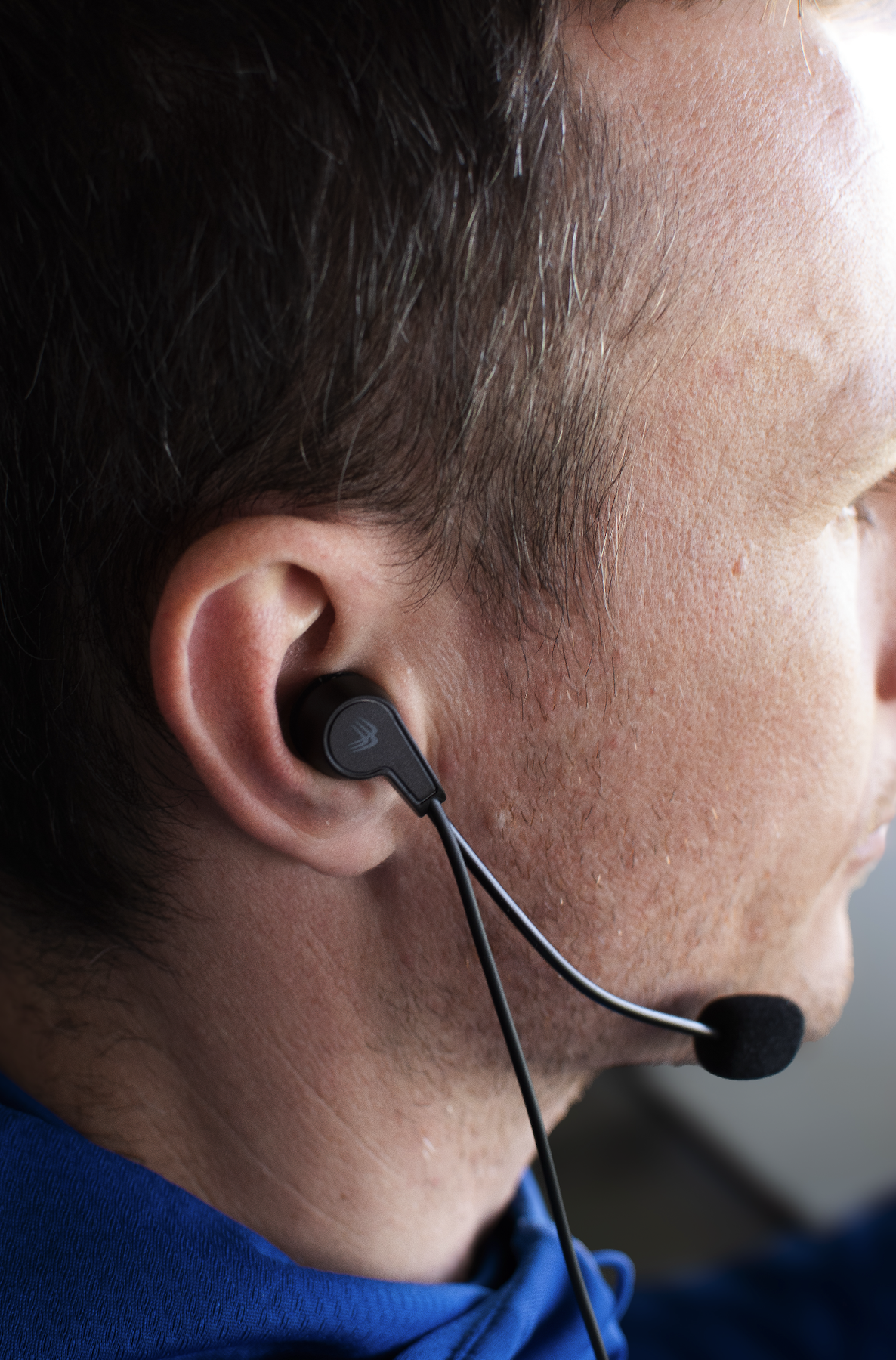

– That’s right. You got a prototype from us with a push-to-talk button for our new SwiftFit Headset.
– Exactly. It is necessary for us to have this function because talking all the time like referees do is too much for us. Together with the SwiftFit Headset, it works very well and easy for us.
– Where do you see these types of tools in the next years in football? Do you think we will see more of these mobile, smart tools in use of the game?
– I think it will increase, and we will need it even more. In the past, the big teams have had these things for a while now, like video systems and communication systems for staff members. But I think third division teams, and even under that, will start using these things. Now we are in a time these tools will gain further importance, for sure.
– Thanks for this, Phil, and good luck.