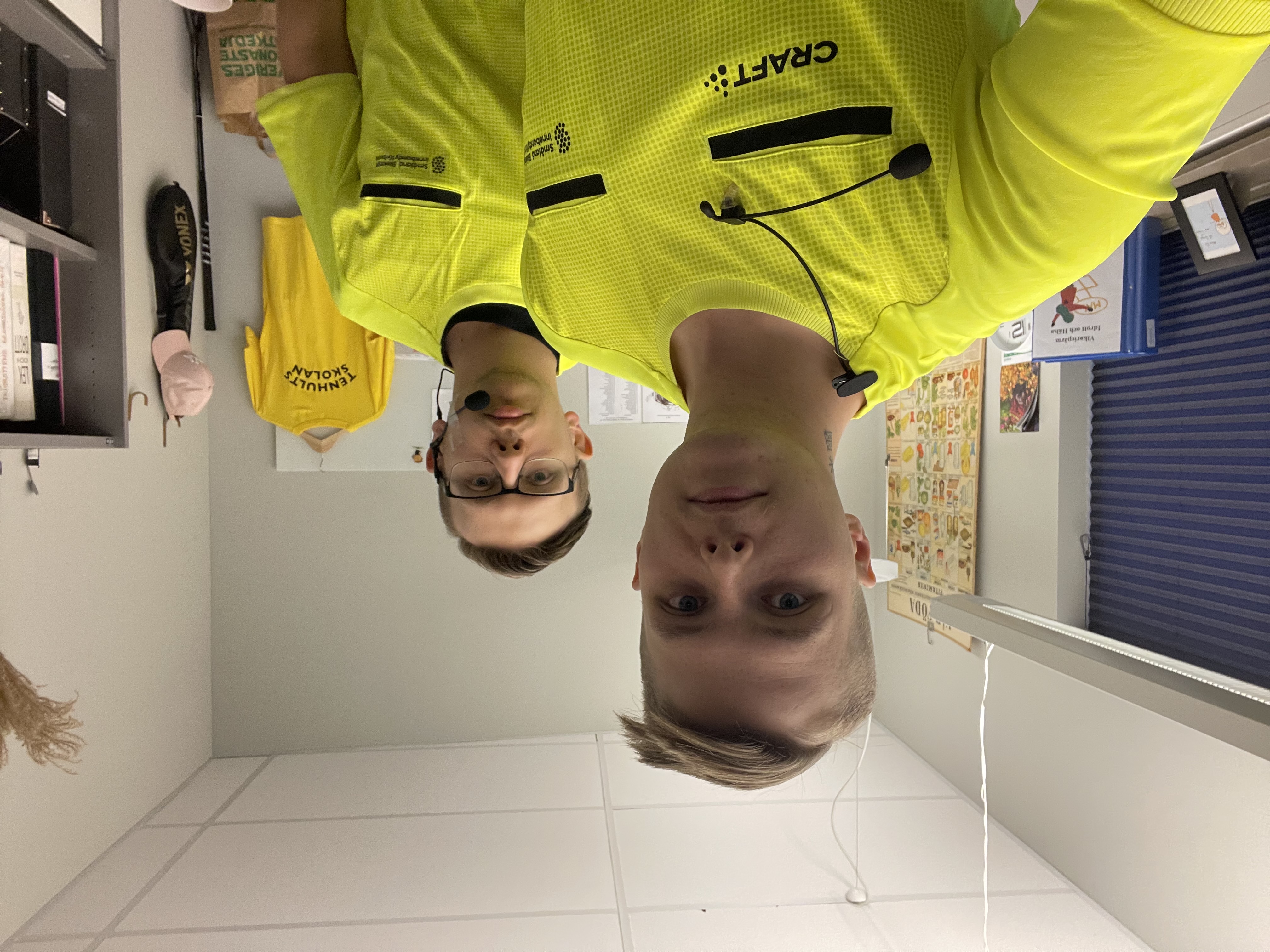
Interview: Emil Lindén referee in floorball 2023-01-06
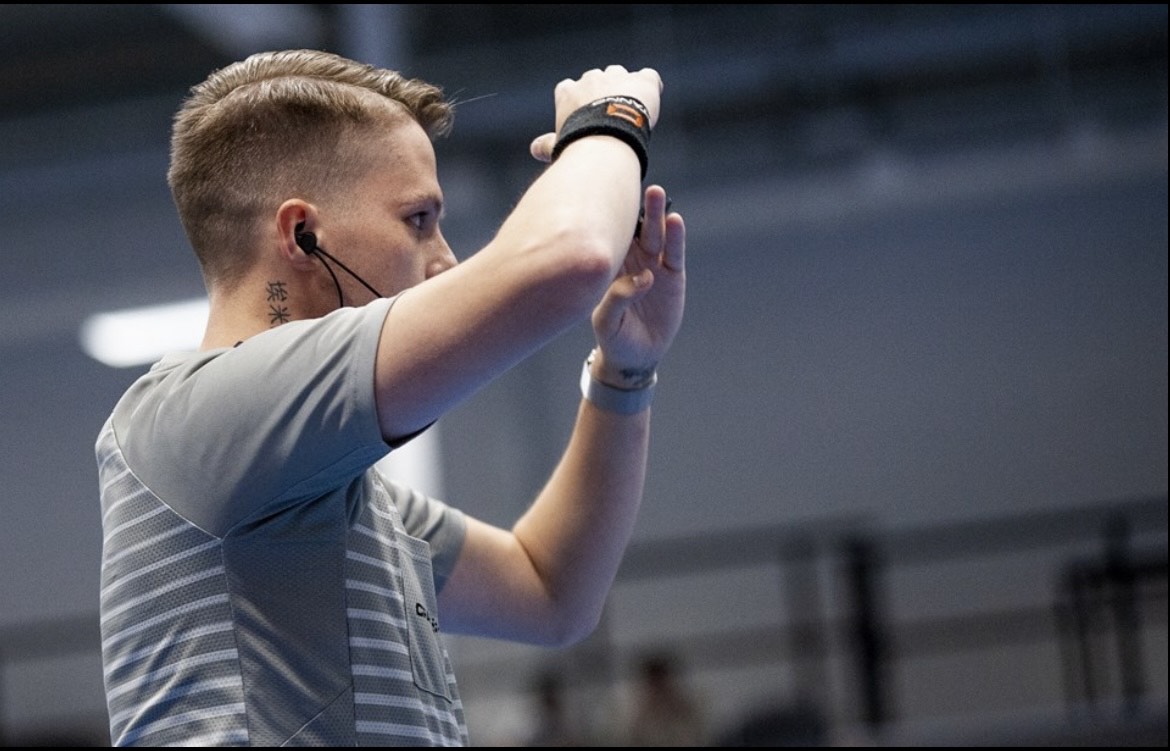
Interview with floorball referee Emil Lindén
Emil has refereed floorball since he was a teenager, and he is aiming for the top and has no plans to stop. He loves the sport where it is fast and you, as a referee, have to be connected all the time and that you are close to all the players during the entire match. He believes that the most important quality for a referee, regardless of sport, is the ability to communicate with players and managers - read the full interview below.
– Hi Emil, you are in the middle of the floorball season and how is the status for you?
– It's good and there have been a lot of matches, of course. During Christmas and New Year there was a small break for me, but then it starts again. Me and a colleague from my district are also going to Gothia to blow there. Gothia Indoor Bandy Cup which is played 5-8 January 2023. I have been there before, when the year before the pandemic came and got a final, which was really fun. Gothia and Czeck Open are the two biggest floorball tournaments that you want to referee, it's tough competition and it's a fun way to compare yourself with others and to get a lot of feedback and observations.
– Lots of matches, you say. How much do you referee?
– It varies a little, but maybe on average per week there are two matches per weekend. Sometimes three and sometimes one. It takes a lot of time and energy to be a referee, but if you plan and have a dialogue with friends and family, it usually goes well with the rest of your life.
– Tell me more about what you do than refereeing floorball then!
– I live in Jönköping and moved here last spring. Right now I'm studying and finishing high school, then I'll further my education as a sign language interpreter.
– Interesting! You may not use sign language as a referee, but you have to use an extreme amount of body language as a referee and sign language interpreter. Right?
– We are using headsets most of the time, but we really try to maintain our body language as referees. I am trained without a headset and have refereed a lot without it. I use a lot of body language in order to be clearer in my communication to players and the audience. Just like you say, I use sign language and what I've learned with it, when refereeing floorball – in my body language. It has given me a clearer body language and it is a big advantage on the field, because, for example, you don't always have to get up high with the whistle but can show a clearer body language.
– How long have you refereed floorball?
– As a district referee, I have refereed for 7 years, I think. Then I refereed for two years as an local club referee before that. The district caught me quite early, as a 15-year-old and was then picked up there. I played floorball before that and clearly remember being pretty "hungry" and wanting to start refereeing floorball, I was one of the few who actually wanted to start myself. The club talked about having an association referee training and I signed up myself, while some others were forced to start. Since then I've found being a referee is really fun.
– Fun to referee you say, can you tell me more about why you think it's fun?
– As a floorball referee, you are so close to the game all the time, you are usually already in the situation when it happens, unlike perhaps football or other sports. I think it is easier to communicate with players in floorball, because you are close to everything as a referee. You are close to the situation, to the bench, to leaders and so on. I love the sport and being a referee in the sport I love. That's probably why I find it fun.
– What do you think is the most important quality for a referee, regardless of sport?
– The ability to communicate! Being able to communicate with players, leaders and with others. To communicate a decision, to everyone including the audience. You can be great at reading the game, you can be great at blowing a whistle - But if you're the worst at communicating, players, managers and the crowd won't buy any of your decisions. Then you will get 60 tough minutes as a referee, instead of 60 fun minutes.
– Do you have examples or situations from your own matches with good and bad communication?
– Yes, I had a division three men where it was 7-0 after the first period. Those who had 0 goals then started playing tougher and using tricks and it was very whiny, they were annoyed. I had a chat with them during the break where I said something like “Guys, why are you irritated? You have 40 minutes left to play and we are playing floorball. Why are you giving up already, the match is far from over! You solve 7 goals in 20 minutes without problems if you focus on the right things. Don't focus on our job as referee or the other team, but do your thing". I think if I hadn't had that talk with them, the foul play continued and they would have come even later into the situations. Then we would have received a match picture that we don't want and we would have had a floorball match focusing on completely the wrong things.
– A bad example, of course there are a lot of them. You learn along the way and have to make mistakes and reflect on them to get better. But it was a match where a player broke his floorball stick. Then we refereed in a hall where when a goal is scored they turn off the lights in the entire hall and there are only spotlights on the player who scored the goal. No one saw that a player on the team that conceded the goal then hit the stick and broke it, except me, when it happened. I was standing next to him at the rim and I could have solved it better as a referee. I could have told him a little quickly that "... take your stick quick and pick it up and be smart now, before everyone sees what you did". There, I could have been a bit smarter as a referee and solved it easily. He could have picked up the club and just go to the bench.
– Two good examples, thank you Emil. You just got to try a new whistle as a floorball referee. An Acme Thunderer 477/660 that you received from us at Spintso. What do you think about it?
– I've had one before, but many years ago now. The old one broke when I tripped over the rim and have wanted to buy one like it ever since, but haven't found one. I'm used to having to blow hard to get high with the signal, but with this one I don't have to. It is enough to blow a little to get where I want in signal. It fits well on the fingers and is easy to use.
– What goals do you and your colleague have going forward with the refereeing?
– Today we mostly refereeing in the men's third and "junior allsvenskan" or junior league. Mainly it is to get up to the men's second division. That is the first and primary goal. Then we want to get as high as possible, up to SSL and further from there. Imagine refereeing internationally - what a dream! But as I said, first and foremost the men's division two and one step at a time.
– Thank you Emil. Anything else you want to add before we wrap up.
– Yes, I think that the climate in the indoor arenas and the climate for the referees in every sport always needs to be discussed, to have a chance to get better. Especially for the younger referees. I know for myself what it's like to be a young referee and you hear the stands and audience sitting and shouting at you. As a 15-year-old, you may not be that strong in your role yet. You have to dare to stand your ground, early on. That you make a decision and then you play on after that. But, as I said, not everyone is that strong in their role yet and the climate needs to improve in order for us to get more referees to continue. The audience, above all, needs to be nicer to the younger referees!